Piyush Goyal Urges Daily Yoga Beyond 21 June
Synopsis
On International Yoga Day 2026, Union Minister Piyush Goyal urged Indians to treat 21 June as the start of a year-round daily yoga practice rather than a single-day event, echoing India's sustained push to embed yoga in everyday public health and wellness culture.
Key Takeaways
Union Commerce and Industry Minister Piyush Goyal posted his International Yoga Day message on 21 June 2026 .
He urged Indians to practise yoga not just on 21 June but every day for all 365 days of the year.
The International Day of Yoga was established by the UN General Assembly via Resolution 69/131 in December 2014 after a proposal by PM Narendra Modi .
India promotes yoga through the AYUSH ministry as part of its preventive health and cultural diplomacy agenda.
Annual ministerial messaging on 21 June is part of a government-wide effort to encourage sustained daily yoga practice among the general public.
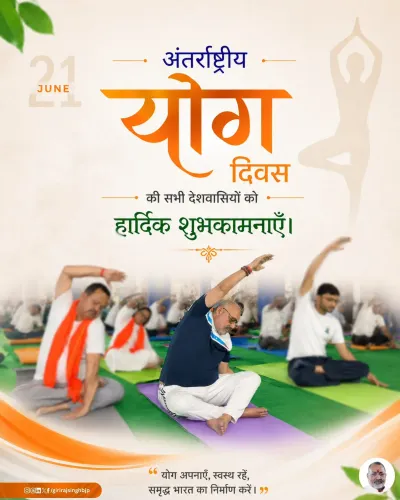
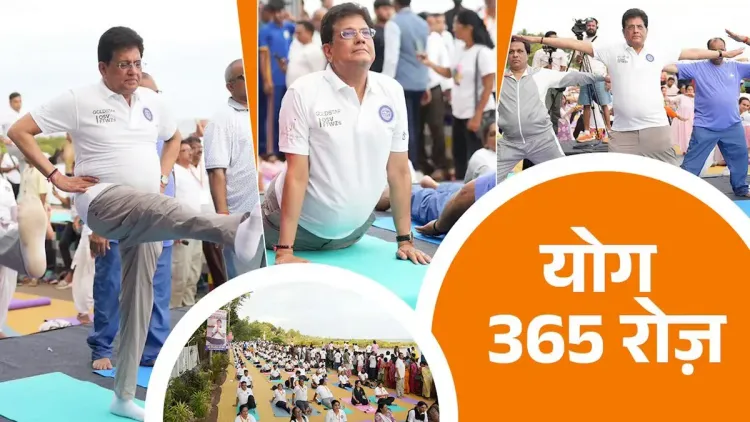
Union Commerce and Industry Minister Piyush Goyal on Sunday, 21 June 2026 called on Indians to move beyond a single-day observance of yoga and adopt the practice as a year-round daily routine, posting his message on the occasion of International Yoga Day.
In his post, Goyal wrote: 'योग केवल साल में एक दिन नहीं करें, 21 जून से शुरुआत करके इसे 365 दिन का नित्य अपना कार्यक्रम बनाएं।' — translated: 'Do not practise yoga only one day a year; starting from 21 June, make it your daily routine for all 365 days.'
Context
The International Day of Yoga is observed every year on 21 June as a global event recognising the physical, mental, and spiritual benefits of yoga. The day carries particular significance for India, which championed its establishment at the international level more than a decade ago.
Goyal's message reflects a recurring theme among senior government figures on this date: using the annual observance as a launchpad for sustained personal commitment rather than a one-off event.
Policy Backdrop
The United Nations General Assembly adopted Resolution 69/131 in December 2014, declaring 21 June as the International Day of Yoga. The resolution followed a proposal by Prime Minister Narendra Modi in his address to the UN General Assembly that same year — one of the earliest and most visible acts of cultural diplomacy by his administration.
Since then, India has woven yoga promotion into broader public-health and wellness policy, including through the AYUSH ministry, which oversees Ayurveda, Yoga, Naturopathy, Unani, Siddha, and Homeopathy systems. Annual ministerial messaging on 21 June forms part of a sustained, government-wide public-awareness effort.
Stakeholders and Impact
Goyal's appeal is directed at the general public and the country's large and growing community of yoga practitioners. By framing 21 June as a starting point rather than a destination, the message pushes back against the tendency to treat the annual observance as a symbolic gesture disconnected from everyday health habits.
The broader government push has seen yoga modules introduced in school curricula and integrated into public-health programmes, extending the reach of the practice well beyond urban enthusiasts to students and rural communities.
What's Next
Observers will watch for concrete policy announcements around future International Yoga Day observances, particularly any expansion of yoga into national health and fitness schemes. The continued integration of AYUSH systems into mainstream healthcare planning suggests the government's emphasis on yoga as a preventive-health tool is likely to deepen in the months ahead.
Point of View
The message subtly shifts the metric of success from attendance at a single event to sustained personal adoption — a harder but more meaningful target. This aligns with the broader Modi government strategy of anchoring cultural diplomacy achievements, such as the 2014 UN resolution, to tangible domestic health outcomes. As AYUSH integration into mainstream healthcare deepens, such ministerial nudges serve a dual purpose: public-health promotion and soft-power reinforcement of India's identity as the home of yoga.
NationPress
19 Sept 2026
Frequently Asked Questions
When is International Yoga Day celebrated?
International Yoga Day is celebrated every year on 21 June, as declared by the United Nations General Assembly through Resolution 69/131 in December 2014.
Who proposed International Yoga Day at the United Nations?
Prime Minister Narendra Modi proposed the International Day of Yoga during his address to the UN General Assembly in 2014, and the resolution was adopted the same year.
What did Piyush Goyal say on International Yoga Day 2026?
Piyush Goyal urged Indians not to limit yoga to a single day and called on people to make it a daily routine for all 365 days of the year, starting from 21 June.
What is the AYUSH ministry in India?
The AYUSH ministry oversees traditional and alternative health systems in India, including Ayurveda, Yoga, Naturopathy, Unani, Siddha, and Homeopathy, and plays a central role in promoting yoga as part of public health policy.
How does India promote yoga internationally?
India promotes yoga as a pillar of cultural diplomacy, backed by the UN recognition of 21 June as International Yoga Day, and domestically through AYUSH programmes, school curricula integration, and sustained ministerial outreach.