Goyal marks 12 years of Make in India with defiant pride
Synopsis
On the 12th anniversary of Make in India, Commerce Minister Piyush Goyal declared the flagship manufacturing initiative has silenced its sceptics, citing 12 years of sustained industrial policy continuity built on PLI schemes and a drive to lift manufacturing's share of GDP.
Key Takeaways
Make in India was launched by PM Narendra Modi on 25 September 2014 — completing exactly 12 years on this date.
Commerce Minister Piyush Goyal marked the anniversary by declaring the initiative has silenced early sceptics.
The scheme was designed to position India as a global manufacturing and design hub, targeting higher GDP share for manufacturing and greater FDI inflows .
From 2020 , sector-specific Production-Linked Incentive (PLI) schemes were added to reinforce the Make in India framework across industries including electronics, pharma, and solar.
Upcoming industrial production and FDI data will be the real benchmark for whether momentum is sustained into the programme's second decade.
Twelve years after Prime Minister Narendra Modi unfurled the Make in India lion on 25 September 2014, Union Commerce and Industry Minister Piyush Goyal marked the anniversary with a combative flourish — declaring that the initiative has grown loud enough to silence every doubter who ever questioned it.
From a 2014 launch to a 12-year manufacturing bet
Make in India was conceived as India's most ambitious attempt to rewire its economic identity — from a services-heavy, import-reliant economy to a global design and production hub. When Modi unveiled the programme at a ceremony in New Delhi in September 2014, the scepticism was loud: could a country with creaking infrastructure, a labyrinthine regulatory stack, and chronic skill gaps really compete with established manufacturing giants?
Goyal's post today — 'The Make in India lion is silencing the skeptics with a deafening roar' — is a direct answer to that question, framed as a verdict rather than a claim.
PLI schemes and the push to raise manufacturing's GDP share
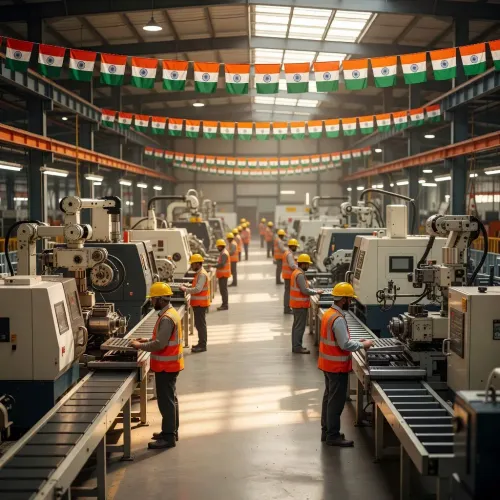
The initiative did not travel alone. From 2020 onward, the government layered sector-specific Production-Linked Incentive (PLI) schemes on top of the Make in India umbrella, targeting industries from semiconductors and smartphones to pharmaceuticals and solar modules. The logic was blunt: tie cash incentives directly to incremental production, not promises. Manufacturers and foreign investors — the two constituencies Make in India always needed most — were the explicit audience.
The broader policy ambition has remained consistent: lift manufacturing's share of GDP and pull in waves of foreign direct investment that had historically bypassed India in favour of East and Southeast Asian rivals.
What the anniversary moment signals
Anniversary posts by senior ministers are rarely accidental in their tone. Goyal's lion metaphor — roaring down sceptics — is a deliberate political statement: that 12 years of continuity have vindicated the original bet. The video attached to the post signals an intent to showcase milestones rather than merely mark a date on the calendar.
The test, as always, will come in hard numbers. Upcoming quarterly industrial production data and FDI inflow figures will determine whether the roar translates into measurable momentum heading into the programme's second decade.
A 12-year manufacturing mission doesn't win on anniversaries. It wins on factory floors — and the next set of data will tell that story.
Point of View
But its real credibility test lies in whether PLI-driven output gains translate into durable export competitiveness. By invoking the lion imagery on the exact birth date of the scheme, the government is reinforcing policy continuity as an electoral asset ahead of future cycles. The next quarterly hard data — not the anniversary post — will determine whether that framing holds.
NationPress
25 Sept 2026
Frequently Asked Questions
When was Make in India launched?
Make in India was launched by Prime Minister Narendra Modi on 25 September 2014 in New Delhi, making 2026 its 12th anniversary.
What is the goal of Make in India?
The scheme aims to position India as a global hub for manufacturing and design, raise manufacturing's share of GDP, and attract significant foreign direct investment.
What are PLI schemes and how are they linked to Make in India?
Production-Linked Incentive (PLI) schemes, introduced from 2020 onward, are sector-specific cash incentives tied to incremental production targets. They were layered onto the Make in India framework to drive output in sectors like electronics, pharmaceuticals, and solar energy.
What did Piyush Goyal say about Make in India's anniversary?
Commerce Minister Piyush Goyal posted on X that 'The Make in India lion is silencing the skeptics with a deafening roar', framing the 12-year milestone as a vindication of the programme.
How will India measure Make in India's success going forward?
Quarterly industrial production data and FDI inflow figures are the primary metrics that will indicate whether Make in India's momentum continues into its second decade.