Goyal meets Maersk on shipbuilding and maritime investment
Synopsis
Commerce Minister Piyush Goyal met A.P. Moller – Maersk's Head of Asset Strategy on 1 July 2026 to discuss investments in India's shipbuilding, container manufacturing, ship repair and recycling sectors, advancing India's goal of becoming a top global maritime and logistics hub by 2030.
Key Takeaways
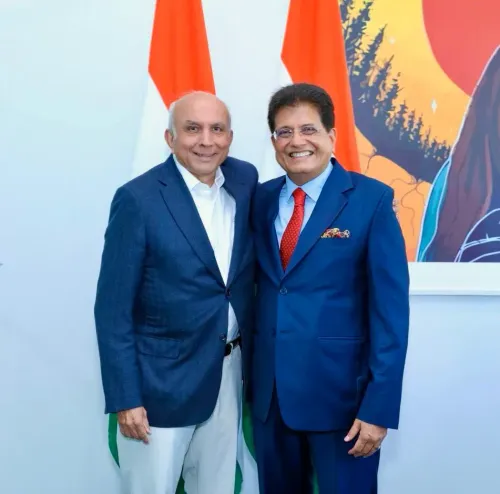
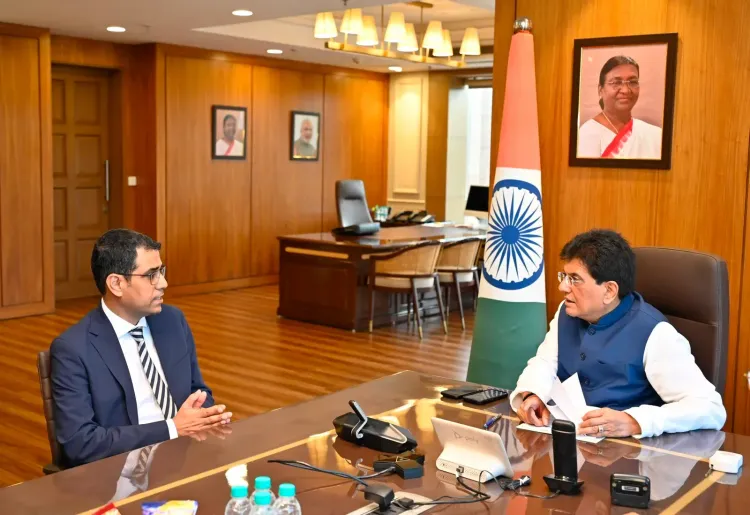
Union Commerce and Industry Minister Piyush Goyal met Ahmed Hassan , Head of Asset Strategy at A.P.
Moller – Maersk Group , on 1 July 2026 .
Discussions covered investments in shipbuilding, container manufacturing, ship repair, and ship recycling .
India aims to raise its global shipbuilding and repair market share from under 1 per cent to 5 per cent by attracting foreign capital and technology.
Maritime India Vision 2030 targets a 100 per cent increase in the Indian-flagged fleet and expanded ship-repair capacity.
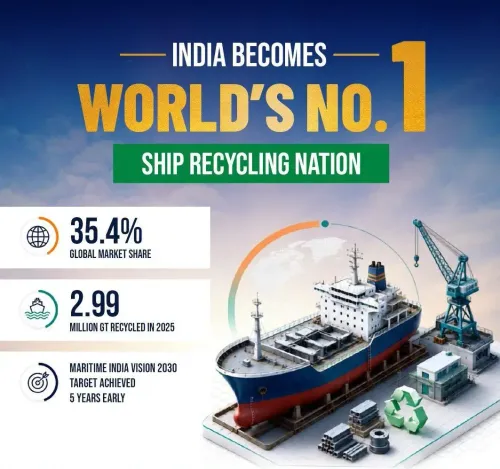
Alang, Gujarat — the world's largest ship-breaking yard — could benefit from international shipping majors committing to certified Indian recycling facilities.
Follow-up policy moves, including revised FDI incentives or shipbuilding cluster announcements, may feature in the next Union Budget .
Union Commerce and Industry Minister Piyush Goyal met Ahmed Hassan, Head of Asset Strategy at A.P. Moller – Maersk Group, on Wednesday, 1 July 2026, to explore deeper collaboration across India's maritime sector, covering shipbuilding, container manufacturing, ship repair, and ship recycling.
Context
Minister Goyal described the meeting as an opportunity to discuss 'strengthening India's maritime sector through investments in shipbuilding, container manufacturing, ship repair, and ship recycling.' The two sides also 'exchanged views on enhancing India's competitiveness as a global maritime and logistics hub through deeper industry collaboration,' according to the minister's post on X.
A.P. Moller – Maersk, headquartered in Denmark, is one of the world's largest container shipping and integrated logistics companies and has maintained a long-standing presence across Indian ports and supply chains.
Policy Backdrop
The meeting sits within a multi-year government push to raise India's share of global shipbuilding and ship repair from under 1 per cent toward 5 per cent by attracting foreign technology and capital. The Sagarmala Project, launched in 2015, laid the foundation for port-led development and coastal shipping, while a shipbuilding financial assistance scheme was extended in 2016 and again in 2021 to revive domestic yards.
Maritime India Vision 2030, unveiled at the Maritime India Summit in 2021, set targets for a 100 per cent increase in the Indian-flagged fleet and a significant expansion of ship-repair capacity. Successive policy moves have liberalised foreign direct investment norms in shipyards, offered viability gap funding, and aligned domestic recycling yards with the Hong Kong Convention on safe and environmentally sound ship recycling.
Parallel efforts under PM Gati Shakti seek to integrate maritime assets with inland multimodal logistics corridors, making the sector attractive to global operators such as Maersk that require end-to-end supply-chain visibility.
Stakeholders and Impact
Indian shipyards, port operators, and logistics firms stand to benefit directly if engagement with a global player like Maersk translates into technology transfer, capital investment, or long-term offtake agreements. Container manufacturing, in particular, has gained strategic importance after global supply-chain disruptions exposed India's near-total dependence on imported containers.
Ship recycling yards concentrated along the Gujarat coast — particularly at Alang, the world's largest ship-breaking yard — could also see upgraded environmental and safety standards if international shipping majors commit to using certified Indian facilities. This would bolster India's position in the global recycling market while meeting international compliance benchmarks.
What's Next
Observers will watch for follow-up announcements on dedicated shipbuilding clusters or revised FDI incentive structures, potentially in the next Union Budget. Participation by Maersk or other global shipping lines at a forthcoming Maritime India Summit would signal whether Wednesday's discussions move from dialogue to binding commitments.
India's ambition to become a top-five global maritime and logistics hub by 2030 will require sustained foreign investment alongside domestic capacity building — and high-level ministerial engagement with asset-strategy decision-makers at companies like Maersk is a necessary early step in that direction.
Point of View
Not merely relationship managers. This fits a broader pattern of the Commerce Ministry using high-level bilateral engagements to build the investment pipeline that Maritime India Vision 2030 requires. The focus on container manufacturing is particularly telling — it reflects a post-pandemic lesson that supply-chain sovereignty demands domestic production capacity, not just port infrastructure. Whether these talks produce binding commitments will be the true measure of India's maritime diplomacy.
NationPress
1 Jul 2026
Frequently Asked Questions
Why did Piyush Goyal meet Maersk in July 2026?
Minister Goyal met Maersk's Head of Asset Strategy to discuss potential investments in India's shipbuilding, container manufacturing, ship repair, and ship recycling sectors, as part of India's push to become a global maritime and logistics hub.
What is Maritime India Vision 2030?
Maritime India Vision 2030 is a government roadmap unveiled in 2021 that targets a 100 per cent increase in the Indian-flagged fleet, significant growth in ship-repair capacity, and broader port and logistics competitiveness by 2030.
What is India's current share in global shipbuilding?
India currently holds under 1 per cent of the global shipbuilding and ship-repair market. The government's stated target is to raise this to around 5 per cent by attracting foreign investment and technology.
What is the Sagarmala Project?
The Sagarmala Project, launched in 2015, is a central government initiative to promote port-led development, modernise ports, and develop coastal shipping and inland waterway infrastructure across India.
Where are India's major ship recycling yards?
India's largest ship-recycling yards are located at Alang in Gujarat, which is recognised as the world's biggest ship-breaking and recycling facility.