Gujarat bans caste symbols on private vehicles under new motor vehicle rules
Synopsis
Gujarat has become one of the few Indian states to legally codify a ban on caste-identifying words, symbols, and signs on private vehicles. The amendment, quietly notified on 17 November 2026 after zero public objections, closes a loophole that years of episodic police drives had failed to seal — and signals a sharper regulatory intent than anything attempted before in the state.
Key Takeaways
The Gujarat Ports and Transport Department notified the Gujarat Motor Vehicles (Third Amendment) Rules, 2026 on 17 November 2026 .
The amendment prohibits caste-identifying words, symbols, figures, and signs on all private vehicles , including two-wheelers, three-wheelers, cars, buses, and trucks.
A new sub-rule (3) is inserted under Rule 138 of the Gujarat Motor Vehicles Rules, 1989 ; Rule 125 is also amended to include 'caste signage' explicitly.
The draft was published in the Gujarat Government Extraordinary Gazette on 11 June 2026 ; no objections were received in the 30-day window.
A similar drive in Uttar Pradesh in 2023 issued over 2,300 challans for caste and religious stickers, but lacked a statutory rule change of this nature.
The state government retains the power to grant exemptions through a general or special order.
The Gujarat government on 17 November 2026 formally prohibited the display of caste-identifying words, symbols, figures, and signs on private vehicles across the state, through an amendment to its motor vehicle rules. The Ports and Transport Department notified the Gujarat Motor Vehicles (Third Amendment) Rules, 2026, making Gujarat one of the few states to codify such a ban explicitly in motor vehicle legislation.
What the Amendment Says
The new rules insert a fresh sub-rule (3) after sub-rule (2) of Rule 138 of the Gujarat Motor Vehicles Rules, 1989. Under the provision, no advertising device, caste-identifying sign, figure, or any kind of text can be displayed on a private vehicle — covering two-wheelers, three-wheelers, cars, buses, and trucks — unless the state government grants an exemption through a general or special order.
The amendment also modifies sub-rule (1) of Rule 125, replacing the phrase 'No advertising device, figure' with 'No advertising device, caste signage, figure', explicitly bringing caste-identifying signs within that provision's ambit. Notably, the ban extends to caste-related displays on any part of a vehicle, not merely on registration plates.
How the Rule Came Into Effect
A draft of the amendment was first published in the Gujarat Government Extraordinary Gazette on 11 June 2026, inviting objections and suggestions from affected persons within 30 days. The government stated that no objections or suggestions were received during the stipulated period, following which the final rules were notified on 17 November 2026.
Background: A Long-Standing Practice
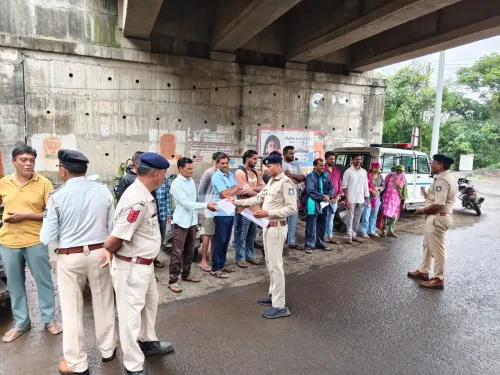
The display of caste identities on vehicles is not new in Gujarat. Cars and two-wheelers bearing labels such as 'Patidar', 'Kshatriya', and other caste-identifying names have been widely reported on the state's roads. In 2015, Rajkot Police had announced a drive to remove caste-related writings from vehicle registration plates, with officials at the time describing the practice as widespread across Gujarat.
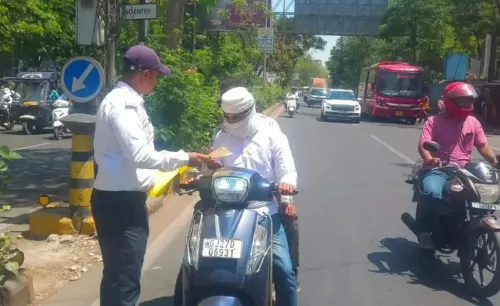
This comes amid broader national efforts to curb such displays. A similar enforcement drive in Uttar Pradesh's Noida and Ghaziabad in 2023 resulted in more than 2,300 challans being issued for caste and religious stickers on vehicles. The Gujarat amendment, however, goes further by embedding the prohibition in state motor vehicle rules rather than relying solely on enforcement drives.
Scope and Enforcement Outlook
The amendment's reach is broader than past enforcement actions — it covers caste-identifying material displayed on any surface of a private vehicle, not just registration plates. The state government retains the power to grant exemptions through a general or special order, though no such exemptions have been notified so far.
How rigorously the new rules are enforced by traffic police and regional transport authorities will be closely watched, particularly given that earlier crackdowns in Gujarat remained largely episodic rather than sustained.
Point of View
The state creates an enforcement tool that traffic authorities can invoke without fresh political direction each time. The harder question is implementation — Rajkot Police ran a similar crackdown in 2015 and the practice persisted. The amendment's real test will be whether regional transport offices and traffic police treat it as an operational mandate or a shelf rule. It is also worth noting that the government's own exemption clause, however standard, leaves a door open that could dilute the ban's social signal if invoked selectively.
NationPress
20 Nov 2026
Frequently Asked Questions
What does the Gujarat caste ban on private vehicles entail?
The Gujarat Motor Vehicles (Third Amendment) Rules, 2026, notified on 17 November 2026, prohibit the display of caste-identifying words, symbols, figures, and signs on all private vehicles in the state. The ban covers two-wheelers, three-wheelers, cars, buses, and trucks, and extends to any surface of the vehicle — not just the registration plate.
When did the Gujarat Motor Vehicles (Third Amendment) Rules, 2026, come into effect?
The final rules were notified on 17 November 2026 by the Ports and Transport Department. The draft amendment had been published in the Gujarat Government Extraordinary Gazette on 11 June 2026, with a 30-day window for objections, after which no responses were received.
Which rules of the Gujarat Motor Vehicles Rules, 1989, have been changed?
A new sub-rule (3) has been inserted after sub-rule (2) of Rule 138, explicitly barring caste-identifying signs on private vehicles. Sub-rule (1) of Rule 125 has also been amended to include the words 'caste signage', bringing such displays within the existing advertising-device restrictions.
Has any Indian state or city taken similar action before?
Yes, though less comprehensively. Rajkot Police ran a drive in 2015 to remove caste-related writings from registration plates in Gujarat. In 2023, authorities in Uttar Pradesh's Noida and Ghaziabad issued more than 2,300 challans for caste and religious stickers on vehicles. Gujarat's 2026 amendment goes further by codifying the prohibition in state motor vehicle rules, covering all vehicle surfaces.
Are there any exemptions to the new Gujarat vehicle caste ban?
The amendment allows the state government to grant exemptions through a general or special order. As of the notification date, no such exemptions have been announced, meaning the ban applies broadly to all private vehicle owners in Gujarat.