Shyama Prasad Mukherjee death anniversary: Gujarat BJP leaders pay tribute
Synopsis
On the 72nd anniversary of Dr Shyama Prasad Mukherjee's death in custody in Srinagar, Gujarat's top BJP leadership gathered to honour the Jana Sangh founder — pointedly framing the 2019 abrogation of Article 370 as the realisation of his lifelong demand. The tributes underscore how central Mukherjee's legacy remains to the BJP's political identity.
Key Takeaways
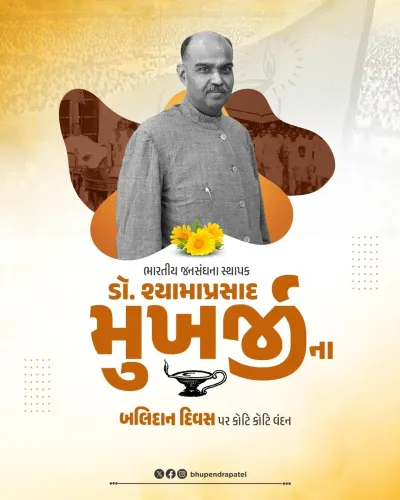
Gujarat CM Bhupendra Patel , Deputy CM Harsh Sanghavi , and BJP state president Jagdish Vishwakarma paid tributes to Dr Shyama Prasad Mukherjee on 23 June .
Patel linked Mukherjee's vision of national integration to the abrogation of Article 370 in 2019 under PM Narendra Modi .
Sanghavi posted his tribute on social media platform X , describing Mukherjee as 'a symbol of the resolve for an undivided India.' Mukherjee founded the Bharatiya Jana Sangh in 1951 , the ideological predecessor of the BJP.
He died in custody in Srinagar on 23 June 1953 , aged 51 , after entering J&K without a permit in protest against the prevailing entry restrictions.
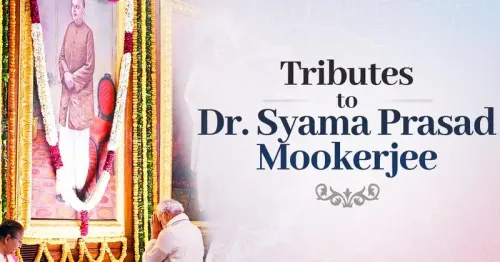
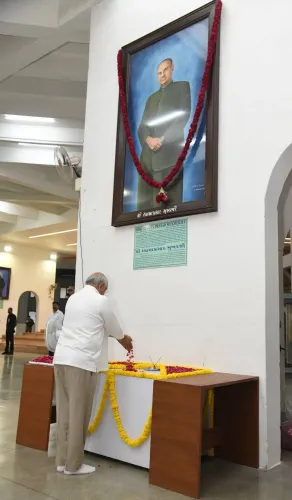
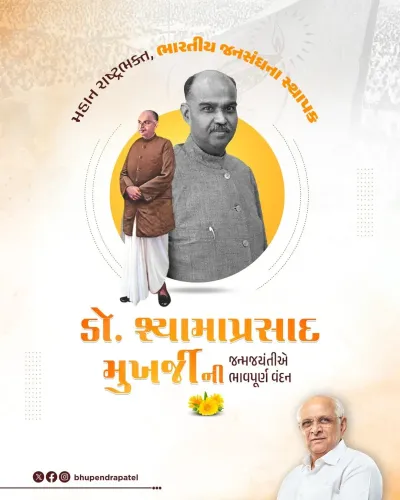
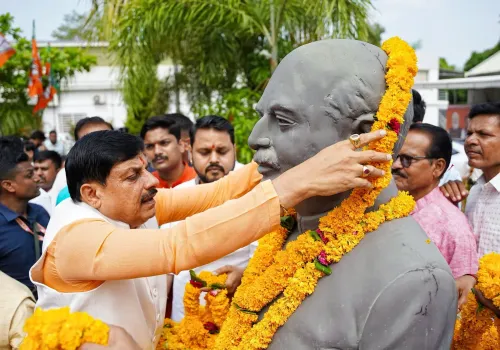
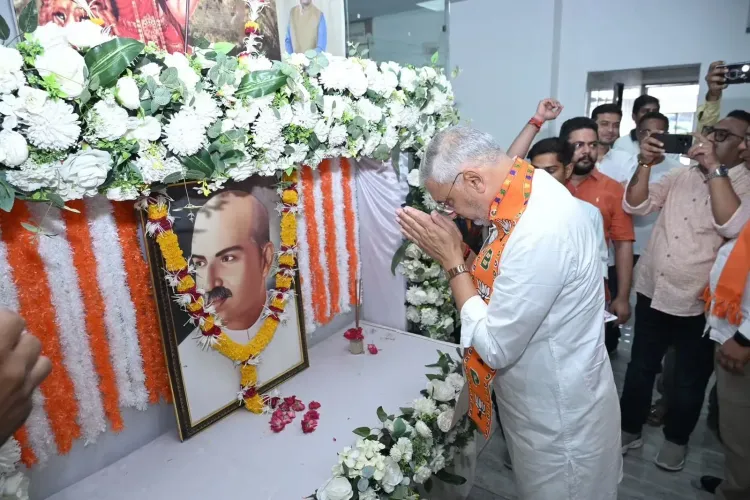
Gujarat Chief Minister Bhupendra Patel, Deputy Chief Minister Harsh Sanghavi, and Bharatiya Janata Party (BJP) state president Jagdish Vishwakarma on Tuesday, 23 June paid homage to Dr Shyama Prasad Mukherjee on his death anniversary, honouring the Bharatiya Jana Sangh founder for his lifelong advocacy of national integration and his fierce opposition to Jammu and Kashmir's special constitutional status.
What Gujarat Leaders Said
Chief Minister Patel invoked Mukherjee's defining slogan — 'One country cannot have two constitutions, two prime ministers and two flags' — calling him a nationalist leader who dedicated his life to the complete integration of Kashmir with India.
Patel said: 'The vision of ‘Ek Bharat, Shreshtha Bharat’, for which he had made the supreme sacrifice, was realised through the abrogation of Article 370 in Jammu and Kashmir under the leadership of Prime Minister Narendra Modi.' He added that Mukherjee's life would continue to inspire selfless service in the cause of national unity.
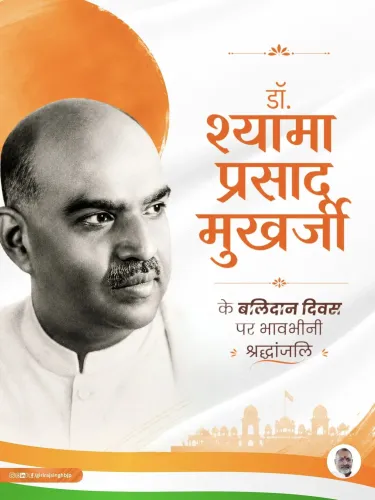
Deputy Chief Minister Sanghavi, in a post on social media platform X, wrote: 'Millions of salutations on the death anniversary of Dr Shyama Prasad Mukherjee, a symbol of the resolve for an undivided India, national self-respect and public service.'
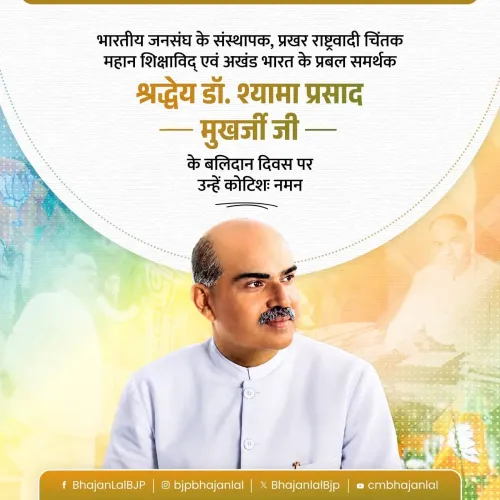
BJP state president Vishwakarma paid floral tributes at the party's Narmada district office, Shri Kamalam, describing Mukherjee as 'the founder of the Jana Sangh, a distinguished thinker, educationist and nationalist leader.'
Who Was Shyama Prasad Mukherjee
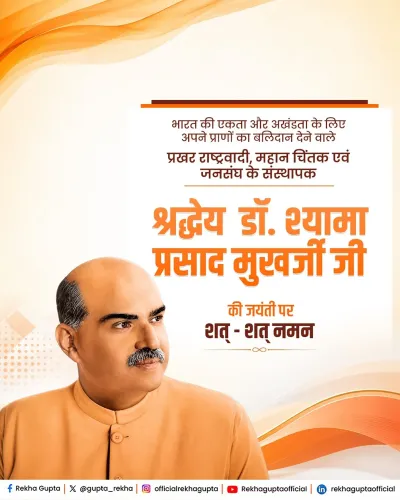
Born in Kolkata in 1901, Mukherjee was an academic, barrister, and politician of considerable stature. He served as India's first Minister for Industry and Supply in Prime Minister Jawaharlal Nehru's cabinet before resigning over policy differences.
In 1951, he founded the Bharatiya Jana Sangh, which later evolved into the ideological predecessor of the BJP. He was also the youngest Vice-Chancellor of the University of Calcutta, cementing his reputation as an intellectual force in post-Independence Indian politics.
The Article 370 Stand and Arrest
Mukherjee is particularly remembered within the BJP and its ideological affiliates for his opposition to Article 370 and the permit system that then governed entry into Jammu and Kashmir. In 1953, he entered the state without a permit in deliberate defiance of the regulation and was subsequently arrested.
He died in custody in Srinagar on 23 June 1953, at the age of 51. The circumstances of his death have remained a point of political contention for decades.
Annual Observance Across the Country
His death anniversary is observed each year by BJP leaders and workers nationwide. This year's tributes in Gandhinagar reflect the party's continued effort to anchor its ideological identity to Mukherjee's legacy — particularly in the context of the 2019 abrogation of Article 370, which BJP leaders routinely describe as the fulfilment of his vision. As the BJP marks another anniversary, Mukherjee's political philosophy remains a live reference point in India's ongoing debate over federalism and national integration.
Point of View
But its content has shifted since 2019 — from aspiration to claimed fulfilment. By framing the Article 370 abrogation as the realisation of Mukherjee's sacrifice, the party converts a death anniversary into a validation of its own governance record. What mainstream coverage often misses is the contested history around Mukherjee's death in custody: the circumstances have never been independently adjudicated, and the demand for a formal inquiry has resurfaced periodically without resolution. The tributes also paper over the fact that Mukherjee resigned from Nehru's cabinet — a reminder that the Jana Sangh's founding was as much about internal Congress-era politics as it was about Kashmir.
NationPress
22 Sept 2026
Frequently Asked Questions
Who was Dr Shyama Prasad Mukherjee?
Dr Shyama Prasad Mukherjee was an academic, barrister, and politician born in Kolkata in 1901. He served as India's first Minister for Industry and Supply before founding the Bharatiya Jana Sangh in 1951, the party that later became the ideological predecessor of the BJP. He was also the youngest Vice-Chancellor of the University of Calcutta.
How did Shyama Prasad Mukherjee die?
Mukherjee died in custody in Srinagar on 23 June 1953, at the age of 51. He had been arrested after entering Jammu and Kashmir without a permit, in deliberate protest against the entry restrictions then in force in the state.
Why do BJP leaders observe Mukherjee's death anniversary?
BJP leaders observe the anniversary to honour Mukherjee as the founder of the Bharatiya Jana Sangh, the party's ideological predecessor. His opposition to Article 370 and his demand for full integration of J&K with India are central to the BJP's political identity, and the party frames the 2019 abrogation of Article 370 as the fulfilment of his vision.
What was Mukherjee's stance on Article 370?
Mukherjee strongly opposed Article 370, which granted Jammu and Kashmir special constitutional status, and the accompanying permit system that restricted entry into the state. In 1953, he entered J&K without a permit in defiance of these rules, leading to his arrest and subsequent death in custody.
What did Gujarat CM Bhupendra Patel say on the death anniversary?
Chief Minister Patel recalled Mukherjee's slogan — 'One country cannot have two constitutions, two prime ministers and two flags' — and said the vision of 'Ek Bharat, Shreshtha Bharat' for which Mukherjee made the supreme sacrifice was realised through the abrogation of Article 370 under Prime Minister Narendra Modi's leadership.