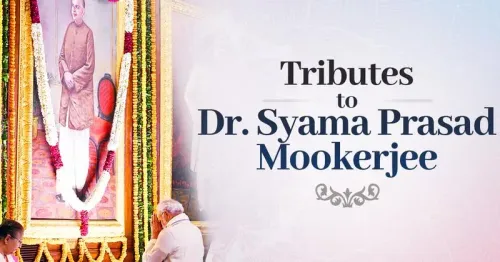
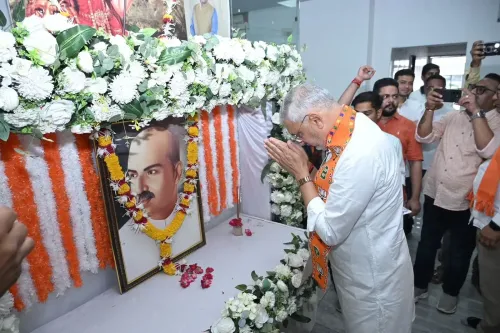
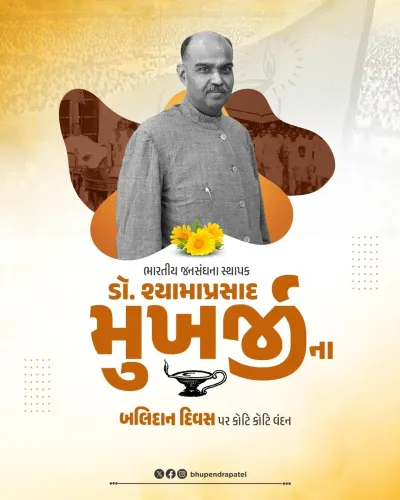
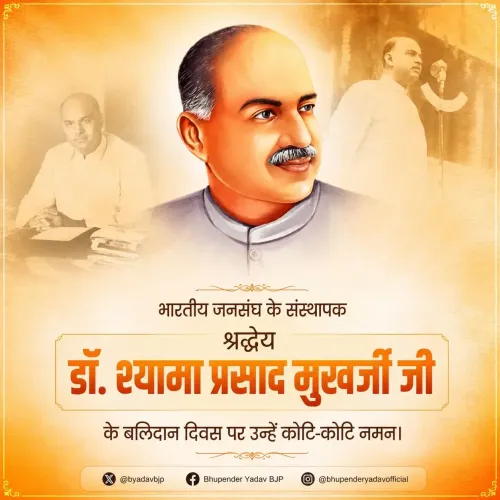
CM Bhupendra Patel Pays Tribute to Dr. Shyama Prasad Mukherjee on Birth Anniversary
Synopsis
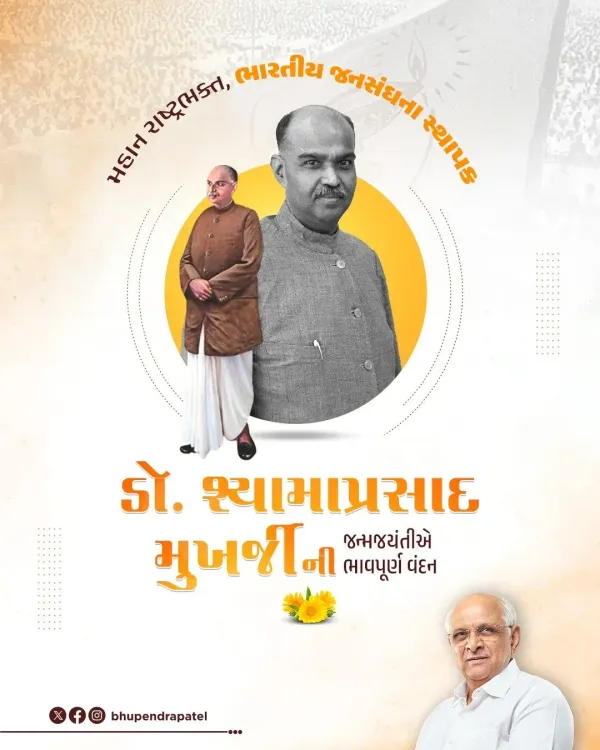
Gujarat Chief Minister Bhupendra Patel paid tribute to Dr. Shyama Prasad Mukherjee on his birth anniversary, calling him a fervent nationalist and linking his vision of uniform citizenship to the Modi government's 2019 abrogation of Article 370 in Jammu and Kashmir.
Key Takeaways
Gujarat CM Bhupendra Patel posted a tribute to Dr.
Shyama Prasad Mukherjee on his birth anniversary on 6 July 2026 .
Mukherjee founded the Bharatiya Jana Sangh in 1951 and died in 1953 while protesting entry restrictions in Jammu and Kashmir .
The post quoted his famous slogan against 'two constitutions, two prime ministers and two emblems in one country' — a reference to Article 370 .
CM Patel stated that Dr.
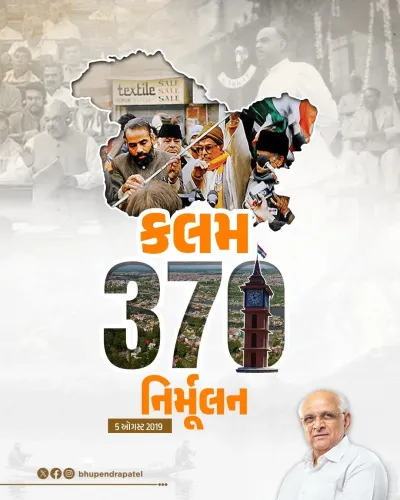
Mukherjee's vision has been realised under Prime Minister Narendra Modi 's leadership, citing the abrogation of Article 370 in August 2019 .
The Bharatiya Jana Sangh is the acknowledged ideological predecessor of the BJP , which continues to frame national integration as a core political commitment.
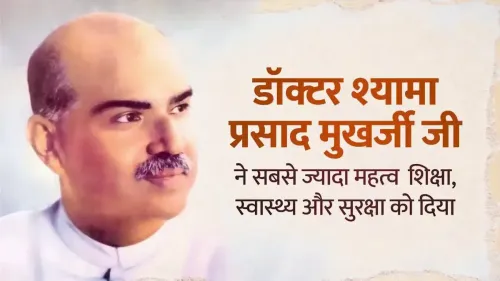
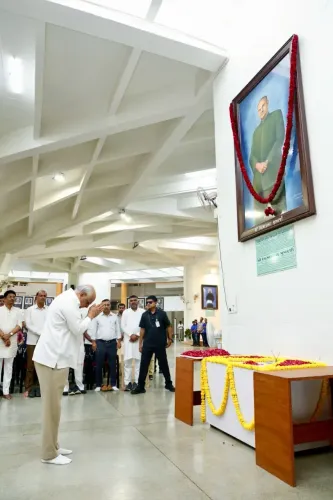
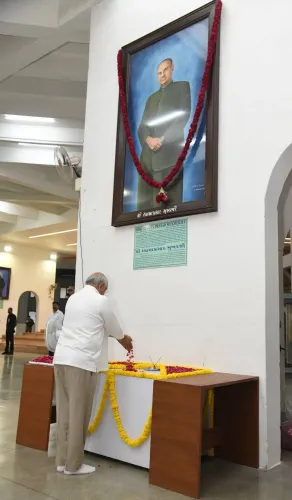
Gujarat Chief Minister Bhupendra Patel on Monday, 6 July 2026, paid tribute to Dr. Shyama Prasad Mukherjee on his birth anniversary, honouring the educationist and founder of the Bharatiya Jana Sangh as a fervent nationalist thinker who fought until his last breath for the complete integration of Jammu and Kashmir into India.
Context
Posting in Gujarati, CM Patel offered his respects — 'sadar vandan' (respectful salutation) — to Dr. Mukherjee, describing him as a 'prakhar rashtravadi vicharak' (ardent nationalist thinker) and educationist. The post recalled Dr. Mukherjee's lifelong opposition to what the Chief Minister quoted as the condition of 'ek desh mein do vidhan, do pradhan aur do nishan' — 'two constitutions, two prime ministers and two emblems in one country' — a slogan that defined Jana Sangh's campaign against Article 370 of the Indian Constitution.
Dr. Mukherjee founded the Bharatiya Jana Sangh in 1951 as a nationalist political alternative. He died in 1953 while in detention in Jammu and Kashmir, where he had gone to protest the requirement that Indian citizens obtain a permit to enter the state — a restriction he viewed as an affront to national unity.
Policy Backdrop
The post explicitly connects Dr. Mukherjee's vision to Prime Minister Narendra Modi's government, stating that his dream has been realised under Modi's leadership. This is a direct reference to the abrogation of Article 370 in August 2019, when the central government issued a presidential order and passed the Jammu and Kashmir Reorganisation Act, revoking the region's special constitutional status and bifurcating it into two union territories — Jammu and Kashmir, and Ladakh.
The Bharatiya Jana Sangh, which later merged into the Janata Party and is widely regarded as the ideological predecessor of the BJP, had consistently opposed differential constitutional treatment for Jammu and Kashmir since its founding. The 2019 abrogation is frequently cited by BJP leaders as the fulfilment of that decades-old ideological commitment.
Stakeholders and Impact
Dr. Mukherjee's birth anniversary is observed annually by the BJP and affiliated organisations as an occasion to reaffirm the party's founding ideology of national integration and uniform citizenship rights. For residents of the Jammu and Kashmir union territories, the 2019 constitutional changes brought the region under central laws that previously did not apply there, with long-term implications for land rights, employment, and governance.
CM Patel concluded his post by expressing that Dr. Mukherjee's ideas and his spirit of 'nation first' will keep the flame of dedication to the motherland burning in every heart — a sentiment that underscores the BJP's ongoing effort to position its current policy agenda within a continuous nationalist tradition stretching back to the pre-independence era.
What's Next
The tribute comes as the central government continues to deepen the administrative and legislative integration of the Jammu and Kashmir union territory, with further rollout of central laws and ongoing discussions around a potential nationwide Uniform Civil Code — both causes that trace their ideological lineage to the Jana Sangh era. Commemorations of Dr. Mukherjee's birth anniversary by BJP leaders across the country are expected to reinforce this political messaging through the day.
Point of View
Lending historical legitimacy to a decision that remains politically significant. By invoking Dr. Mukherjee's sacrifice in Jammu and Kashmir, the party simultaneously honours a founding figure and reminds its base that the 2019 move was not a departure but a fulfilment. The Gujarati-language post is also a deliberate outreach to the home-state audience, reinforcing the CM's nationalist credentials ahead of any electoral cycle. Taken alongside similar tributes from BJP leaders nationwide, it signals a coordinated effort to keep the Article 370 narrative alive as a mobilising issue.
NationPress
5 Oct 2026
Frequently Asked Questions
Who was Dr. Shyama Prasad Mukherjee?
Dr. Shyama Prasad Mukherjee was an educationist and nationalist politician who founded the Bharatiya Jana Sangh in 1951. He died in 1953 while in detention in Jammu and Kashmir, where he had gone to protest permit restrictions on Indian citizens entering the state.
Why did Gujarat CM Bhupendra Patel pay tribute to Shyama Prasad Mukherjee?
CM Patel paid tribute on Dr. Mukherjee's birth anniversary, honouring him as a fervent nationalist thinker who fought for the complete integration of Jammu and Kashmir and equal citizenship rights for all Indians.
What is the connection between Shyama Prasad Mukherjee and Article 370?
Dr. Mukherjee was a prominent opponent of Article 370, which granted Jammu and Kashmir special constitutional status. His Jana Sangh campaigned against the 'two constitutions in one country' arrangement, a position the BJP fulfilled when Article 370 was abrogated in August 2019.
What is the Bharatiya Jana Sangh?
The Bharatiya Jana Sangh was a nationalist political party founded by Dr. Shyama Prasad Mukherjee in 1951. It later merged into the Janata Party and is considered the ideological predecessor of the Bharatiya Janata Party (BJP).
What happened to Article 370 and when?
Article 370 was abrogated in August 2019 by the Modi government through a presidential order and the Jammu and Kashmir Reorganisation Act, which also bifurcated the former state into two union territories — Jammu and Kashmir, and Ladakh.