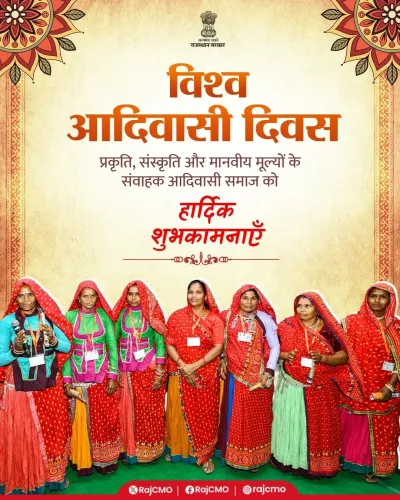
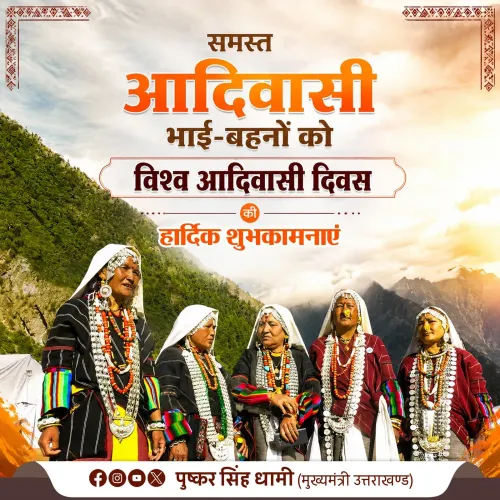
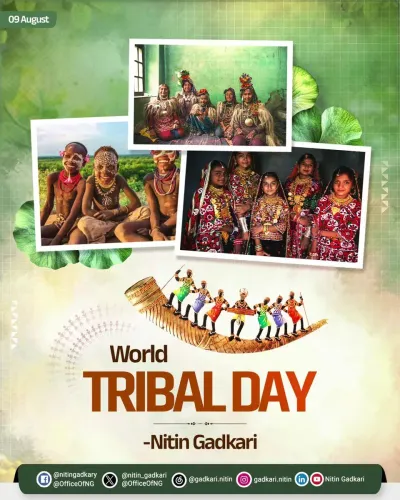
Gujarat CM Bhupendra Patel marks World Tribal Day
Synopsis
On World Tribal Day, 9 August 2026, Gujarat's Chief Minister's Office reaffirmed CM Bhupendra Patel's commitment to Adivasi rights, cultural heritage preservation, and economic self-reliance for the state's tribal communities.
Key Takeaways
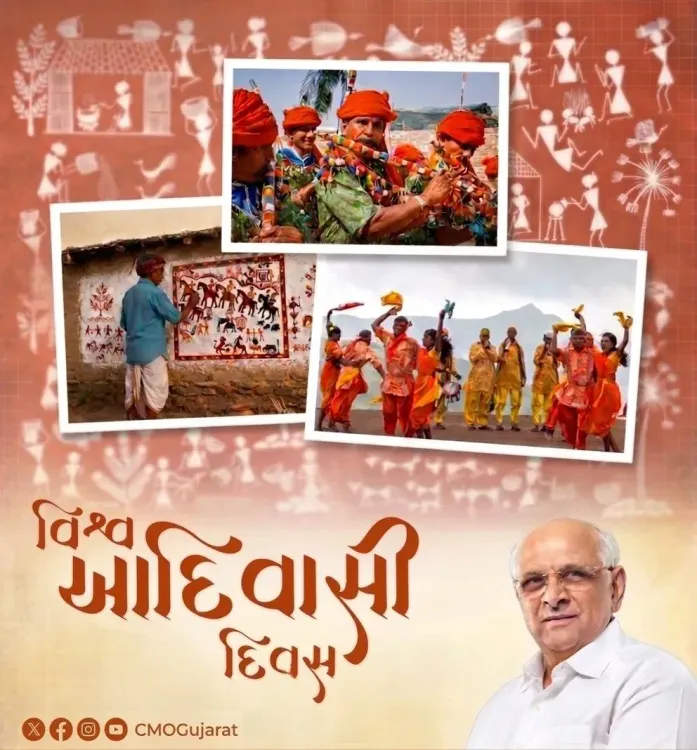
The Chief Minister's Office of Gujarat marked World Tribal Day on 9 August 2026 with a Gujarati-language post on X.
CM Bhupendra Patel was cited as leading the state government's commitment to tribal rights, upliftment, and self-reliance.
The UN designated 9 August as the International Day of the World's Indigenous Peoples via Resolution 49/214 in 1994 .
India's Forest Rights Act, 2006 remains the key legislative framework securing land and resource rights for tribal communities nationally.
Gujarat's approach combines cultural heritage protection with economic self-reliance measures aligned with central schemes for scheduled tribe upliftment.
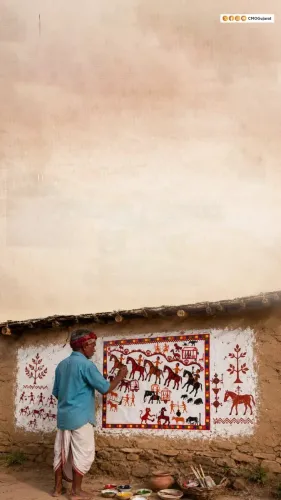
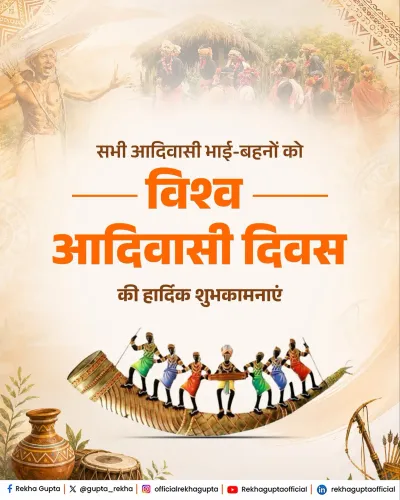
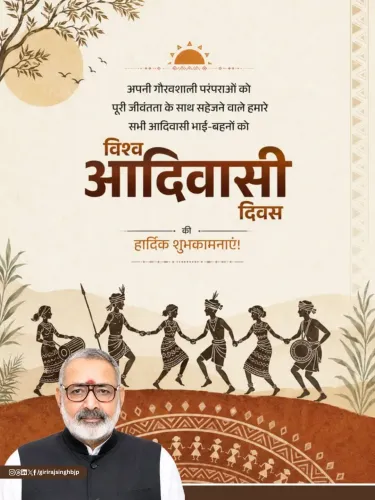
On World Tribal Day, 9 August 2026, the Chief Minister's Office of Gujarat reaffirmed the state government's commitment to the rights, upliftment, and self-reliance of Gujarat's Adivasi communities — pledging to protect their irreplaceable cultural heritage while pushing forward on inclusive development.
Posting in Gujarati, the CMO described today as 'asmita, gaurav ane vikas-yatra ne ujavavanu parva' — a festival to celebrate the identity, pride, and development journey of tribal brethren. The message placed Chief Minister Bhupendra Patel at the centre of that effort, stating that under his leadership the state government stands committed to the 'distinct rights, progress, and self-reliance' of Gujarat's progressive Adivasi society.
Why 9 August matters for India's tribal communities
The date is not incidental. The United Nations General Assembly designated 9 August as the International Day of the World's Indigenous Peoples through Resolution 49/214 in 1994 — anchoring it as a global moment to spotlight indigenous rights, languages, and cultures. India's own legislative milestone came over a decade later: the Scheduled Tribes and Other Traditional Forest Dwellers (Recognition of Forest Rights) Act, 2006, which secured land and resource rights for tribal communities across the country, giving constitutional and legal weight to what the UN resolution had framed in principle.Gujarat's Adivasi population and the heritage-development balance
Gujarat is home to a substantial Adivasi population concentrated in its eastern and southern belt. The state's stated approach has long combined cultural heritage protection — preserving traditional art, language, and customs — with economic self-reliance measures aligned with central government schemes for scheduled tribe upliftment. Bhupendra Patel, who has served as Chief Minister since 2021, has continued that dual-track framework: honour the past, invest in the future. The CMO's post signals that this balance remains a live political and administrative priority — not merely a ceremonial gesture on a calendar date. India's tribal communities have historically sat at the intersection of cultural richness and developmental lag. The real test of any state's commitment is not the tribute posted on 9 August, but the welfare budget lines and scheme rollouts that follow the rest of the year.Point of View
Public reaffirmations of cultural respect and developmental intent carry weight beyond ceremony. Bhupendra Patel's government has positioned tribal welfare as a pillar of Gujarat's inclusive growth narrative, consistent with the BJP's broader national outreach to scheduled tribe constituencies. The real analytical question is whether the rhetorical commitment to 'self-reliance and distinct rights' translates into measurable budgetary and legislative action in the Gujarat assembly. Observers of state tribal policy will watch for concrete scheme rollouts and allocations in the months ahead.
NationPress
9 Aug 2026
Frequently Asked Questions
When is World Tribal Day and why is it celebrated?
World Tribal Day , formally the International Day of the World's Indigenous Peoples , falls on 9 August every year. The UN General Assembly established it through Resolution 49/214 in 1994 to highlight and protect the rights, cultures, and languages of indigenous communities worldwide.
What did the Gujarat government say on World Tribal Day 2026?
The Chief Minister's Office of Gujarat posted on X on 9 August 2026 stating that under CM Bhupendra Patel , the state government is committed to protecting the cultural heritage of Gujarat's Adivasi communities and ensuring their distinct rights, progress, and self-reliance.
Who is Bhupendra Patel and what is his role in tribal welfare?
Bhupendra Patel has served as Chief Minister of Gujarat since 2021 . Under his leadership, the state has continued a dual-track approach to tribal welfare — preserving Adivasi cultural heritage while pursuing economic self-reliance measures aligned with national schemes for scheduled tribe upliftment.
What is India's key law protecting tribal rights?
The Scheduled Tribes and Other Traditional Forest Dwellers (Recognition of Forest Rights) Act, 2006 is India's principal legislation securing land and resource rights for tribal communities, giving legal recognition to their claims over forest land and resources.
What is the Adivasi population situation in Gujarat?
Gujarat has a substantial Adivasi population concentrated in its eastern and southern districts. The state government has implemented targeted welfare and heritage programmes for these communities, aligned with both state priorities and central government schemes for scheduled tribe development.