Gujarat CM breaks ground on ₹2300 Cr e-methanol plant at Kandla
Synopsis
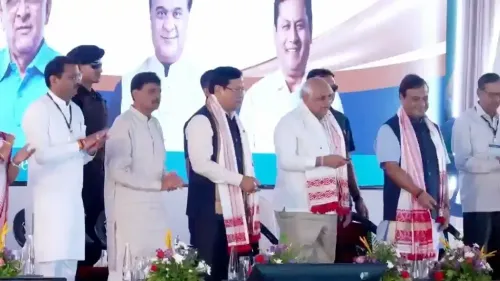
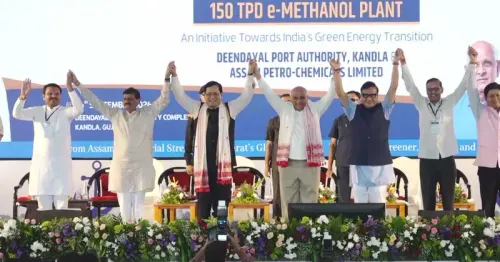
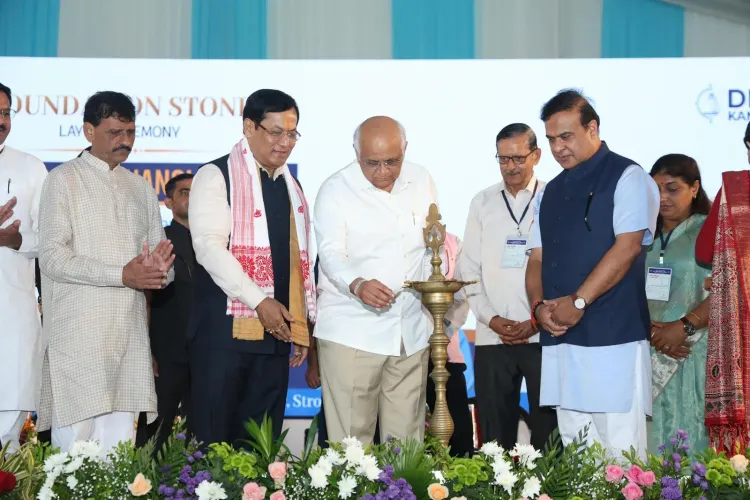
Gujarat CM Bhupendra Patel broke ground on a ₹2,300-crore, 150 TPD e-methanol plant at Gandhidham on 26 September 2026, a joint venture of Deendayal Port Authority and Assam Petro-Chemicals Limited, with Assam CM Himanta Biswa Sarma and Union Minister Sarbananda Sonowal present.
Key Takeaways
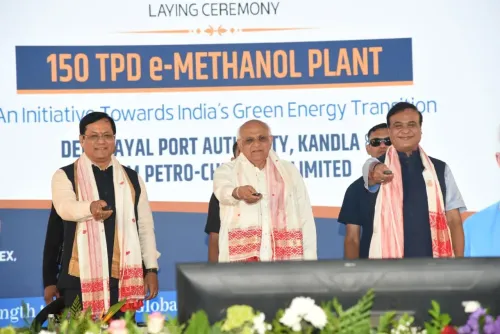
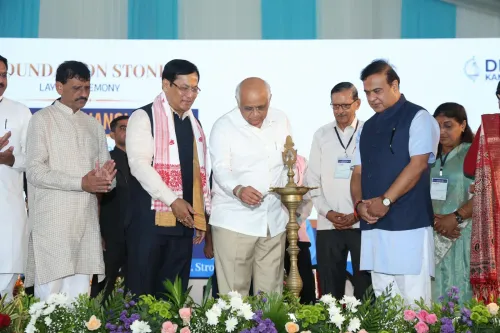
Gujarat CM Bhupendra Patel performed the bhoomi poojan for a ₹2,300-crore e-methanol plant at Gandhidham on 26 September 2026 .
The facility will produce 150 tonnes per day (TPD) of e-methanol and is a joint venture between Deendayal Port Authority, Kandla and Assam Petro-Chemicals Limited .
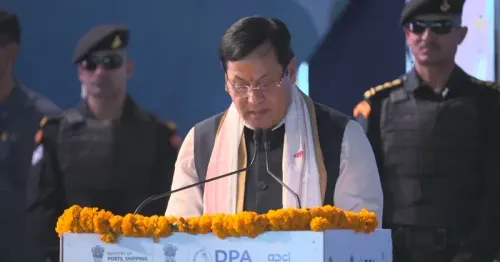
Himanta Biswa Sarma and Union Minister Sarbananda Sonowal attended the ground-breaking ceremony.
The project aligns with the Sagarmala scheme and India's push to decarbonise its maritime sector using alternative fuels.
Assam's methanol economy programme, launched around 2018 , provides the institutional know-how behind the venture.
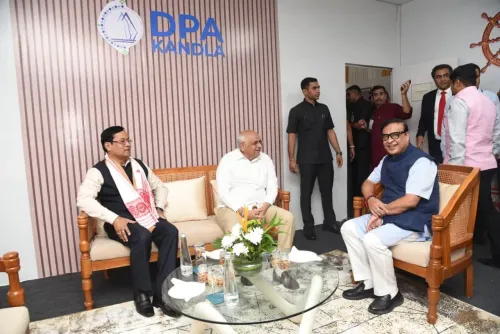
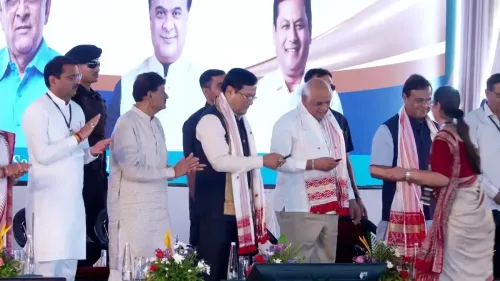
A ₹2,300-crore green fuel plant took its first step into existence on Saturday, 26 September 2026, when Gujarat Chief Minister Bhupendra Patel performed the bhoomi poojan (ground-breaking ceremony) for a 150 TPD e-methanol plant at Gandhidham — a joint venture between Deendayal Port Authority, Kandla and Assam Petro-Chemicals Limited that brings two states' industrial muscle to bear on one of India's most pressing clean-energy challenges.
Two states, one plant: the Gujarat–Assam partnership
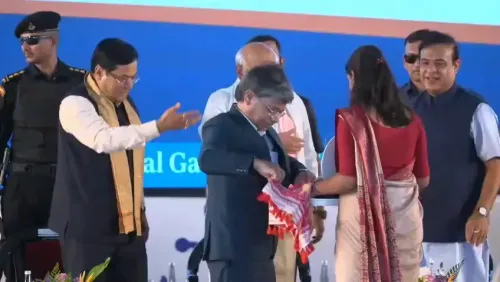
The ceremony was attended by Assam Chief Minister Dr. Himanta Biswa Sarma, Union Minister of Ports, Shipping and Waterways Sarbananda Sonowal, Minister of State for Labour and Employment Kantibhai Amrutiya, and Minister of State for Education Trikambhai Chhanga. The inter-state character of the project is deliberate: Deendayal Port Authority brings maritime infrastructure and a ready industrial corridor, while Assam Petro-Chemicals Limited — a state enterprise with decades of methanol production history — brings the process expertise. Together, they are targeting an output of 150 tonnes per day (TPD) of e-methanol once the facility is operational.
Why e-methanol, and why Kandla
Deendayal Port, one of India's largest cargo ports by volume, sits at the centre of a national push for port-led industrial development under the Sagarmala scheme, running since 2015. E-methanol — produced using renewable energy and green hydrogen — is increasingly seen as a viable low-emission fuel for shipping, and locating a production facility inside a major port precinct shortens the supply chain dramatically. Assam's own methanol economy programme, launched around 2018, has been building institutional know-how that can now be deployed at scale in Gujarat's maritime ecosystem.
India's maritime decarbonisation bet
The project slots neatly into a broader national agenda: reducing emissions from one of the world's most carbon-intensive sectors. Shipping accounts for roughly 3 percent of global greenhouse-gas emissions, and the International Maritime Organization's tightening regulations are pushing Indian ports and fleet operators to find credible fuel alternatives. A domestic e-methanol supply at Kandla — a port that handles everything from crude oil to fertilisers — would reduce import dependence and give Indian shippers a locally priced, cleaner bunkering option. Construction milestones and any central blending mandates for e-methanol will determine how quickly this ambition translates into actual decarbonisation.
Point of View
Assam supplies the petrochemical pedigree, and the Union government's Sagarmala framework supplies the policy runway. For the BJP, which governs both states, the ceremony also doubles as a visible symbol of inter-state coordination in the clean-energy space ahead of likely maritime fuel regulation. The real test, however, is commissioning — India has a long history of ambitious port-industrial projects that stall between ground-breaking and ribbon-cutting. Watchers should track construction timelines and whether the Centre issues e-methanol blending mandates that would create a guaranteed domestic demand curve for the plant's output.
NationPress
26 Sept 2026
Frequently Asked Questions
What is the e-methanol plant announced at Gandhidham?
It is a 150 TPD e-methanol production facility to be built at Gandhidham, Gujarat , at a cost of ₹2,300 crore , jointly by Deendayal Port Authority, Kandla and Assam Petro-Chemicals Limited . The ground-breaking ceremony was held on 26 September 2026.
Who attended the bhoomi poojan of the Kandla e-methanol plant?
Gujarat CM Bhupendra Patel performed the ceremony, with Assam CM Dr. Himanta Biswa Sarma , Union Minister Sarbananda Sonowal , MoS Kantibhai Amrutiya , and MoS Trikambhai Chhanga also present.
What is e-methanol and why is it important for shipping?
E-methanol is methanol produced using renewable energy and green hydrogen, making it a low-emission alternative fuel. For shipping, it offers a cleaner bunkering option as international regulations tighten on vessel emissions.
What is Assam Petro-Chemicals Limited's role in this project?
Assam Petro-Chemicals Limited is a state enterprise with an established methanol production background, stemming from Assam's methanol economy programme launched around 2018. It is a co-promoter of the joint venture alongside Deendayal Port Authority.
How does the Kandla e-methanol plant connect to the Sagarmala scheme?
The Sagarmala scheme , launched in 2015 , promotes port-led industrial development across India. The Gandhidham plant, located within the Deendayal Port precinct, is an example of Sagarmala's framework being used to anchor green-fuel infrastructure at a major cargo hub.