CM Bhupendra Patel at Ground-Breaking of 150 TPD E-Methanol Plant in Kandla
Synopsis
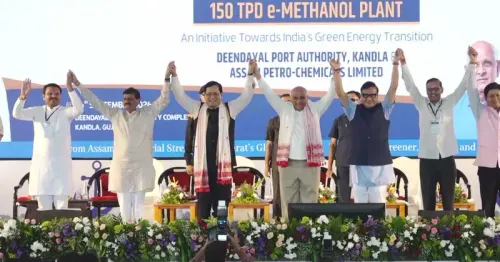
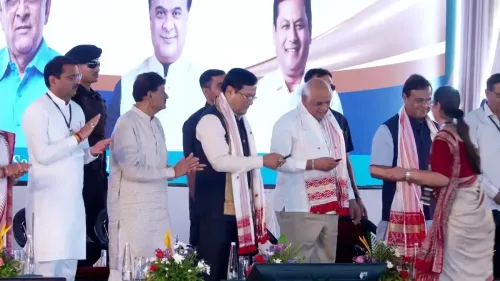
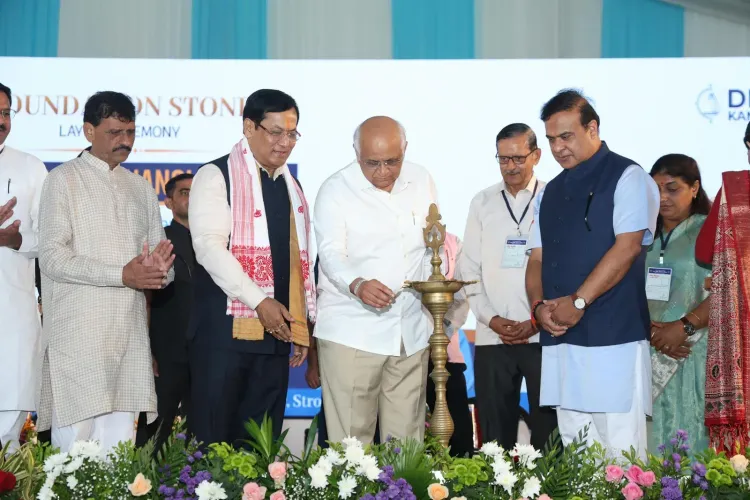
Gujarat CM Bhupendra Patel, Assam CM Himanta Biswa Sarma, and Union Minister Sarbananda Sonowal inaugurated the ground-breaking of Assam Petrochemicals' 150 TPD e-methanol plant at Deendayal Port, Kandla — a flagship inter-state green energy and shipping initiative under the Ek Bharat, Shreshtha Bharat vision.
Key Takeaways
Assam Petrochemicals Ltd. will set up a 150 TPD e-methanol plant at Deendayal Port Authority Complex, Kandla, Kutch .
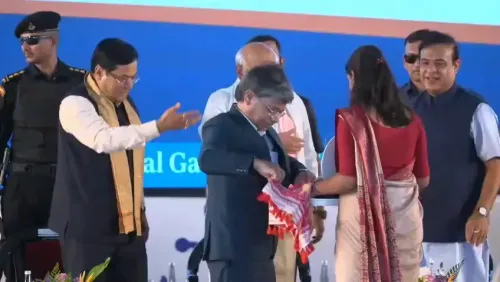
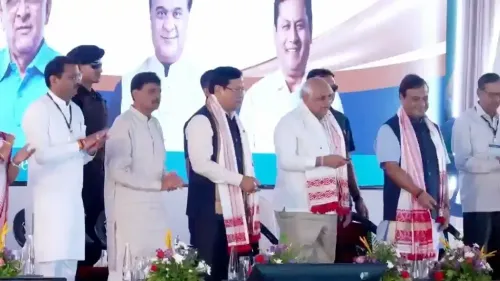
The bhoomi pujan was attended by Gujarat CM Bhupendra Patel , Assam CM Himanta Biswa Sarma , and Union Minister Sarbananda Sonowal on September 26, 2026 .
The project combines Assam's petrochemical manufacturing capability with Gujarat's maritime infrastructure at one of India's busiest ports.
Deendayal Port (formerly Kandla Port, renamed 2017 ) is a key node of the Central government's Sagarmala port-led industrialisation programme.
CM Patel described the project as a 'living example' of the Ek Bharat, Shreshtha Bharat scheme, launched in 2015 to foster inter-state economic integration.
Commissioning timeline and investment details for the plant have not yet been made public.
A port that handles hundreds of millions of tonnes of cargo every year just became the launchpad for India's green fuel ambitions. On Saturday, September 26, 2026, Gujarat Chief Minister Bhupendra Patel joined Assam Chief Minister Himanta Biswa Sarma and Union Minister Sarbananda Sonowal for the ground-breaking ceremony of a new 150 tonnes-per-day (TPD) e-methanol plant by Assam Petrochemicals Ltd. at the Deendayal Port Authority Complex, Kandla, Kutch.
Gujarat's coast meets Assam's industrial muscle
The project sits at the intersection of two state economies that rarely share a stage. Assam Petrochemicals Ltd., a state public-sector unit with decades of methanol manufacturing experience in the Northeast, is planting its newest and greenest facility not on home ground but on the shores of Kutch — leveraging the unmatched cargo throughput and maritime connectivity of Deendayal Port Authority, one of India's busiest ports by volume. CM Patel, posting in Hindi on X, called it 'an extraordinary convergence of Gujarat's rich maritime strength and Assam's industrial capacity in the precinct of Deendayal Port.'
That convergence is deliberate policy design, not coincidence. The port was renamed from Kandla Port to Deendayal Port in 2017, and since then it has been a centrepiece of the central government's port-led industrialisation drive under the Sagarmala programme. Hosting a downstream green fuel unit here follows the same logic: build capacity where ships dock, so fuel reaches vessels without crossing half the country by rail.
Why e-methanol, and why now
E-methanol — methanol produced from green hydrogen and captured carbon dioxide — is emerging as one of the most viable low-emission fuels for maritime transport. Global shipping is under mounting pressure to cut its carbon intensity, and Indian ports are racing to position themselves as green-fuel bunkering hubs. A 150 TPD facility at Kandla places India inside that global conversation in a concrete, measurable way.
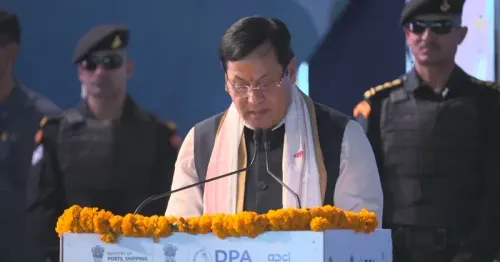
Union Minister Sonowal, who leads the Ministry of Ports, Shipping and Waterways and previously served as Assam's Chief Minister between 2016 and 2021, is a central thread connecting both states to this project. His ministry has actively promoted green fuel projects at major ports, and his presence at the bhoomi pujan (ground-breaking) underlines the Centre's direct stake in seeing this facility succeed. India's methanol economy push, championed by the Ministry of Petroleum and Natural Gas since the mid-2010s, now finds a new node on the western coastline.
'Ek Bharat, Shreshtha Bharat' in steel and concrete
CM Patel explicitly framed the project as a 'living example' of the Ek Bharat, Shreshtha Bharat vision — the 2015 Central initiative designed to foster cultural and economic integration between India's states. The phrase is often deployed ceremonially, but here it maps onto an actual capital asset: a petrochemical plant financed by an Assam PSU, built on Gujarat soil, serving a national and international shipping corridor.
Kutch has long anchored India's energy and chemical coastline, from Mundra's private port to the industrial clusters that spread inland from the Gulf. Adding an e-methanol production unit at Kandla deepens that identity and signals that Gujarat's maritime infrastructure is ready to absorb the next generation of clean-energy projects — not just facilitate the old ones.
The commissioning timeline and commercial offtake agreements for the plant are yet to be made public. But the ground is broken, three governments are aligned, and a port that has quietly handled India's cargo for decades just made its loudest statement yet about where the country's energy future is headed.
Point of View
The Centre demonstrates that the Sagarmala programme is beginning to attract downstream manufacturing — not just infrastructure investment. For CM Patel, hosting this project reinforces Gujarat's pitch as the country's premier maritime-industrial corridor at a time when green shipping is moving from aspiration to commercial tender. The dual presence of a state CM and the Cabinet minister for ports also signals that inter-state rivalry is being deliberately converted into inter-state supply chains — a model that, if it delivers on capacity, could reshape how India meets its maritime decarbonisation commitments.
NationPress
26 Sept 2026
Frequently Asked Questions
What is the e-methanol plant being built at Kandla?
Assam Petrochemicals Ltd. is setting up a 150 TPD (tonnes per day) e-methanol plant at the Deendayal Port Authority Complex in Kandla, Kutch, Gujarat . E-methanol is a low-emission fuel produced from green hydrogen and carbon dioxide, intended to support green shipping.
Who attended the ground-breaking ceremony at Deendayal Port on September 26, 2026?
Gujarat Chief Minister Bhupendra Patel , Assam Chief Minister Himanta Biswa Sarma , and Union Minister Sarbananda Sonowal (Minister for Ports, Shipping and Waterways) attended the bhoomi pujan on September 26, 2026 .
What is Assam Petrochemicals Ltd.?
Assam Petrochemicals Ltd. is an Assam state public-sector undertaking with existing methanol and petrochemical manufacturing facilities in the Northeast. The Kandla plant marks its first major facility in Gujarat.
What is Deendayal Port Authority?
Deendayal Port Authority , located in Kandla, Kutch, Gujarat , is one of India's busiest ports by cargo volume. It was renamed from Kandla Port in 2017 and is a central hub for the government's Sagarmala port-led industrialisation programme.
How does this project relate to Ek Bharat Shreshtha Bharat?
CM Patel described the project as a direct example of the Ek Bharat, Shreshtha Bharat initiative — a 2015 Central scheme to strengthen economic and cultural ties between Indian states. Here, Assam's industrial capacity and Gujarat's maritime infrastructure are combined at a single facility.