Sonowal lays foundation of e-Methanol Plant at Kandla Port
Synopsis
Union Minister Sarbananda Sonowal attended the foundation-laying of a 150 TPD e-Methanol Plant at Deendayal Port, Kandla — a joint initiative of Assam Petro-Chemicals Limited and the port authority — to build domestic green-fuel capacity for Indian shipping.
Key Takeaways
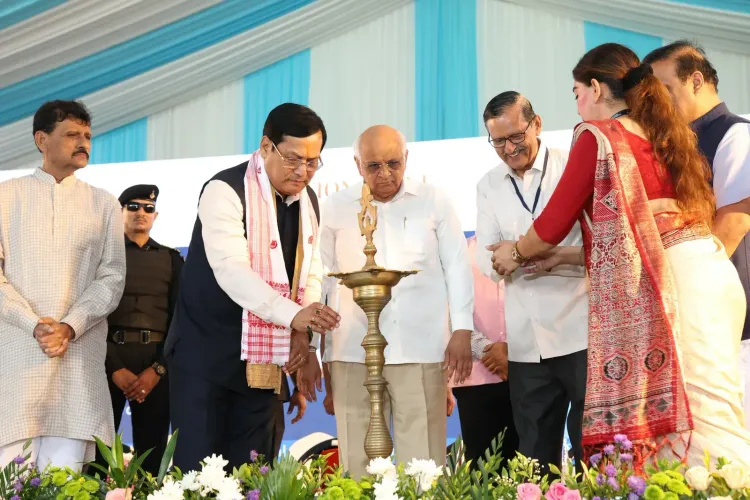
Union Minister Sarbananda Sonowal laid the foundation of a 150 TPD e-Methanol Plant at Deendayal Port, Kandla on 26 September 2026 .
The plant is jointly developed by Assam Petro-Chemicals Limited (APL) and Deendayal Port Authority .
The project aims to produce green maritime fuel domestically, reducing dependence on imported hydrocarbons for shipping.
It aligns with India's Maritime India Vision 2030 and the broader Atmanirbhar Bharat self-reliance framework.
The initiative is expected to support cleaner shipping, local job creation, and national energy security.
Successful commissioning could serve as a template for green-fuel infrastructure at other major Indian ports.
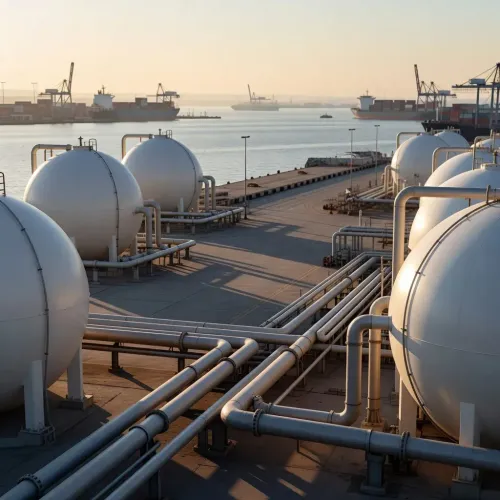
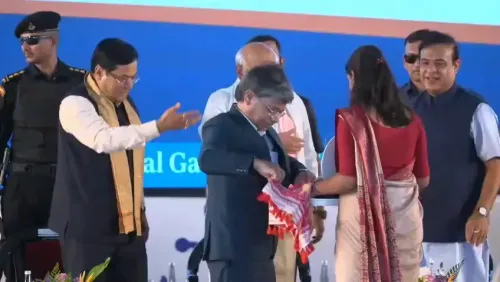
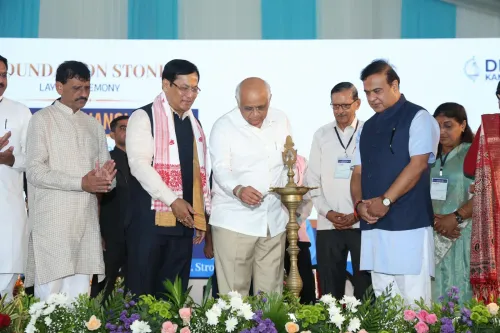
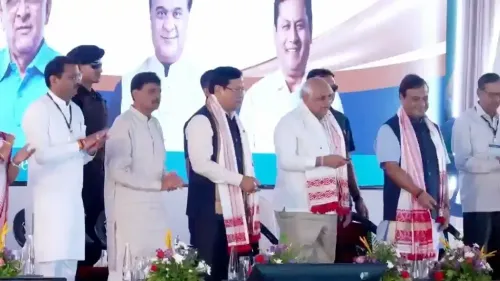
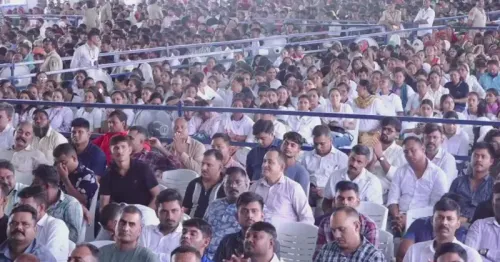
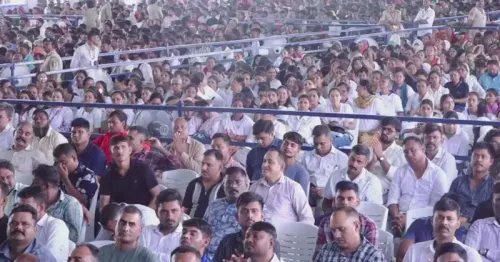
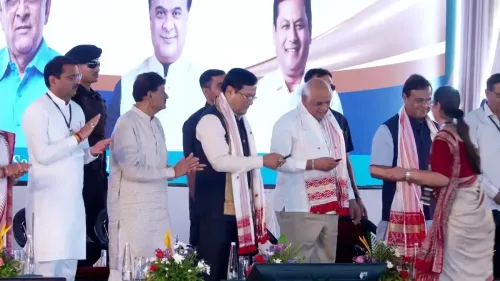
A new chapter in India's green maritime ambitions opened at Kandla, Gujarat, on Saturday, 26 September 2026, as Union Minister of Ports, Shipping and Waterways Sarbananda Sonowal attended the 'Shilanyas' — the foundation-laying — of a 150 TPD e-Methanol Plant at Deendayal Port. The plant is a joint venture between Assam Petro-Chemicals Limited (APL) and the port authority, and its groundbreaking marks one of the most concrete steps yet toward domestically produced green fuel for Indian shipping.
An unlikely partnership that makes strategic sense
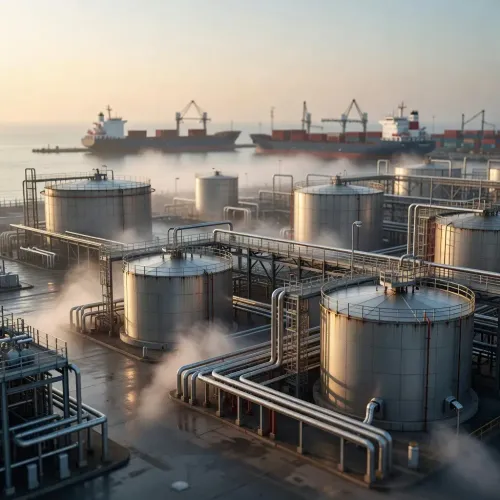
Assam Petro-Chemicals Limited, a state-owned enterprise with decades of methanol production experience in the northeast, is teaming up with Deendayal Port Authority — India's largest port by cargo volume, located in the Kutch district of Gujarat. The pairing looks unusual on a map, but it is deliberate policy architecture: APL brings the chemistry expertise, Deendayal brings the maritime gateway. Together, they are building local green-fuel capability that could one day refuel ships without relying on imported hydrocarbons.
Sonowal underlined all four of the project's ambitions in his post: 'cleaner shipping, boosting jobs and strengthening our nation's energy security.' Three objectives, one plant, one foundation stone. That is the pitch.
Why e-Methanol, and why now
Electro-methanol — produced by combining green hydrogen with captured carbon dioxide — is emerging globally as a credible zero-emission marine fuel. Major international shipping lines have already ordered methanol-capable vessels, and the International Maritime Organization has tightened its emission-reduction targets for the sector. India's Maritime India Vision 2030, unveiled in 2021, had already flagged green ports and sustainable maritime fuels as a national priority. The Kandla plant, if commissioned on schedule, would give India an indigenous supply anchor rather than leaving its ports dependent on imports of marine fuel alternatives.
The project also slots neatly into the Atmanirbhar Bharat framework — self-reliance not just in defence or electronics, but in the energy that moves goods through India's seas. That framing matters politically and economically.
What the commissioning clock means for Indian ports
The real test, as with every Shilanyas, is what comes after the foundation stone. Industry watchers will track the commissioning timeline closely — and, perhaps more importantly, whether a proven Kandla model gets replicated at other major ports. India operates 13 major ports, and a network-level green-fuel supply chain would substantially change the economics of decarbonised shipping on Indian trade routes.
For Sonowal, who has steered port modernisation and waterway expansion since taking charge of the ministry, the Kandla groundbreaking is a visible deliverable that connects his home state's industrial capacity — through APL, an Assam enterprise — to a Gujarat port of national consequence. The symbolism of that geographic bridge is hard to miss.
Green fuel on Indian seas is no longer just a policy aspiration. The foundation has literally been laid.
Point of View
Bridging Maritime India Vision 2030 targets with Atmanirbhar Bharat's self-reliance imperatives. The pairing of Assam Petro-Chemicals Limited — a northeast state enterprise — with Gujarat's Deendayal Port reflects deliberate cross-regional industrial integration, not just green optics. For Minister Sonowal, it also carries political resonance: routing Assamese industrial capacity into a nationally significant port project strengthens his footprint across both his home state and the maritime ministry's mandate. The commissioning timeline will determine whether this becomes a replicable model or remains a solitary milestone.
NationPress
26 Sept 2026
Frequently Asked Questions
What is the e-Methanol Plant at Kandla Port?
It is a 150 TPD (tonnes per day) electro-methanol production plant being built at Deendayal Port, Kandla, Gujarat , jointly developed by Assam Petro-Chemicals Limited and Deendayal Port Authority to produce green marine fuel domestically.
Who laid the foundation stone of the Kandla e-Methanol Plant?
Union Minister of Ports, Shipping and Waterways Sarbananda Sonowal attended the Shilanyas (foundation-laying ceremony) at Kandla on 26 September 2026 .
What is Assam Petro-Chemicals Limited?
Assam Petro-Chemicals Limited (APL) is a state-owned company based in Assam with expertise in methanol production and downstream petrochemicals. It is the industrial partner in the Kandla green-fuel project.
Why is e-Methanol important for shipping?
E-Methanol, produced using green hydrogen and captured CO2, is a low-emission marine fuel. It helps shipping companies meet International Maritime Organization decarbonisation targets and reduces India's reliance on imported fossil-based marine fuels.
How does the Kandla plant fit into India's Maritime India Vision 2030?
Maritime India Vision 2030 , released in 2021 , set out plans for green ports and sustainable maritime fuels. The Kandla e-Methanol Plant is a direct implementation step under that vision, combined with the Atmanirbhar Bharat self-reliance push.