Ahmedabad's 149th Jagannath Rath Yatra begins as Gujarat CM performs Pahand Vidhi
Synopsis
Ahmedabad's 149th Jagannath Rath Yatra got under way on 16 July with Gujarat CM Bhupendra Patel performing the Pahand Vidhi and Union Minister Amit Shah attending the Mangala Aarti. With 18 elephants, 31,000 security personnel, AI surveillance, and new elephant-tracking systems introduced after last year's incidents, this year's edition of India's second-largest Rath Yatra is its most tightly managed yet.
Key Takeaways
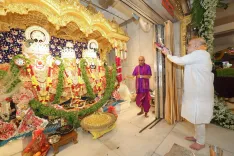
Gujarat CM Bhupendra Patel performed the Pahand Vidhi — sweeping the chariot path with a golden broom — at Shree Jagannath Mandir, Jamalpur, Ahmedabad on 16 July .
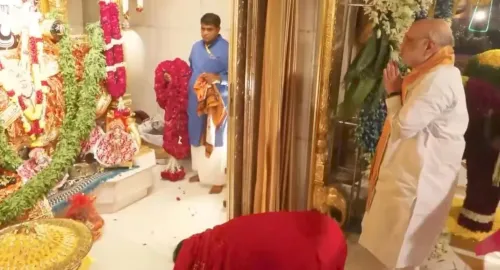
Union Minister Amit Shah attended the Mangala Aarti and offered prayers before the deities were placed on the chariots.
The 149th Ahmedabad Rath Yatra is regarded as India's second-largest after Puri, drawing lakhs of devotees annually.
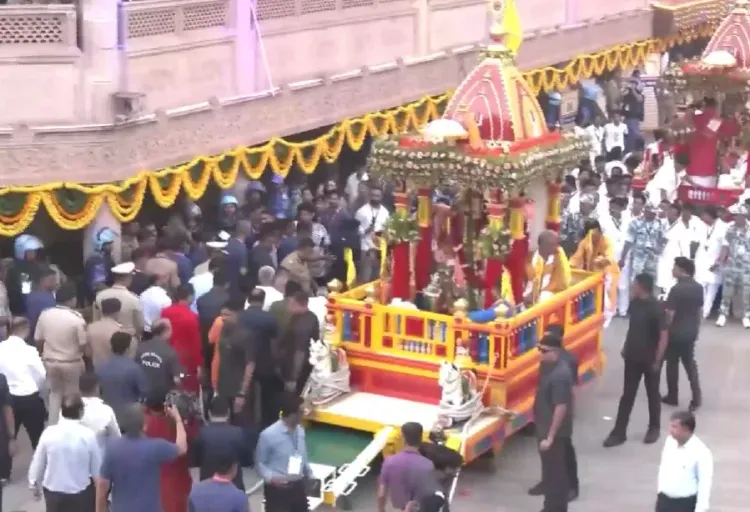
This year's procession features 18 elephants , three main chariots, and dozens of akhadas along a 16.2-km traditional route.
More than 31,000 security personnel are deployed, backed by AI surveillance, drones, facial recognition, and new GPS-based elephant monitoring systems .
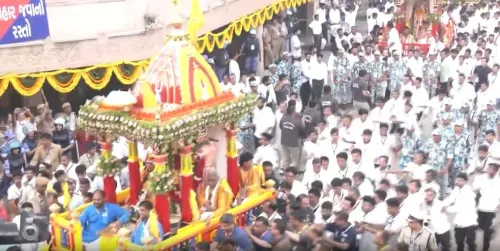
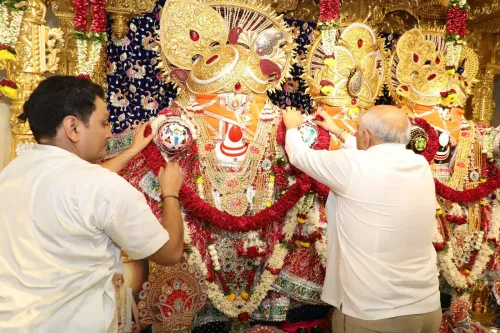
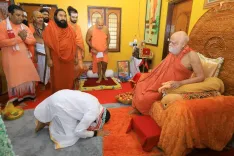
Gujarat Chief Minister Bhupendra Patel on Thursday, 16 July performed the traditional Pahand Vidhi at the historic Shree Jagannath Mandir in the Jamalpur area of Ahmedabad, ceremonially launching the city's 149th Jagannath Rath Yatra. The ritual marked the formal commencement of one of Gujarat's largest and most revered religious processions, drawing lakhs of devotees to the streets of Ahmedabad.
The Pahand Vidhi Ritual
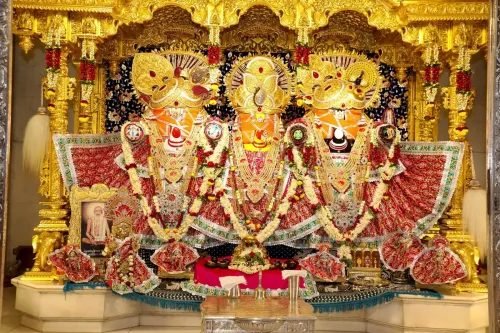
The Pahand Vidhi is a centuries-old tradition in which the Chief Minister symbolically sweeps the path before the chariots using a golden broom, an act signifying humility and selfless service before Lord Jagannath. The ritual is performed just before the three sacred chariots — carrying the idols of Lord Jagannath, Lord Balabhadra, and Devi Subhadra — depart the temple for their annual journey through the city.
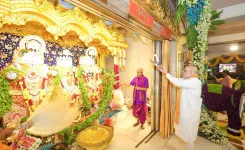
Thousands of devotees gathered at the Shree Jagannath Mandir in the early hours to witness the ritual and the procession's commencement. Earlier in the morning, Union Home and Cooperation Minister Amit Shah attended the Mangala Aarti and offered prayers at the temple before the deities were placed on the chariots.
Scale and Significance
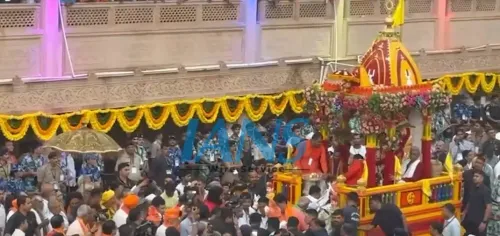
The annual Rath Yatra is held on the occasion of Ashadhi Bij and begins from the nearly 400-year-old Shree Jagannath Mandir in Jamalpur, following its traditional route across Ahmedabad before the chariots return to the temple later in the day. Regarded as India's second-largest Jagannath Rath Yatra after the one in Puri, the procession draws lakhs of devotees annually.
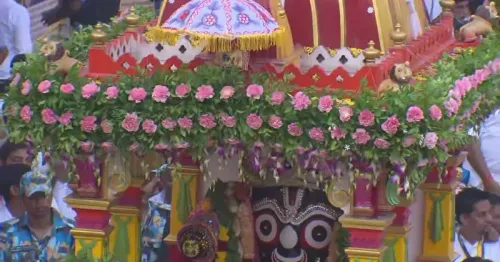
This year's yatra features the three main chariots, 18 elephants, dozens of akhadas, devotional music groups, and elaborately decorated tableaux — a spectacle that reflects both deep religious fervour and centuries of cultural tradition.
Security and Civic Arrangements
Authorities have deployed more than 31,000 police and security personnel along the traditional 16.2-km route. The security apparatus is supported by artificial intelligence-enabled surveillance, facial recognition technology, drones, high-resolution CCTV cameras, and body-worn cameras to monitor the procession in real time.
Notably, this year has seen the introduction of special elephant monitoring systems, GPS trackers, and movement sensors — enhancements made in direct response to incidents involving elephants during last year's Rath Yatra.
Civic Infrastructure in Place
The Ahmedabad Municipal Corporation and allied agencies have arranged sanitation, drinking water, medical services, emergency response, traffic management, and uninterrupted civic services along the route. Police have also established a multi-layered security grid across the entire 16.2-km corridor to ensure the safe and smooth conduct of the procession.
With its scale, heritage, and the participation of senior national leaders, Ahmedabad's Rath Yatra continues to affirm its standing as one of India's most significant religious gatherings — and the city will watch closely as the chariots complete their sacred journey through the day.
Point of View
000 personnel, AI cameras, facial recognition, and now GPS elephant trackers — reflects a broader pattern of high-profile religious events becoming logistical mega-operations under state watch. The elephant monitoring upgrade is a direct admission that last year's incidents were avoidable, and the question for authorities is whether technology substitutes for systemic animal welfare protocols or merely layers surveillance over unresolved risks. Meanwhile, the attendance of a Union Cabinet minister at the Mangala Aarti underscores how deeply embedded these religious occasions have become in the political calendar — a trend that cuts both ways on questions of state-religion separation.
NationPress
16 Jul 2026
Frequently Asked Questions
What is the Pahand Vidhi performed at the Jagannath Rath Yatra?
The Pahand Vidhi is a centuries-old ritual in which a senior dignitary — traditionally the Chief Minister in Ahmedabad — symbolically sweeps the path before the chariots with a golden broom, signifying humility and service before Lord Jagannath. It is performed just before the three chariots carrying Lord Jagannath, Lord Balabhadra, and Devi Subhadra depart the temple.
Which edition is the 2025 Ahmedabad Jagannath Rath Yatra?
This year's procession is the 149th edition of the Ahmedabad Jagannath Rath Yatra, held on 16 July on the occasion of Ashadhi Bij. It begins from the nearly 400-year-old Shree Jagannath Mandir in the Jamalpur area of Ahmedabad.
How does the Ahmedabad Rath Yatra compare to Puri's?
The Ahmedabad Rath Yatra is regarded as India's second-largest Jagannath Rath Yatra after the one held in Puri, Odisha. It draws lakhs of devotees each year and follows a traditional 16.2-km route through the city.
What security arrangements are in place for the 2025 Rath Yatra?
More than 31,000 police and security personnel have been deployed along the 16.2-km route, supported by AI-enabled surveillance, facial recognition technology, drones, high-resolution CCTV cameras, and body-worn cameras. New GPS trackers and movement sensors for elephant monitoring have also been introduced following incidents during last year's yatra.
Who attended the Rath Yatra ceremonies alongside Gujarat CM Bhupendra Patel?
Union Home and Cooperation Minister Amit Shah attended the Mangala Aarti and offered prayers at Shree Jagannath Mandir before the deities were placed on the chariots, ahead of CM Bhupendra Patel's Pahand Vidhi performance.