Gujarat CM Bhupendra Patel Marks Doctors' Day, Links Swachh Bharat to Health
Synopsis
On National Doctors' Day, Gujarat Chief Minister Bhupendra Patel called cleanliness and health 'complementary to each other', outlined PM Modi's Swachh Bharat initiatives, and urged all citizens to make hygiene a personal habit for a cleaner, healthier Gujarat.
Key Takeaways
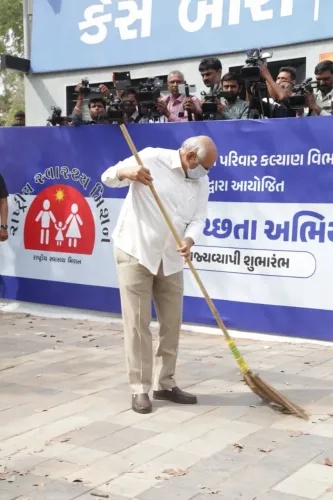
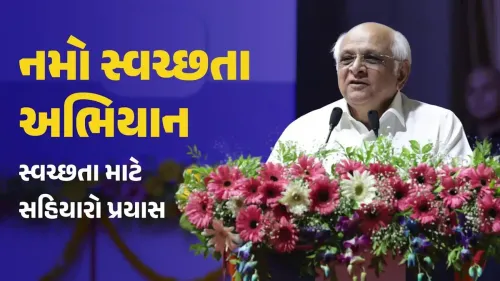
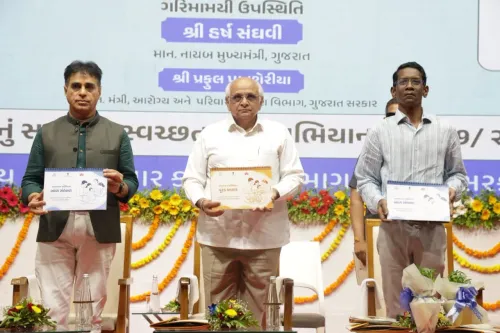
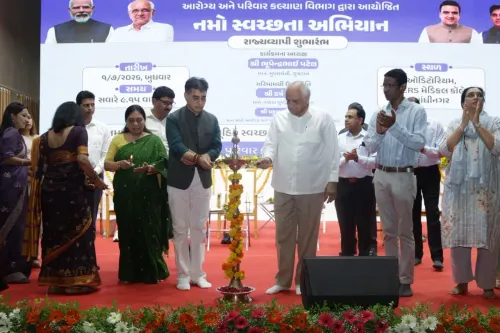
Gujarat Chief Minister Bhupendra Patel marked National Doctors' Day on 1 July 2026 with a public address linking sanitation to health.
He stated that 'cleanliness and health are complementary to each other', echoing the Swachh Bharat Mission's foundational premise.
The Chief Minister outlined multiple initiatives taken by PM Narendra Modi under the Swachh Bharat Mission , launched on 2 October 2014 .
He appealed to all citizens to make cleanliness a personal habit — 'swabhav' — and contribute to a Swachh Gujarat through collective effort.
Gujarat has participated in Swachh Bharat phases since 2014, with several districts declared open-defecation-free in successive rounds.
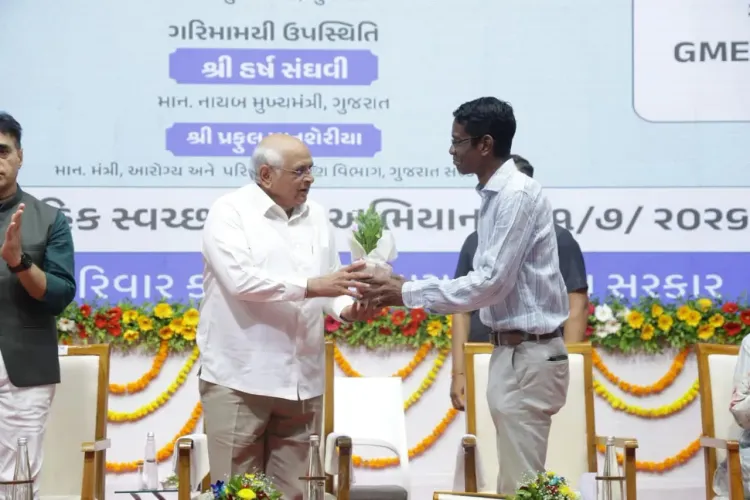
The Chief Minister's Office of Gujarat shared remarks by Chief Minister Bhupendra Patel on Wednesday, 1 July 2026, as he extended greetings on National Doctors' Day and underscored the inseparable link between cleanliness and public health, calling on all citizens to make hygiene a personal habit in the pursuit of a 'Swachh Gujarat'.
Context
National Doctors' Day is observed every year on 1 July across India to honour the medical profession and commemorate the birth and death anniversary of the legendary physician and statesman Dr. Bidhan Chandra Roy. Chief Minister Patel used the occasion to address citizens and health workers, framing the day not only as a tribute to doctors but also as a call to action on preventive public health through sanitation.
Speaking at the event, the Chief Minister stated — in the original Gujarati, 'સ્વચ્છતા અને સ્વાસ્થ્ય બંને એકબીજાના પૂરક છે' ('Cleanliness and health are complementary to each other') — a formulation that echoes the core philosophy behind national sanitation policy since 2014.
Policy Backdrop
Prime Minister Narendra Modi launched the Swachh Bharat Mission on 2 October 2014 with the explicit goal of ending open defecation and embedding hygiene as a public-health imperative across India. Gujarat was among the early participating states, with multiple districts declared open-defecation-free in successive phases of the mission.
Chief Minister Patel outlined several initiatives taken under PM Modi's leadership that connect sanitation directly to health outcomes, reinforcing the national campaign's central argument that a cleaner environment reduces the disease burden on communities and eases pressure on the healthcare system. The Swachh Gujarat campaign has since evolved from an infrastructure push into a behavioural drive urging citizens to internalise cleanliness as a daily value.
Stakeholders and Impact
The messaging is directed at three overlapping audiences: Gujarat's medical community, whose professional mission is eased when preventive hygiene reduces communicable disease; public health and sanitation workers who implement ground-level programmes; and ordinary citizens whose daily habits ultimately determine whether campaign gains are sustained.
By linking Doctors' Day to the Swachh Gujarat agenda, the state government signals that health outcomes are a shared civic responsibility, not solely a medical-system challenge. The appeal for 'collective effort' — 'સહિયારા પ્રયાસ' ('sahiyara prayas') — positions hygiene behaviour as a community norm rather than a top-down directive.
What's Next
Observers will watch for state-level Swachh Gujarat review meetings and any new district-level sanitation-health convergence programmes announced in the 2026-27 budget cycle. The convergence of National Doctors' Day messaging with the Swachh Bharat framework suggests the Gujarat government may use the second half of the fiscal year to announce measurable targets linking sanitation indicators to health metrics.
If the state follows through with concrete programme announcements, it could serve as a model for how other BJP-governed states translate decade-old campaign infrastructure into sustained public-health dividends — making the symbolic occasion a policy milestone as well.
Point of View
The Gujarat government is doing something strategically deliberate: converting a tribute moment into a behavioural nudge. This approach reflects a broader BJP playbook of using commemorative days to reinforce flagship schemes and keep them in public consciousness well beyond their launch cycles. The framing of cleanliness as 'swabhav' (innate nature) rather than a government programme is significant — it shifts ownership from the state to the citizen, which is precisely how durable public-health norms are built. Whether the rhetoric translates into measurable 2026-27 programme announcements will determine whether this is policy signalling or seasonal messaging.
NationPress
29 Sept 2026
Frequently Asked Questions
Why is National Doctors' Day celebrated on 1 July in India?
National Doctors' Day is observed on 1 July every year to mark the birth and death anniversary of eminent physician and former West Bengal Chief Minister Dr. Bidhan Chandra Roy , honouring the contributions of the medical profession to society.
What did Gujarat CM Bhupendra Patel say on National Doctors' Day 2026?
Chief Minister Bhupendra Patel stated that 'cleanliness and health are complementary to each other', outlined PM Modi's sanitation initiatives under the Swachh Bharat Mission, and urged citizens to make hygiene a personal habit to build a Swachh Gujarat.
What is the Swachh Bharat Mission and how does it relate to health?
The Swachh Bharat Mission was launched by Prime Minister Narendra Modi on 2 October 2014 to eliminate open defecation and improve sanitation across India. It is directly tied to health outcomes because poor sanitation is a leading driver of communicable diseases.
What is Swachh Gujarat?
Swachh Gujarat is the state-level extension of the Swachh Bharat Mission, under which Gujarat has declared multiple districts open-defecation-free and runs behavioural campaigns urging citizens to adopt cleanliness as a daily value.
Who is Gujarat's Chief Minister in 2026?
Bhupendra Patel is the Chief Minister of Gujarat. He took office in September 2021 and has continued the state's alignment with central government flagship programmes including Swachh Bharat.