Gujarat CMO Showcases State's Tourism Gems on World Tourism Day
Synopsis
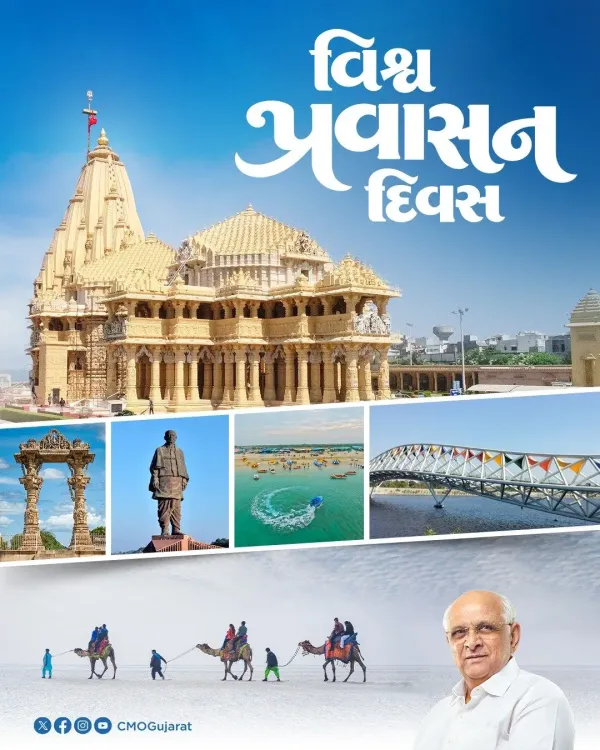
On World Tourism Day 2026, Gujarat's Chief Minister's Office promoted the state's tourism wealth — from the moonlit Rann of Kutch and Gir's Asiatic lions to Somnath, Dwarka, the Statue of Unity, Modhera Sun Temple and Shivrajpur beach — under the ethos of 'Atithi Devo Bhava'.
Key Takeaways
Gujarat's CMO posted a World Tourism Day message on 27 September 2026 , inviting domestic and international visitors to the state.
The Rann of Kutch and Gir National Park — home to the world's only wild Asiatic lions — were highlighted as flagship natural attractions.
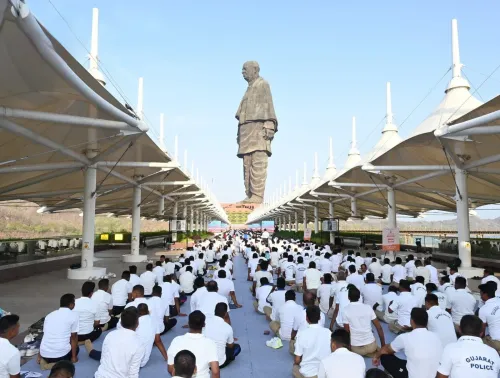
Pilgrimage sites Somnath and Dwarka , alongside the Statue of Unity (inaugurated October 2018 ), were named as centrepieces of Gujarat's heritage-tourism offer.
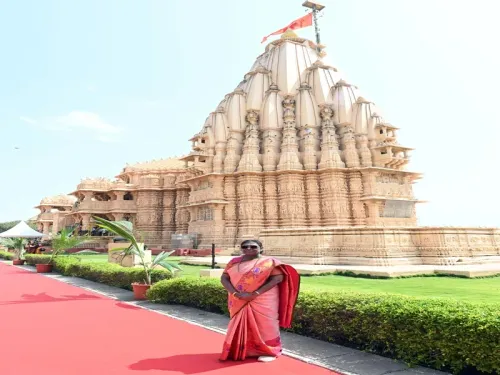
Heritage monuments Modhera Sun Temple (11th century) and Patan's Rani ki Vav stepwell were cited as architectural landmarks.
The post invoked the Sanskrit principle Atithi Devo Bhava ('The guest is God') as the spirit underpinning Gujarat's tourism welcome.
Gujarat has positioned tourism as a strategic economic sector since the first Vibrant Gujarat summit in 2003 .
On World Tourism Day, 27 September, the Chief Minister's Office of Gujarat sent out an open invitation to the world — beckoning travellers to a state where salt deserts shimmer under a full moon, ancient temples anchor a living faith, and the planet's last wild Asiatic lions roar through sunlit forests.
The post, shared in Gujarati, described the experience of Gujarat's land as a triveni sangam — a confluence of three rivers — of 'natural diversity, ancient heritage and modern development.' Invoking the timeless Sanskrit principle Atithi Devo Bhava ('The guest is God'), the message welcomed visitors to 'savour the beauty and culture' of Gujarati soil.
From Kutch's White Desert to Gir's Roar
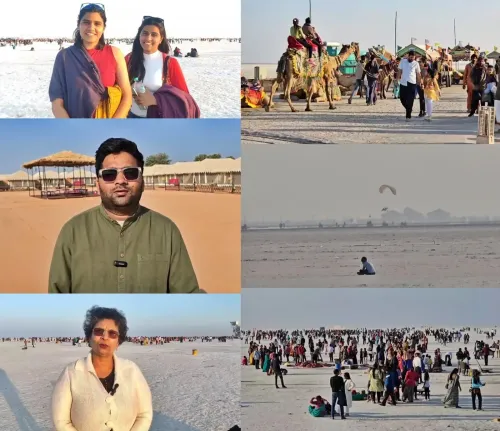
The post opened its travelogue with two of Gujarat's most cinematic landmarks. The Rann of Kutch — a vast white salt desert in western Gujarat — offers what the message called 'the magnificent spectacle of moonlight blooming in full splendour,' a reference to the magical landscape best experienced during winter nights and the annual Rann Utsav cultural festival. Due south, Gir National Park, the sole remaining habitat of the Asiatic lion, promises the 'thrilling roars of the forest king' — a wildlife tourism draw found nowhere else on earth.
Pilgrimage, Pride and the World's Tallest Statue
The message then swept eastward across centuries of devotion and modern ambition. The Somnath Temple, one of India's twelve Jyotirlinga shrines and a monument rebuilt through centuries of invasion and renewal, stands alongside Dwarka — one of Hinduism's seven sacred cities — as a pilgrimage axis that draws millions annually. Anchoring the state's contemporary identity is the Statue of Unity, the world's tallest statue at 182 metres, inaugurated in October 2018 as a tribute to Sardar Vallabhbhai Patel and now one of India's most-visited modern landmarks.
Sun Temples, Stepwells and a Blue-Flag Beach
The post also spotlighted heritage monuments and natural retreats that reward the curious traveller. The Modhera Sun Temple, an 11th-century masterpiece dedicated to the sun god and a protected monument under the Archaeological Survey of India, sits alongside Patan's stepwell — the Rani ki Vav, a UNESCO World Heritage Site — as testament to Gujarat's architectural genius. For those seeking hills and coast, Saputara in the Sahyadri ranges and the Shivrajpur beach, which holds a coveted Blue Flag eco-certification, round out the state's remarkably varied offer.
Gujarat has systematically woven tourism into its economic identity since the early Vibrant Gujarat investment summits that began in 2003, positioning heritage circuits alongside infrastructure investment. Today's message lands that years-long branding effort into a single, scroll-stopping call to travel — because Gujarat's next landmark is always one more kilometre down the road.
Point of View
Refined since the Vibrant Gujarat summits of 2003, to brand the state as a multi-segment tourism destination encompassing wildlife, pilgrimage, modern infrastructure and beach tourism. The inclusion of the Statue of Unity alongside ancient sites like Somnath and Modhera signals how the BJP-governed state has consciously fused nationalist iconography with heritage promotion. The emphasis on 'Atithi Devo Bhava' also positions Gujarat's tourism pitch within a broader cultural-diplomacy frame that echoes central government messaging on inbound tourism. Whether this messaging translates into new circuit investments or budget allocations remains the real test of intent.
NationPress
27 Sept 2026
Frequently Asked Questions
What is World Tourism Day and when is it celebrated?
World Tourism Day is an annual observance promoted by UN Tourism, celebrated every year on 27 September , to highlight the social, cultural and economic value of tourism globally.
What are the top tourist places in Gujarat?
Gujarat's top tourist destinations include the Rann of Kutch , Gir National Park , Somnath Temple , Dwarka , the Statue of Unity , Modhera Sun Temple , Patan's Rani ki Vav , Saputara hill station, and Shivrajpur beach .
Where is the Statue of Unity and when was it inaugurated?
The Statue of Unity , the world's tallest statue at 182 metres , is located near Kevadia, Gujarat , and was inaugurated on 31 October 2018 as a tribute to Sardar Vallabhbhai Patel.
What is the Rann Utsav in Gujarat?
The Rann Utsav is a seasonal cultural festival held in the Rann of Kutch , Gujarat, typically from November to February, celebrating the region's white salt landscape, full-moon nights, folk arts and crafts.
What does 'Atithi Devo Bhava' mean?
' Atithi Devo Bhava ' is a Sanskrit phrase meaning 'The guest is God,' drawn from ancient Indian texts. It is widely used as a guiding principle in Indian hospitality and tourism promotion.