Is Gujarat's Draft Electoral Roll a Game Changer After the 45-Day SIR Drive?
Synopsis
Gujarat's draft electoral roll has been published following an extensive SIR exercise, enabling 4.34 crore voters to participate in upcoming elections. Notably, the revision process involved a door-to-door verification campaign, enhancing the accuracy and inclusivity of the electoral rolls.
Key Takeaways
4.34 crore voters registered in Gujarat.
Extensive door-to-door verification process.
Deadline for claims and objections is January 18, 2026 .
Voters can verify their details online.
Forms available for registration, corrections, and objections.
Ahmedabad, Dec 19 (NationPress) Following a thorough Special Intensive Revision (SIR) initiative lasting approximately one and a half months, Gujarat has unveiled its draft electoral roll, representing a pivotal moment in the state's electoral readiness.
The extensive revision campaign was executed under the guidance of the Election Commission of India (ECI), leading to the registration of 4.34 crore voters throughout Gujarat.
Initiated on October 27, 2025, the SIR drive included a comprehensive door-to-door verification process, digitization of enumeration forms, and validation in collaboration with political parties.
Upon concluding the enumeration phase, the draft electoral roll was made public with January 1, 2026 serving as the qualifying date.
Official statistics reveal that from the previous total of 5.08 crore registered voters, 73.73 lakh names were excised from the draft electoral roll.
These removals occurred after verification indicated that the affected voters had either passed away, relocated permanently, were untraceable during verification, or were registered at multiple addresses.
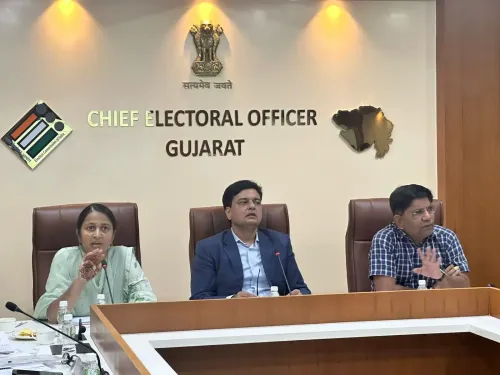
Chief Electoral Officer of Gujarat, Harit Shukla, stated that the operation was concluded within the designated timeframe due to the cooperative efforts of the electoral machinery and stakeholders at various levels.
He emphasized that the revision campaign saw dedicated involvement from 33 District Election Officers, 182 Electoral Registration Officers, 855 Assistant Electoral Registration Officers, 50,963 Booth Level Officers (BLOs), 54,443 Booth Level Agents (BLAs), and 30,833 volunteers.
Officials from urban local bodies, including municipal corporations and municipalities, were also engaged in this initiative. As directed by the Election Commission of India, all municipal commissioners in Gujarat were designated as Additional District Election Officers for the SIR process.
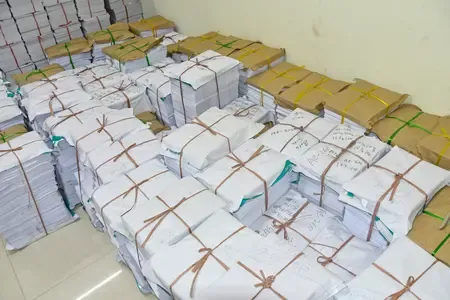
Counting forms were distributed to all 5.08 crore voters in a mission-driven approach. Out of these, 4.34 crore enumeration forms were collected and completely digitized, achieving a strong and technology-enhanced database for electoral rolls.
The door-to-door survey conducted by BLOs was crucial in identifying ineligible voters. Among the deletions were 18,07,278 deceased voters, 9,69,662 absent voters, 40,25,553 voters who had permanently migrated, 3,81,470 voters registered at multiple locations, and 1,89,364 voters removed under other categories.
Officials clarified that despite extensive outreach and repeated visits by BLOs, numerous voters could not be reached, or their enumeration forms were not returned. These voters may have moved elsewhere, passed away, failed to submit forms on time, or opted to remain unregistered.
As a result, their names were omitted from the draft roll. In the interest of transparency and inclusivity, meetings were held between BLOs and BLAs of recognized political parties to confirm the status of unreturned forms.
Constituency-specific lists of voters whose forms were not received have been published on the websites of District Election Officers and the Chief Electoral Officer.
Moreover, verification of 10.69 lakh discrepancies noted under the ASD (Absent, Shifted, Deceased) category has been accomplished. Officials commended Gujarat's performance during the enumeration phase, highlighting the state's commitment to upholding the integrity and accuracy of electoral rolls.
With the draft electoral roll now available, voters have until January 18, 2026 to submit claims and objections regarding any inclusions, deletions, or corrections of details.
Election authorities will assess these claims and objections and resolve them by February 10, 2026, after issuing notices and conducting personal hearings as needed.
The draft electoral roll is accessible at all polling stations and designated venues across Gujarat. It is also available on the Chief Electoral Officer's website at http://ceo.gujarat.gov.in, allowing voters to verify their information online.
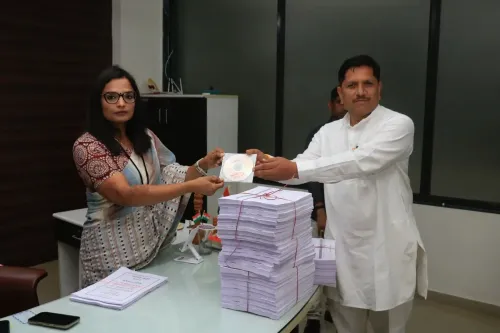
Copies of the draft roll, including one printed version with photographs and one digital copy without photographs, have been distributed to representatives of all recognized political parties. Lists of voters whose enumeration forms were not received have also been shared for further verification by BLAs.
Political parties have been encouraged to diligently examine the draft roll and assist voters in submitting claims or objections by adhering to the established procedures before the deadline.
Young citizens who turn 18 years old on or before January 1, 2026 can apply for inclusion in the final electoral roll, which is scheduled for publication on February 17, 2026, by completing Form 6.
Voters can check their names in the draft electoral roll through various platforms, including the CEO Gujarat website, the ECI Voters Portal (voters.eci.gov.in), the ECINET mobile app, Booth Level Officers, and the offices of District Election Officers, Electoral Registration Officers, and Assistant Electoral Registration Officers.
Those whose names are not listed in the draft roll can apply for inclusion using Form 6, while corrections to existing entries can be requested via Form 8. Objections to any name's inclusion can be submitted using Form 7, either online or offline, along with the necessary supporting documents.
Election officials reiterated that the Special Intensive Revision initiative aims to ensure a clean, accurate, and inclusive electoral roll in anticipation of future elections in Gujarat.
Point of View
I underscore the importance of maintaining the integrity of electoral rolls in our democracy. Gujarat's recent efforts demonstrate a commendable commitment to ensuring an accurate and inclusive electoral process. The collaboration among various stakeholders highlights the need for transparency and accountability in elections, which is essential for fostering public trust in the democratic system.
NationPress
10 Oct 2026
Frequently Asked Questions
What is the Special Intensive Revision (SIR) exercise?
The SIR exercise is a comprehensive initiative aimed at updating the electoral rolls, ensuring accuracy, and removing ineligible voters through door-to-door verification.
How many voters have been registered in Gujarat?
The recent revision has registered a total of 4.34 crore voters in Gujarat.
What is the deadline for filing claims and objections?
Voters can file claims and objections until January 18, 2026.
How can voters verify their details?
Voters can check their names on the Chief Electoral Officer's website, through the ECI Voters Portal, or via Booth Level Officers.
What forms are required for different applications?
Form 6 is for new registrations, Form 8 is for corrections, and Form 7 is for objections to any name's inclusion.