Kerala woman arrested in ₹13.10 lakh Surat investment fraud with fake SEBI papers

Synopsis
A Kerala woman allegedly opened a bank account with her son and handed it to fraudsters — earning a 3% cut — while victims across five states lost money to a fake share-trading platform backed by forged SEBI letterheads. The Surat Cyber Crime Branch's arrest of Saleena Thadiyan exposes how mule-account networks and fake regulatory documents are now standard tools in high-value online investment fraud.
Key Takeaways
Saleena Thadiyan , 46 , was arrested in Kerala by the Surat City Police Cyber Crime Branch for alleged online investment fraud.
The complainant was induced to transfer ₹13.10 lakh through a fake share-trading website and messaging-app group.
The accused allegedly circulated forged SEBI documents, including a letterhead dated 27 July 2026 , to establish credibility.
Her Federal Bank joint current account received ₹33.40 lakh in suspected fraud proceeds; total transactions reached ₹39.70 lakh between 9 January and 29 July 2026 .
The account is linked to 12 complaints from multiple states and 4 FIRs in UP, Maharashtra, West Bengal , and Telangana .
A co-accused who operated the scheme remains absconding ; cybercrime helpline 1930 can be used to report such fraud.
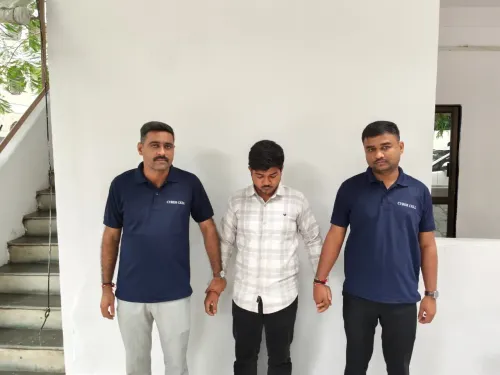
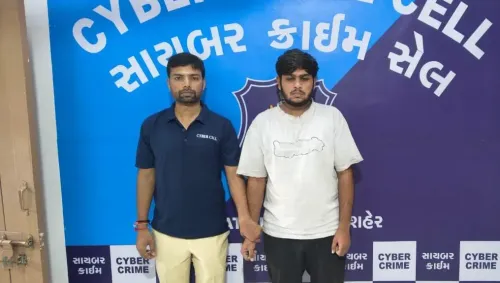
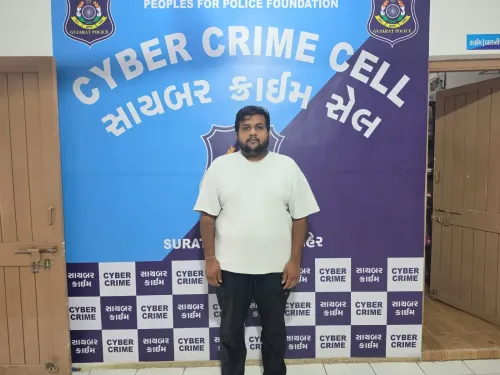
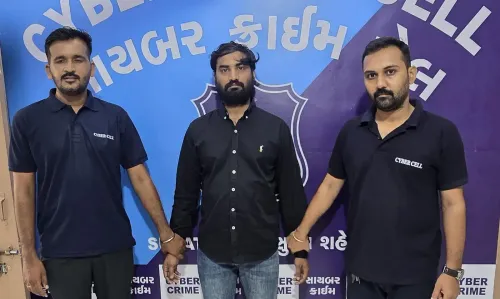
The Surat City Police Cyber Crime Branch has arrested a 46-year-old Kerala woman in connection with an alleged ₹13.10 lakh online investment fraud, in which the victim was lured with promises of share-trading returns exceeding five per cent. The accused, identified as Saleena Thadiyan, was traced to Kerala following a technical investigation led by Police Inspector Y. S. Sisodiya.
How the Fraud Was Carried Out
According to the police, the accused allegedly conspired with others — including an absconding co-accused — to cheat the victim by first adding the complainant to a group on a messaging application. The group was used to circulate attractive claims about profits available through their purported share-trading company.
The accused then shared a link to a fake website, where the complainant was asked to register and create a personal account. The platform was allegedly designed to create the illusion of mounting profits, inducing the victim to transfer ₹13.10 lakh to accounts provided by the group. When the complainant subsequently sought a withdrawal, the funds were not released — prompting the registration of a cybercrime complaint.
Forged SEBI Documents Used to Build Trust
In a particularly audacious element of the scheme, the accused allegedly circulated forged documents purportedly issued by the Securities and Exchange Board of India (SEBI), including a document on official-looking letterhead dated 27 July 2026. Bank account details for receiving transfers were also shared through the group messaging channel.
The use of fabricated regulatory documents signals a sophisticated operation designed to bypass the scepticism of potential victims — a tactic law-enforcement agencies have flagged as increasingly common in high-value investment frauds.
Role of the Bank Account
Saleena Thadiyan allegedly opened a joint current account with Federal Bank in the name of a firm she set up with her son, and allowed an absconding accused to use the account for routing cyber fraud proceeds. In exchange, she reportedly received a three per cent commission on transactions passing through the account.
A scrutiny of the account through the National Cyber Crime Reporting Portal uncovered 12 complaints from different states. Four FIRs had already been registered in Uttar Pradesh, Maharashtra, West Bengal, and Telangana. According to the police, suspected cyber fraud proceeds totalling ₹33.40 lakh had been credited to the account, with total transactions amounting to ₹39.70 lakh recorded between 9 January and 29 July 2026.
Legal Sections Invoked
The case was registered at the Cyber Crime Police Station, Surat, under Sections 318(4), 336(2), 338, 336(3), 340(2), 61(2), and 3(5) of the Bharatiya Nyaya Sanhita, 2023, along with Section 66(D) of the Information Technology Act, 2000 (as amended in 2008). The co-accused involved in operating the fraudulent scheme remains at large.
Police Advisory
The Surat City Police have urged the public to exercise caution when approached with unsolicited online share-market schemes promising unusually high returns, and to independently verify the credentials of any firm or individual before transferring money. Victims of financial cyber fraud are advised to immediately dial the national cybercrime helpline, 1930, as prompt reporting can improve the chances of freezing fraudulent funds before they are moved.
Point of View
Insulating the masterminds from direct exposure. The use of forged SEBI letterheads marks an escalation in social engineering, deliberately exploiting India's growing retail-investor class who are conditioned to trust regulatory branding. With 12 complaints spanning five states linked to a single account, the National Cyber Crime Reporting Portal is clearly doing its aggregation job — the bottleneck remains swift prosecution of absconding masterminds, who are rarely caught before funds are layered beyond recovery.
NationPress
12 Oct 2026
Frequently Asked Questions
Who is Saleena Thadiyan and why was she arrested?
Saleena Thadiyan is a 46-year-old woman from Kerala arrested by the Surat City Police Cyber Crime Branch for her alleged role in a ₹13.10 lakh online investment fraud. She reportedly allowed a fraudster to use a joint bank account opened in the name of a firm she set up with her son, receiving a three per cent commission on transactions routed through it.
How did the investment fraud scheme work?
The accused allegedly added the victim to a messaging-app group, made promises of returns exceeding five per cent on share trading, and directed the person to a fake website to open a trading account. Forged SEBI documents were circulated to build credibility, and the complainant was eventually induced to transfer ₹13.10 lakh. Withdrawal requests were refused, exposing the fraud.
What were the scale and reach of the fraudulent operation?
The bank account linked to the accused received ₹33.40 lakh in suspected cyber fraud proceeds and recorded total transactions of ₹39.70 lakh between 9 January and 29 July 2026. The National Cyber Crime Reporting Portal flagged 12 complaints from different states, and four FIRs have been registered in Uttar Pradesh, Maharashtra, West Bengal, and Telangana.
What legal charges have been filed in this case?
The case was registered under Sections 318(4), 336(2), 338, 336(3), 340(2), 61(2), and 3(5) of the Bharatiya Nyaya Sanhita, 2023, and Section 66(D) of the Information Technology Act, 2000 (amended 2008). A co-accused who operated the fraudulent scheme remains at large.
What should people do if they suspect an online investment fraud?
The Surat City Police advise verifying the credentials of any firm or individual before transferring money and being wary of schemes promising abnormally high returns. Anyone who has already been defrauded should immediately call the national cybercrime helpline at 1930, as rapid reporting increases the chances of freezing funds in the fraudster's account.