Gujarat Police bust email spoofing racket, arrest 4 in Mumbai
Synopsis
Ahmedabad's cyber crime unit cracked an inter-state email spoofing racket operating out of Nalasopara and Virar, arresting four men who allegedly hijacked business email threads, forged Yes Bank letterhead, and rerouted a ₹6.55 lakh payment into a fraudulent account — all via a single altered Gmail character.
Key Takeaways
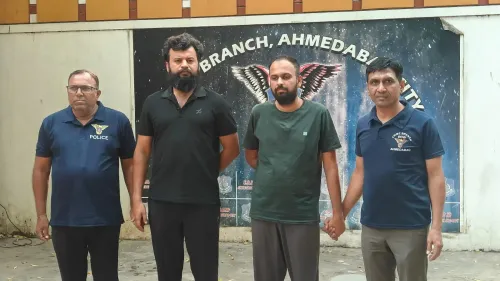
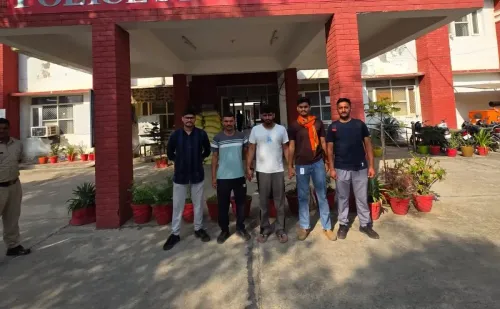
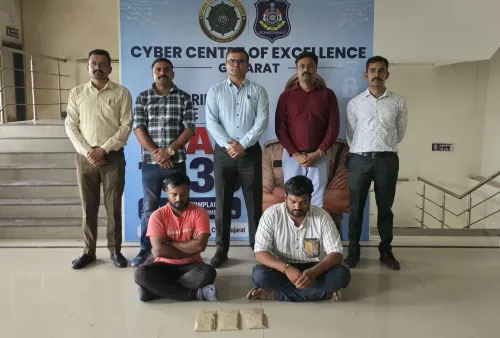
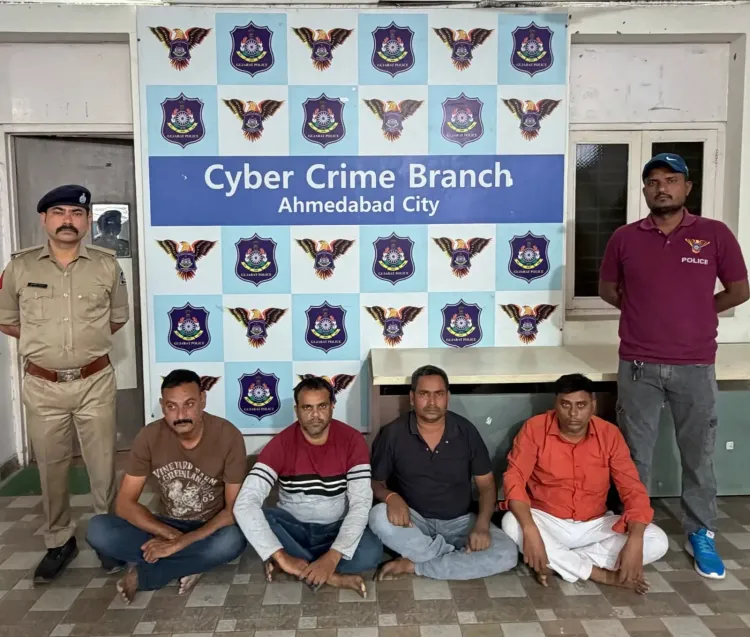
Gujarat Police's Ahmedabad City Cyber Crime Branch arrested four men from Nalasopara and Virar in Palghar district, Maharashtra.
The gang allegedly diverted ₹6,55,111 by hacking into email correspondence between Global Pantry Grocery Company and Maya Agrovet Limited .
Fraudsters sent a forged letter on Yes Bank letterhead after altering the target company owner's Gmail address by a single digit.
An FIR was registered on 14 November under the Bharatiya Nyaya Sanhita, 2023 and the Information Technology Act .
Arrested accused: Ravindrakumar Kashyap (42), Mohammad Riyaz Ansari (38), Kamlesh Singh (41), and Zulfikar Ali Siddiqui (47).
Police are continuing the investigation to trace other alleged members of the network.
The Ahmedabad City Cyber Crime Branch of Gujarat Police has arrested four members of an alleged inter-state cyber fraud network from Mumbai for diverting a business payment of ₹6.55 lakh through email spoofing — a technique involving impersonation of a company owner and the submission of forged bank account details.
How the Fraud Was Executed
The accused allegedly hacked into email communications between Global Pantry Grocery Company and Maya Agrovet Limited before 26 August, gaining unauthorised access to the computer systems of one of the two firms. They altered the email ID of Maya Agrovet Limited's owner from ahgandhi.vishal@gmail.com to ahgandhi.vishal63@gmail.com and added two additional addresses — gatewayserv@yahoo.com and veertrdws@gmail.com — to the business correspondence.
Using the manipulated email identity, the accused sent a forged letter carrying Yes Bank's letterhead, stamp, and signature. The document listed the account personal name as MAYA AGROVET LIMITED and the registered account name as R K ENTERPRISES. The complainant company was consequently induced to transfer ₹6,55,111 — a payment legitimately owed to Maya Agrovet Limited — into the fraudulent account.
The Investigation and Arrests
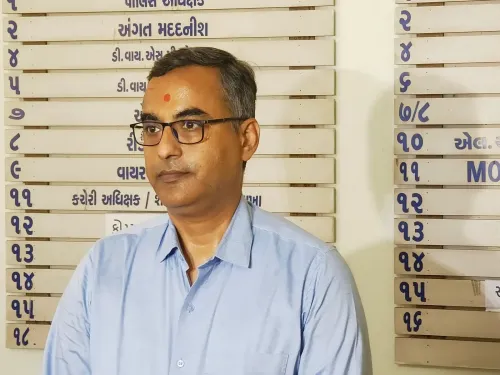
An FIR was registered on 14 November at the Cyber Crime Police Station under relevant sections of the Bharatiya Nyaya Sanhita, 2023 and the Information Technology Act. Police Inspector B N Patel and his team deployed a combination of technical analysis and human intelligence to identify the accused, before travelling to Mumbai to make the arrests.
The four arrested individuals have been identified as Ravindrakumar Kashyap (42), Mohammad Riyaz Ansari (38), Kamlesh Singh (41), and Zulfikar Ali Siddiqui (47). All four were reportedly residing in Nalasopara and Virar in Palghar district, Maharashtra. Kashyap is originally from Basti district and Singh from Prayagraj district, both in Uttar Pradesh.
How the Gang Divided Roles
According to police, the operation involved a layered commission-based structure. Kashyap allegedly provided seven bank accounts to Ansari, into which the fraud proceeds were deposited; he then withdrew the funds and handed them over in exchange for a commission. Ansari allegedly forwarded both the accounts and the cash to Singh, also for a commission.
Singh allegedly sourced documents needed to open the bank accounts — including shop-related papers, banners, firm registration documents, and stamps — with the assistance of associates. Siddiqui allegedly facilitated the deposit of fraud proceeds into the accounts on the instructions of a co-accused and received a commission in return. Police noted that Siddiqui had previously served time in jail in an NDPS case.
Charges and What Comes Next
The four accused have been booked under Sections 54, 61(2)(a), 318(4), 319(2), 336(2), 336(3), 338 and 340(2) of the Bharatiya Nyaya Sanhita, along with Sections 43(a), 43(c), 43(i), 66, 66C and 66D of the Information Technology Act. Further investigation is underway to identify and trace other individuals allegedly involved in the fraud, suggesting the network may extend beyond the four arrested so far.
Point of View
Yet it was enough to reroute a legitimate business payment entirely. The layered commission structure uncovered here — with separate actors handling accounts, cash withdrawal, and document sourcing — mirrors the mule-network architecture seen in larger cyber fraud operations busted in Jamtara and Mewat. The ₹6.55 lakh figure is relatively modest, but the method is scalable, and the fact that the accused were operating across state lines from rented accommodation in Palghar signals an organised, not opportunistic, operation.
NationPress
21 Nov 2026
Frequently Asked Questions
What is email spoofing fraud and how was it used in this case?
Email spoofing involves manipulating sender details to make a fraudulent email appear to come from a legitimate source. In this case, the accused altered a company owner's Gmail address by adding '63' and sent a forged letter on Yes Bank letterhead, tricking a business into transferring ₹6,55,111 into a fraudulent account.
Who were the four men arrested by Gujarat Police in Mumbai?
The four arrested accused are Ravindrakumar Kashyap (42), Mohammad Riyaz Ansari (38), Kamlesh Singh (41), and Zulfikar Ali Siddiqui (47). All four were residing in Nalasopara and Virar in Palghar district, Maharashtra at the time of arrest.
Which companies were targeted in this cyber fraud?
The email correspondence targeted involved Global Pantry Grocery Company and Maya Agrovet Limited. The accused allegedly infiltrated their business email thread and diverted a payment of ₹6,55,111 that Global Pantry owed to Maya Agrovet Limited.
What charges have been filed against the accused?
The four men have been charged under Sections 54, 61(2)(a), 318(4), 319(2), 336(2), 336(3), 338 and 340(2) of the Bharatiya Nyaya Sanhita, 2023, as well as Sections 43(a), 43(c), 43(i), 66, 66C and 66D of the Information Technology Act.
Is the investigation into the email spoofing gang complete?
No. Police have confirmed that further investigation is underway to identify and trace other individuals allegedly involved in the fraud network, indicating the four arrests may not represent the full extent of the racket.