Gujarat to replace asphalt roads with cement concrete across all urban bodies
Synopsis
Gujarat's Cabinet has greenlit a sweeping shift from asphalt to Cement Concrete roads across every Municipal Corporation, municipality, village settlement, and industrial zone in the state. With CC construction costing 30-40% more upfront, the government is betting that lower long-term maintenance bills and monsoon resilience will justify the premium — a policy other states battered by annual pothole cycles will be watching.
Key Takeaways
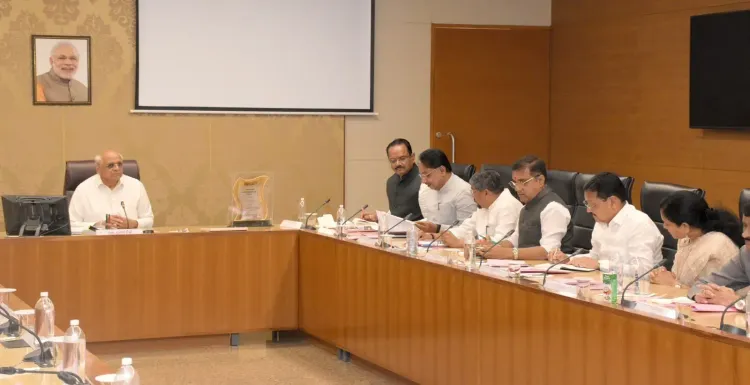
The Gujarat Cabinet , chaired by Chief Minister Bhupendra Patel , approved the shift from asphalt to Cement Concrete (CC) roads on 28 July .
The policy covers internal roads in all Municipal Corporations and Municipalities , as well as waterlogging-prone village settlements and industrial zones .
CC road construction costs 30 to 40 per cent more than asphalt but offers a longer service life and lower maintenance expenditure.
Rural CC road construction is already being carried out under the 'Suvidhapath Yojana' scheme.
Industrial corridors with heavy multi-axle vehicle movement are specifically included in the upgrade plan.
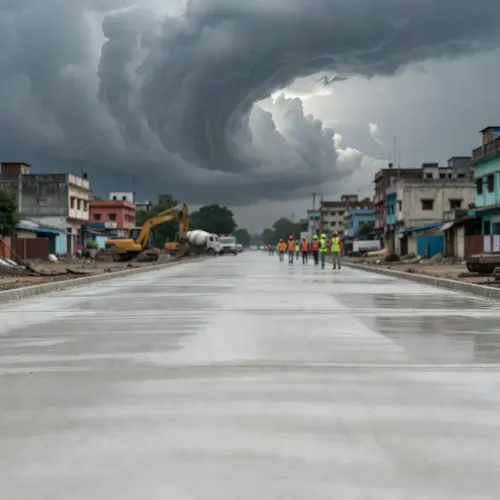
The Gujarat government has resolved to replace asphalt roads with Cement Concrete (CC) roads across all Municipal Corporations and Municipalities in the state, targeting a permanent fix to the cycle of monsoon-driven road damage that plagues urban areas every year. The decision was formalised at a Cabinet meeting chaired by Chief Minister Bhupendra Patel on Tuesday, 28 July.
What the Cabinet Decided
Government Spokesperson and Minister Jitu Vaghani announced that the shift to CC roads is aimed at building road infrastructure strong enough to withstand heavy rainfall and prolonged waterlogging — conditions under which asphalt surfaces routinely deteriorate. The policy applies to internal roads within all urban local bodies across Gujarat.
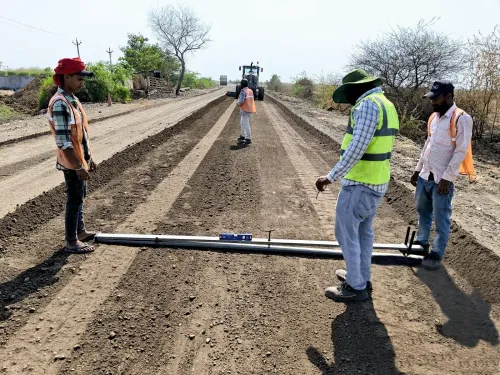
The conversion will not stop at city limits. Asphalt roads in village settlements prone to waterlogging will also be progressively replaced with CC roads. In rural areas, such construction is already under way through the state's 'Suvidhapath Yojana' scheme.
Industrial Areas Also in Scope
The government has additionally earmarked industrial zones for the CC road upgrade, particularly corridors that bear heavy and extra-heavy vehicular loads, including frequent movement of multi-axle vehicles. These stretches have historically seen accelerated surface degradation under asphalt.
The Cost Calculation
Vaghani acknowledged that CC road construction carries a higher upfront price tag — roughly 30 to 40 per cent more than conventional asphalt. However, he framed the decision as a long-term public interest call. 'The Chief Minister has taken this people-centric decision without worrying about the additional expenditure, ensuring that citizens receive durable, high-quality infrastructure that will serve them for years,' Vaghani said.
Officials argue the economics favour CC over time: the roads carry a longer service life, higher load-bearing strength, and are expected to significantly cut recurring expenditure on pothole repairs and monsoon-damage restoration — costs that asphalt roads generate almost annually in Gujarat's climate.
Wider Impact on Road Construction Practices
The policy signals a broader shift in how Gujarat plans and funds urban and rural road infrastructure going forward. CC roads require less frequent maintenance cycles and are considered better suited to regions with high rainfall intensity — a category that covers large parts of Gujarat, particularly Saurashtra and the coastal belt, during the June–September monsoon season.
With the Cabinet's endorsement, implementation is expected to roll out across municipal bodies in phases, setting a precedent that other states grappling with similar monsoon-damage cycles may watch closely.
Point of View
But the 30-40% higher upfront cost will test the state's capital budget discipline, especially as implementation scales across hundreds of urban bodies simultaneously. The real risk is execution: phased rollouts in India frequently stall at land-acquisition or contractor-capacity bottlenecks, leaving half-converted stretches that are worse than either pure asphalt or pure CC. The inclusion of industrial zones is smart — those corridors generate the most damage per rupee of road — but the village-settlement component under Suvidhapath Yojana needs transparent monitoring to avoid becoming a patronage pipeline. If Gujarat delivers, it hands other monsoon-battered states a replicable model; if it doesn't, it adds to a long list of ambitious infrastructure announcements that faded in implementation.
NationPress
27 Oct 2026
Frequently Asked Questions
Why is Gujarat replacing asphalt roads with Cement Concrete roads?
Gujarat is making the switch because asphalt roads repeatedly suffer damage during the monsoon due to waterlogging and prolonged rainfall exposure, generating high annual repair costs. CC roads offer greater durability, higher load-bearing strength, and lower long-term maintenance expenditure.
Which areas will be covered under Gujarat's CC road policy?
The policy covers internal roads in all Municipal Corporations and Municipalities across Gujarat, village settlements vulnerable to waterlogging, and industrial zones with heavy multi-axle vehicle traffic.
How much more expensive are CC roads compared to asphalt roads?
Cement Concrete road construction is approximately 30 to 40 per cent more expensive than conventional asphalt. The Gujarat government has said it has prioritised long-term public benefit over the higher upfront cost.
What is the Suvidhapath Yojana mentioned in the announcement?
Suvidhapath Yojana is an existing Gujarat government scheme under which CC road construction in village settlements is already being carried out. The new Cabinet decision expands and accelerates this approach across urban and industrial areas as well.
When will the CC road conversion begin across Gujarat?
No specific start date or phased timeline was announced at the Cabinet meeting on 28 July. Implementation is expected to roll out across municipal bodies in phases following the Cabinet approval.