Gujarat Temples Go Plastic-Free: Ambaji Follows Somnath
Synopsis
Gujarat's CMO has announced that Ambaji Temple will adopt single-use plastic-free prasad packaging — paper boxes, sugarcane-waste containers, and reusable tin — building on a proven model at Somnath Temple under CM Bhupendra Patel's leadership.
Key Takeaways
Shri Arasuri Ambaji Mata Temple is set to adopt single-use plastic-free prasad packaging, following Shri Somnath Temple where the model is already a declared success.
Replacement materials include paper boxes , sugarcane bagasse containers , and reusable tin containers .
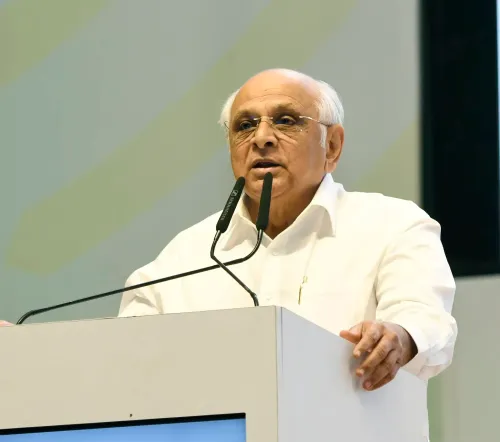
The initiative is branded 'Prasad Sathe Prakriti Jatan' and is led by Chief Minister Bhupendra Patel , aligned with PM Modi's eco-lifestyle vision.
India's Plastic Waste Management Rules (July 2022) provide the national regulatory backbone for this state-level enforcement.
Ambaji draws millions of pilgrims annually, especially during Navratri , giving the initiative significant environmental scale.
The model could extend to other Gujarat pilgrimage sites including Dwarka , with waste-reduction data from Ambaji being the key metric to watch.
Two of Gujarat's most revered pilgrimage sites are becoming unlikely frontlines in India's war on plastic — and the model is spreading fast. The Chief Minister's Office of Gujarat announced on Monday, 26 October 2026 that Shri Arasuri Ambaji Mata Temple will become the latest sacred site to ban single-use plastic from prasad distribution, following the acclaimed success of a similar initiative already running at Shri Somnath Temple.
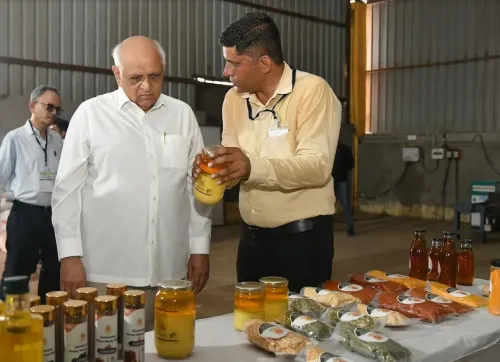
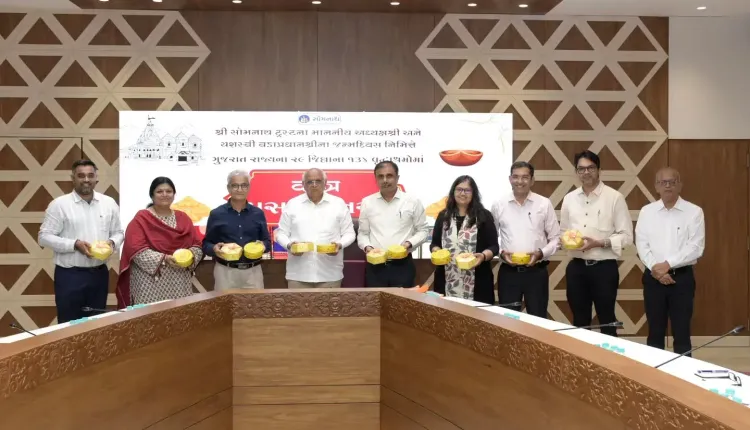
The announcement, made under the banner 'Prasad Sathe Prakriti Jatan' ('Nature Conservation Alongside Prasad'), frames the initiative as a direct expression of Prime Minister Narendra Modi's vision for an eco-friendly lifestyle. Chief Minister Bhupendra Patel is leading the state-level rollout, which replaces single-use plastic packaging with paper boxes, containers made from sugarcane waste, and reusable tin containers — three alternatives designed to eliminate what the CMO describes as 'lakhs of tonnes' of plastic waste generated at high-footfall shrines.
From Somnath to Ambaji: A Tested Blueprint Scales Up
Somnath, the ancient Jyotirlinga shrine on Gujarat's Saurashtra coast, served as the pilot. The eco-friendly prasad packaging model there is described by the CMO as a 'grand success' — a live proof-of-concept that sustainable packaging can operate at the scale of one of India's busiest temples. Ambaji, nestled in the Aravalli hills of Banaskantha district near the Rajasthan border, draws millions of devotees each year, particularly during Navratri, making its plastic footprint one of the largest of any single site in the state. The choice of materials is deliberate: paper boxes are biodegradable; sugarcane bagasse containers repurpose agricultural waste that would otherwise be burned; tin containers offer multi-use value to pilgrims who can carry them home. Each option targets a different segment of the prasad economy — bulk temple distribution, individual devotee packets, and souvenir-grade packaging.Faith and Policy Converging at the Temple Gate
The initiative sits at a rich intersection of religious culture and environmental regulation. India's Plastic Waste Management Rules, which prohibited identified single-use plastic items nationally from July 2022, gave states both a legal framework and political cover to enforce change at even the most tradition-bound institutions. Gujarat is now using that framework to set a replicable standard. The broader lineage runs back to the Swachh Bharat Mission launched in 2014, which included cleanliness mandates at temples and public religious spaces. What Gujarat is doing now takes that sanitation mandate a step further — from 'clean the premises' to 'redesign the supply chain.' The CMO's framing — 'prakriti na jatan ane samajik uttardayitva' ('nature conservation and social responsibility') — signals that the state sees temple trusts, prasad vendors, and pilgrims themselves as active agents of environmental change, not just compliance targets.What Ambaji's Rollout Could Mean for Other Sites
With two flagship sites now anchoring the model, attention will shift to whether Gujarat extends it to Dwarka, another major Char Dham pilgrimage destination within the state, and whether the prasad packaging framework is eventually codified as a state-wide standard for all recognised temple trusts. The waste-reduction data from Ambaji, once operational, will be the real test — numbers that could either turbocharge the model's replication across India or reveal gaps that need design fixes. For now, Gujarat's shrines are making an argument that devotion and environmental stewardship are not in tension. They are, the CMO says, one and the same offering.Point of View
CM Bhupendra Patel simultaneously signals ideological continuity with the Centre and claims local governance credit. The faith-sector angle is strategically sharp: temples are high-visibility, emotionally resonant, and largely compliant institutions, making them ideal launch pads for behaviour-change models that would face resistance in commercial or industrial settings. If Ambaji's rollout produces credible waste-reduction numbers, Gujarat could make a credible national case for mandating the model at all Char Dham and Aadhyashakti Shakti Peetha sites.
NationPress
26 Oct 2026
Frequently Asked Questions
What is the eco-friendly prasad packaging initiative at Gujarat temples?
It is a programme called 'Prasad Sathe Prakriti Jatan' that replaces single-use plastic prasad packaging at Gujarat's pilgrimage sites with paper boxes, sugarcane-waste containers, and reusable tin containers.
Which temples in Gujarat have adopted plastic-free prasad packaging?
Shri Somnath Temple has already implemented the model successfully, and Shri Arasuri Ambaji Mata Temple is the next site to adopt it.
Who is behind the plastic-free temple initiative in Gujarat?
Chief Minister Bhupendra Patel is leading the state-level rollout, framed as an implementation of Prime Minister Narendra Modi's eco-friendly lifestyle vision.
Why is Ambaji Temple significant for this plastic-free drive?
Ambaji Temple in Banaskantha district draws millions of pilgrims each year, especially during Navratri, making it one of the highest-footfall and highest-plastic-waste religious sites in Gujarat.
What law supports India's temple plastic ban?
India's Plastic Waste Management Rules, which came into force in July 2022, prohibited identified single-use plastic items nationally and provide the regulatory framework for state-level enforcement at religious sites.