What Are the Key Highlights of Gujarat's 2026-27 Budget with Rs 3,472 Crore for PMJAY-MA and GIDC Modernisation?
Synopsis
The 2026-27 Gujarat budget reveals a significant allocation of Rs 3,472 crore for the PMJAY-MA scheme, positively impacting millions. With extensive support for agriculture, housing, education, and industrialization, this budget aims to foster growth and resilience in the state. Discover the key takeaways from this ambitious financial plan.
Key Takeaways
Rs 3,472 crore allocated for PMJAY-MA scheme.
Support for 33 lakh farmers affected by floods.
Introduction of 926 new P.M.
Rs 1,340 crore for fisheries and livestock sectors.
Initiatives for industrialization in tribal areas.
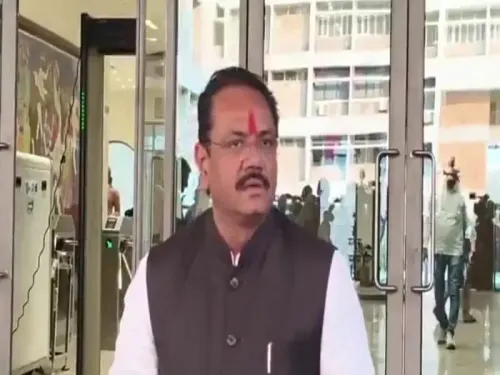
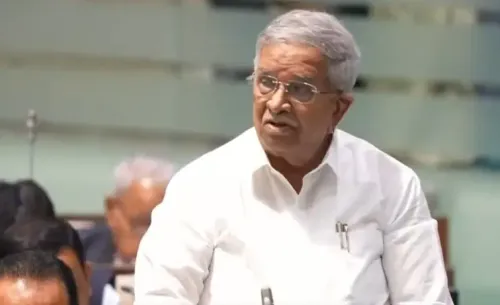
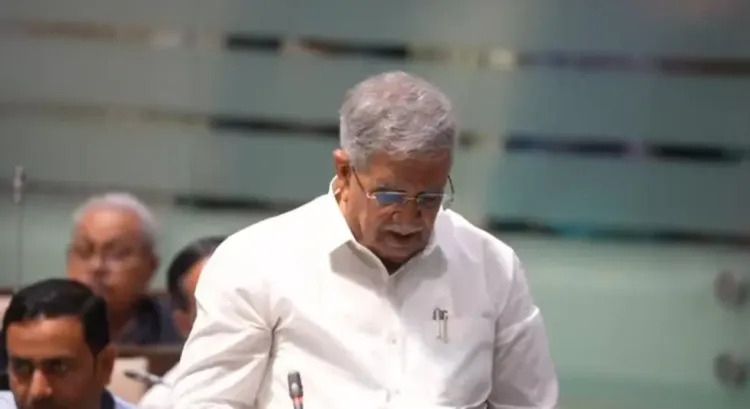
Gandhinagar, Feb 18 (NationPress) In the 2026-27 state budget, the Gujarat government has earmarked Rs 3,472 crore for the Pradhan Mantri Jan Arogya-Mukhyamantri Amrutam (PMJAY-MA) scheme, benefiting over 2.72 crore people. Finance Minister Kanu Desai revealed that more than 68 lakh beneficiaries have already availed cashless treatment.
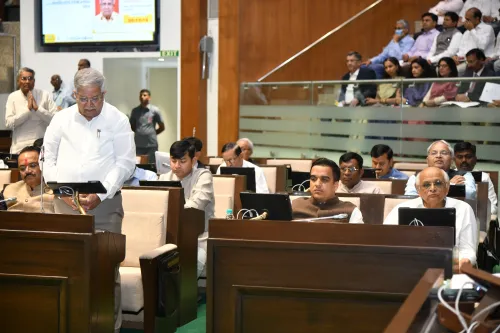
During the budget presentation in the Assembly, Desai highlighted the expansion of In-Vitro Fertilisation (IVF) services, which are currently available at the Institute of Kidney Diseases & Research Centre (IKDRC) in Ahmedabad, with plans to extend them to Surat, Bhavnagar, and Jamnagar.
The budget also commits to providing robust support for agriculture, with immediate aid exceeding Rs 11,000 crore for over 33 lakh farmers affected by floods and unseasonal rains.
To stabilize farmers' incomes amidst market fluctuations, over 9.5 lakh farmers have benefited from procurement at minimum support prices, totaling more than Rs 18,000 crore for crops like groundnut, green gram, black gram, soybean, and cotton.
Encouragement of mechanisation is evident with an allocation of Rs 1,565 crore to assist small and marginal farmers in purchasing tractors, power tillers, seed drills, and harvesters.
For organic farming, Rs 39 crore has been designated for establishing Centres of Excellence, market support, branding, certification, and assistance, while an additional Rs 12 crore will fund six more Centres of Excellence focused on pulses, oilseeds, farm mechanisation, value addition, and agro-processing.
Irrigation projects are prioritized with Rs 3,043 crore allocated to the Sujalam-Suflam pipeline, Sauni, and Kutch projects to channel Narmada water to drought-affected regions in North Gujarat, Saurashtra, and Kutch.
The second phase of pipeline and canal irrigation in remote villages of Ahmedabad has commenced, with Rs 958 crore set aside. The 'Per Drop More Crop' initiative has already covered 25 lakh hectares under micro-irrigation, with further areas being addressed.
The fisheries and livestock sectors will receive Rs 1,340 crore for infrastructure, equipment, and storage, along with Rs 500 crore for the Gau Mata Poshan scheme.
Support for farmers and livestock owners includes Rs 1,539 crore allocated under the Kisan Credit Card scheme and Rs 112 crore for establishing bio-CNG plants across four zones.
In housing, the government aims to deliver over 3.15 lakh houses under schemes such as PM Awas Yojana (rural and urban), Dr Ambedkar Awas, Pandit Deendayal Awas, and Halpati Awas, with a budget of Rs 4,272 crore.
For education and skill development, 926 new P.M. Shri schools will be established, with integrated schools from Balvatika to Grade 10 funded by Rs 120 crore. Additionally, 15 libraries will be created in tribal areas, including the Namo Central Library in Gandhinagar, with Rs 100 crore allocated.
The Namo Saraswati initiative has received Rs 250 crore for science education, while the Namo Gujarat Skill and Employment Mission allocated Rs 226 crore for skill training. The Chief Minister Apprenticeship Scheme, which supports over one lakh trainees, has been allocated Rs 80 crore.
To facilitate ease of doing business, 25 GIDCs will undergo modernization with Rs 1,250 crore set for water, electricity, gas, and digital networks, plus Rs 50 crore for upgrades to 120 mini GIDCs.
New industrial estates will be launched in Dahod, Aravalli, and other districts to promote industrialisation and job creation in tribal areas.
The establishment of the Gujarat State Export Promotion Council aims to enhance trade. The Gujarat Jan Vishwas (Provision Reforms) Act 2025 streamlined 11 legislations and 516 provisions, reinforcing trust among producers, traders, and industrial workers with the government.
Under the Vocal for Local initiative, the state promotes balanced regional development, selecting 90 handloom, handicraft, and rural industry products under the One District, One Product scheme.
Artisans will gain access to domestic markets and e-commerce platforms for selling their products.
Point of View
The Gujarat budget reflects a proactive approach to addressing the needs of its citizens, especially in health, agriculture, and education. By prioritizing these areas, the government demonstrates a commitment to sustainable development and economic resilience, paving the way for a stronger future for all.
NationPress
5 Oct 2026
Frequently Asked Questions
What is the total allocation for the PMJAY-MA scheme in the Gujarat budget?
The total allocation for the PMJAY-MA scheme in the Gujarat budget for 2026-27 is Rs 3,472 crore.
How many beneficiaries have received cashless treatment under PMJAY-MA?
More than 68 lakh beneficiaries have received cashless treatment under the PMJAY-MA scheme.
What support is provided for farmers in the budget?
The budget provides support for over 33 lakh farmers affected by floods, with immediate assistance exceeding Rs 11,000 crore and additional allocations for minimum support prices.
What initiatives are being taken for education in Gujarat?
The government plans to establish 926 new P.M. Shri schools and set up libraries in tribal areas, indicating a strong focus on education.
How is the budget supporting the fisheries and livestock sectors?
The fisheries and livestock sectors will receive Rs 1,340 crore for infrastructure and Rs 500 crore for the Gau Mata Poshan scheme.