How is Gujarat Investing Over Rs 5,000 Crore for Daytime Power to Farmers?
Synopsis
Gujarat's significant investment in daytime electricity for farmers reflects its commitment to agriculture and farmer welfare. Chief Minister Bhupendra Patel confirms that by March 2026, all farmers will have access to this vital resource, enhancing irrigation efficiency and productivity while reducing water wastage.
Key Takeaways
Gujarat's Kisan Suryoday Yojana aims to provide daytime electricity for farmers.
Investment of Rs 5,353.62 crore supports this initiative.
By March 2026, all farmers will have access to daytime power.
The scheme covers 98.66% of villages in Gujarat.
Improved irrigation efficiency will benefit nearly 19.69 lakh farmers .
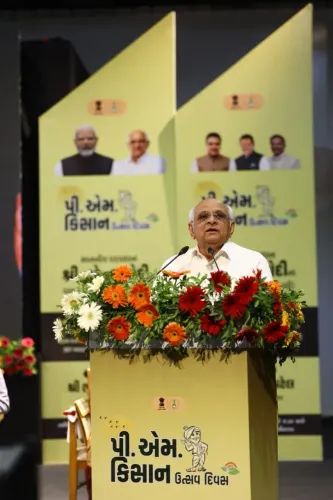
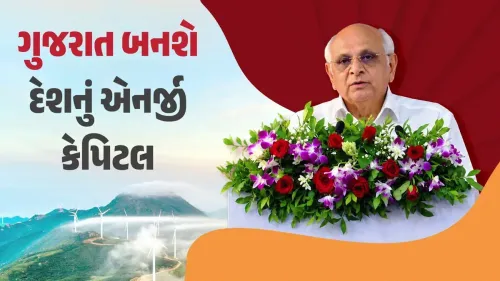
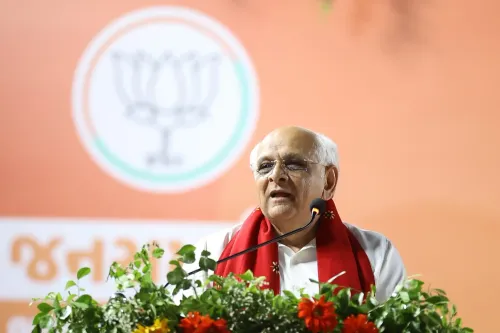
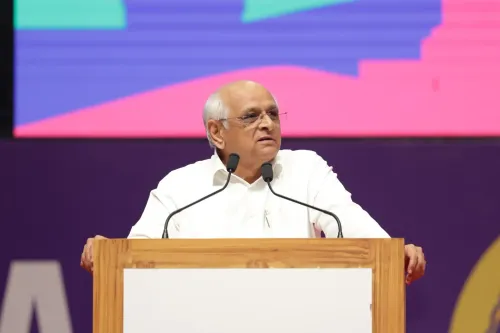
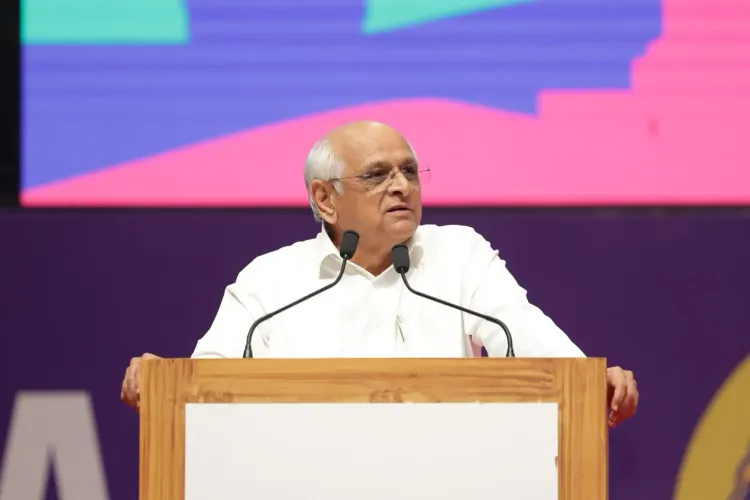
Gandhinagar, Dec 22 (NationPress) Gujarat has become a benchmark for providing daytime electricity to support agriculture, with Chief Minister Bhupendra Patel stating that all farmers will have access to power for irrigation during daylight hours by March 2026.
The success of the Kisan Suryoday Yojana (KSY) highlights the state's commitment to farmer-focused governance, aligned with the broader vision outlined by Prime Minister Narendra Modi.
In reference to Prime Minister Modi's focus on effective governance, CM Patel asserted that the primary aim of governance is to guarantee that farmer-centric schemes reach their intended beneficiaries with transparency and efficiency.
"Farmers are the backbone of our nation. The development of India is dependent on the prosperity, security, and self-sufficiency of farmers," he stated, emphasizing how Gujarat has successfully implemented this vision.
Initiated in 2020, the Kisan Suryoday Yojana has facilitated daytime electricity for 17,018 villages, covering 98.66 percent of the state and benefiting nearly 19.69 lakh farmers.
This initiative was designed to synchronize agricultural power supply with daylight hours, thereby optimizing solar energy utilization and alleviating stress on the power grid during peak demand.
Initially functioning in two shifts from 5 a.m. to 9 p.m., the model was later optimized to a single-shift daytime operation, primarily offering electricity from 7 a.m. to 5 p.m. This alteration has significantly enhanced irrigation efficiency and improved safety and productivity in rural areas.
Currently, 98 percent of substations in Gujarat have transitioned to daytime operations, with efforts underway to cover the remaining 231 villages by relocating the last 45 rotational substations.
To facilitate this extensive transformation, the state government has allocated Rs 5,353.62 crore, establishing 40 new substations, laying 4,640.73 circuit kilometers (CKM) of transmission lines, and reinforcing distribution networks through 3,927.72 CKM of MVCC projects.
Looking forward, the state-owned Gujarat Energy Transmission Corporation Limited (GETCO) has outlined an ambitious plan for 2026–27, proposing five additional substations and fortifying nearly 1,100 CKM of the transmission network at an estimated cost of Rs 1,000 crore. Furthermore, DISCOMs will conduct AB cable and MVCC projects valued at approximately Rs 375 crore to strengthen the distribution framework.
The positive effects of the scheme are already visible on the ground. Farmers have reported improved irrigation management, reduced water wastage, enhanced personal safety, and substantial time savings.
"Previously, we had to irrigate our fields at night, facing dangers from wild animals and wasting water," shared Jayesh Patel, a farmer from Kankrol village in Himmatnagar taluka.
"For the past two years, daytime electricity has resolved these challenges and boosted productivity. It has genuinely transformed our lives," Patel remarked.
Point of View
It's crucial to recognize the transformative impact of Gujarat's commitment to daytime electricity for farmers. This initiative exemplifies a forward-thinking approach that prioritizes agriculture, ensuring that farmers receive essential resources while promoting sustainability and efficiency in power usage. The strategic investment underscores the necessity of farmer welfare in national development.
NationPress
19 Sept 2026
Frequently Asked Questions
What is the Kisan Suryoday Yojana?
The Kisan Suryoday Yojana is an initiative launched by the Gujarat government aimed at providing daytime electricity to farmers for irrigation, enhancing agricultural productivity.
How much has the Gujarat government invested in this initiative?
The Gujarat government has invested over Rs 5,353 crore to facilitate daytime electricity supply through the Kisan Suryoday Yojana.
When will all farmers receive daytime electricity?
The state government aims to ensure that all farmers receive power for irrigation during daytime by March 2026.
How many villages benefit from this scheme?
Currently, the Kisan Suryoday Yojana benefits 17,018 villages, covering 98.66 percent of Gujarat.
What are the expected outcomes of this initiative?
Expected outcomes include improved irrigation management, reduced water wastage, enhanced personal safety for farmers, and increased agricultural productivity.