Gujarat's first rubber dams: ₹162 crore South Korean tech to boost irrigation
Synopsis
Gujarat is deploying South Korean rubber bladder technology for its first two inflatable dams — a ₹162 crore bet on a design that can deflate during floods, flush out silt automatically, and be operated remotely via SCADA. It is a quiet but meaningful pivot away from conventional rigid dam structures in districts where flat terrain made traditional options unworkable.
Key Takeaways
Gujarat is constructing its first two air-filled rubber dams using South Korean rubber bladder technology at a combined cost of over ₹162 crore .
The Rajvasana Rubber Dam on the Heran River , Chhota Udepur, costs over ₹82.97 crore and is 75% complete; target completion is September 2027 .
The Pathakwadi Rubber Dam on the Ambika River , Tapi, costs ₹79.13 crore and is 90% complete, built to Japanese Code 2000 standards.
Each dam is designed to store approximately 3.5 MCM of water; Rajvasana will irrigate 3,420 hectares across 25 villages .
The Pathakwadi dam will be operated via a SCADA-based remote automation system and has a projected service life of 30 years .
Both projects are linked to Prime Minister Narendra Modi's 'Catch the Rain' campaign and include provisions for flood management and silt flushing .
Gujarat is set to commission its first two air-filled rubber dams using South Korean rubber bladder technology, with combined investments exceeding ₹162 crore aimed at strengthening irrigation, groundwater recharge, and flood management in Chhota Udepur and Tapi districts. The projects, both currently under construction, represent a significant technological shift in the state's water infrastructure strategy.
The Two Projects at a Glance
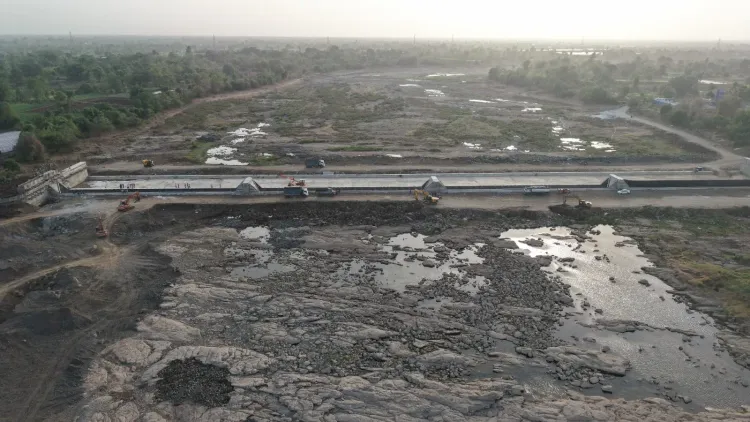
The first structure, the Rajvasana Rubber Dam, is being built on the Heran River in Bodeli taluka of Chhota Udepur district at an estimated cost of over ₹82.97 crore. Scheduled for completion by September 2027 within a 30-month construction window, the dam features a 180-metre-long and 3.5-metre-high inflatable rubber bladder. Around 75 per cent of the construction work has already been completed.
The second project, the Pathakwadi Rubber Dam, sits on the Ambika River in Dolvan taluka of Tapi district and carries an estimated cost of ₹79.13 crore. Construction is approximately 90 per cent complete. Based on a Japanese design and built to Japanese Code 2000 standards, it uses a rubber bladder imported from South Korea with a thickness ranging from 18 mm to 32 mm, designed to withstand temperatures above 50°C and with an estimated service life of around 30 years.
Water Storage and Irrigation Benefits
Both dams are designed to store approximately 3.5 million cubic metres (MCM) of water each. The Rajvasana project will provide irrigation to 3,420 hectares of agricultural land across 25 villages, supporting both Kharif and Rabi crop cycles through the existing canal network. The state government also plans to link canals under the Rajvasana weir scheme to village ponds in the 25 beneficiary villages, enabling surplus water storage for irrigation and drinking needs.
The Pathakwadi dam is intended to irrigate roughly 650 hectares of farmland, directly benefiting farmers in Pathakwadi, Dhodiyawad, Unai, and Sindhai villages by ensuring water availability through Kharif and summer crop seasons. Improved groundwater levels in nearby wells and borewells are also expected, enhancing access to drinking water in surrounding areas.
Why Rubber Dam Technology Was Chosen
The decision to adopt inflatable rubber dam technology was not arbitrary. Officials noted that surveys of the Tapi region found the area's flat terrain and low riverbanks made conventional high check dams or weir structures unsuitable. The choice followed representations by local farmer leaders and Vyara MLA Mohan Kokani.
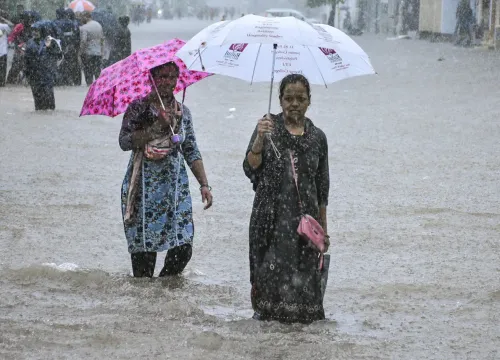
A key operational advantage is flood management: during heavy rainfall, the inflatable structure can be deflated to allow floodwaters to pass freely, reducing flood risk in nearby villages — something rigid steel-gated dams cannot replicate as efficiently. Deflating the bladder during high flows also allows accumulated silt to pass downstream, preserving long-term storage capacity. The Rajvasana project will additionally feature a 900-metre flood protection wall along the left bank and a 500-metre wall along the right bank.
Technology and Automation
The Pathakwadi dam will be operated through a SCADA-based automation system, enabling the rubber bladder to be inflated and deflated remotely by computer without manual intervention. The structure comprises a 2.5-metre-high rubber bladder fixed with J-bolts on a 2-metre concrete base, giving an overall dam height of 4.5 metres and a total length of 280 metres across four spans. The construction contract for Rajvasana also includes 10 years of operation and maintenance.
Broader Policy Context
The state government has framed both projects as part of efforts to strengthen water supply infrastructure in remote tribal and semi-arid regions, linking them to Prime Minister Narendra Modi's 'Catch the Rain' campaign. Officials also noted that the technology could in future serve as a tidal regulator to prevent seawater intrusion into freshwater sources — signalling potential for wider coastal deployment. This comes amid Gujarat's push to expand irrigation coverage in districts that have historically received less infrastructure investment than the state's more industrialised zones.
Point of View
Terrain-sensitive infrastructure over the rigid, high-capital structures that have dominated Indian water management for decades. The SCADA automation and silt-flushing capability address two chronic failures of conventional weirs: manual operation bottlenecks and siltation-driven capacity loss. The real question is whether the 10-year O&M contract embedded in Rajvasana's design will be honoured and monitored — because inflatable rubber technology, however advanced, is only as durable as the maintenance regime behind it. If both projects deliver on their storage and irrigation targets, they could become a replicable template for Gujarat's flat-terrain districts and, potentially, its coastline.
NationPress
5 Oct 2026
Frequently Asked Questions
What are Gujarat's new rubber dams and where are they located?
Gujarat is building two air-filled rubber dams — the Rajvasana Rubber Dam on the Heran River in Chhota Udepur district and the Pathakwadi Rubber Dam on the Ambika River in Tapi district. Together they represent an investment of over ₹162 crore and will be the state's first dams using South Korean rubber bladder technology.
How does an air-filled rubber dam work?
An air-filled rubber dam uses an inflatable rubber bladder anchored to a concrete base to impound water. During floods, the bladder can be deflated remotely — via a SCADA system in the Pathakwadi project — allowing floodwaters and silt to pass freely downstream, reducing flood risk and preserving storage capacity over time.
When will the rubber dams be completed?
The Rajvasana dam is scheduled for completion by September 2027, with about 75% of construction done. The Pathakwadi dam is approximately 90% complete, though an official completion date has not been specified in government statements.
How many farmers and villages will benefit from these projects?
The Rajvasana dam will directly benefit farmers across 25 villages, providing irrigation to 3,420 hectares of agricultural land. The Pathakwadi dam is designed to irrigate around 650 hectares, benefiting farmers in Pathakwadi, Dhodiyawad, Unai, and Sindhai villages.
Why was rubber dam technology chosen over conventional dams?
Officials said surveys found that the flat terrain and low riverbanks in the Tapi region made conventional high check dams or weir structures unsuitable. The rubber dam design was selected after representations by local farmer leaders and Vyara MLA Mohan Kokani, and offers advantages including flood-pass capability and automatic silt flushing.