Gujarat Government Proposes Increased Subsidies and RTO Relief for Farmers
Synopsis
In a recent announcement, the Gujarat government unveiled plans to enhance irrigation subsidies and provide RTO relief for tractors, following discussions with farmer groups. Agriculture Minister Jitu Vaghani assured full support for farmers, emphasizing the government's commitment to resolving agricultural challenges.
Key Takeaways
Increased subsidies for irrigation systems.
RTO exemption for tractor trolleys for 3-5 years.
Regular meetings between the government and farmer representatives.
Enhanced fencing support for small farmers.
Commitment to sustainable farming practices.
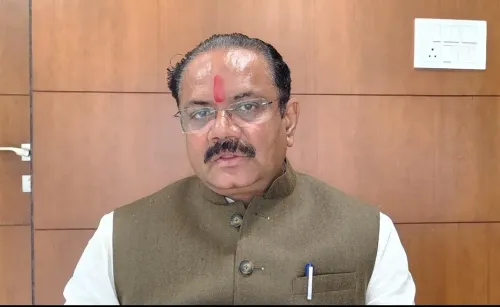
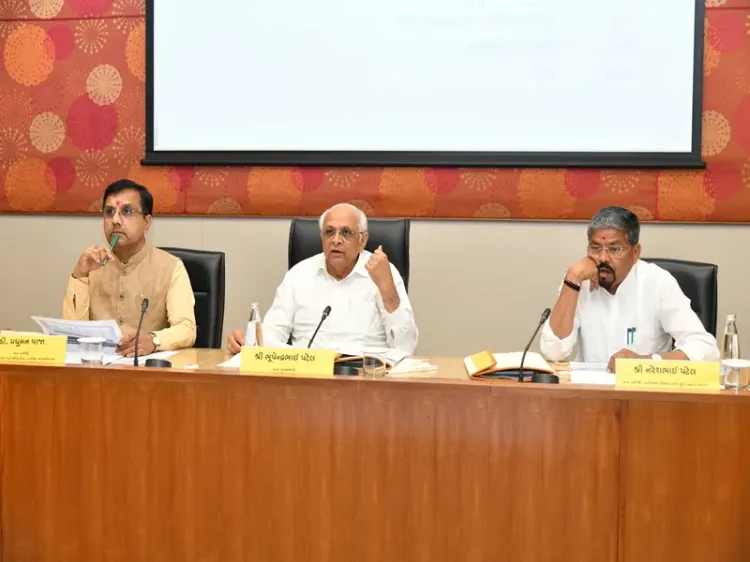
Gandhinagar, March 30 (NationPress) The government of Gujarat has proposed a range of initiatives focused on enhancing irrigation support, regulating farm equipment, and safeguarding crops, following discussions with agricultural organizations, stated Agriculture Minister Jitu Vaghani on Monday.
The minister assured that the administration is fully committed to supporting farmers and emphasized that there is no reason for farmers to feel anxious.
During a press briefing after his meeting with the Bharatiya Kisan Sangh and Kisan Morcha, Vaghani revealed that the Chief Minister has granted a preliminary nod to boost subsidies for sprinkler and drip irrigation systems.
“This irrigation system enables farmers to conserve water while increasing productivity with less water usage. The proposal for enhanced subsidies has received initial approval, and further discussions with relevant departments will follow,” he mentioned.
The state has also provisionally approved a temporary exemption for tractor trolleys from Regional Transport Office (RTO) passing requirements for a duration of three to five years to alleviate challenges faced by farmers.
“To address the issues related to tractor and trolley passing, the state government has granted a provisional exemption from RTO passing for three to five years,” he noted.
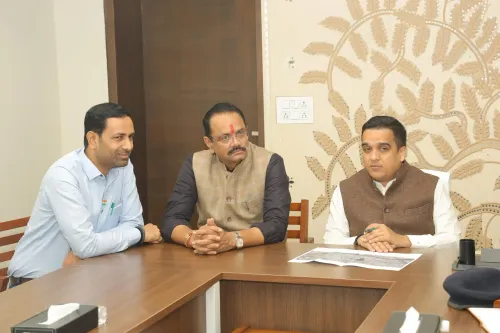
A committee has been formed, consisting of Vaghani, Energy Minister Rushikesh Patel, and Forest Minister Arjun Modhwadia, along with other officials, to tackle farmers' concerns.
This committee conducts regular meetings with farmer representatives and liaises with the Chief Minister.
“The government has consistently adopted a proactive stance towards resolving farmers’ issues and will maintain this approach,” he affirmed.
Reflecting on previous decisions, the minister highlighted that the state had sanctioned exemptions from stamp duty for legal heirs in cases involving ancestral property.
He remarked that such measures were taken under the guidance of Chief Minister Bhupendra Patel after consultations with farmer representatives.
“Crucial decisions for farmers have been swiftly undertaken under the Chief Minister’s leadership and will continue in the future,” he added.
Regarding water management, Vaghani mentioned that under the ‘Sujalam Sufalam’ and ‘SAUNI’ schemes, the government has filled check dams, ponds, and major reservoirs in response to farmers’ needs.
“Village ponds have been filled to initiate a green transformation, with water bodies expected to be filled in stages extending up to around seven kilometres, which will aid in raising groundwater levels, providing irrigation water, and ensuring a drinking water supply,” he explained.
Plans include filling additional ponds through pipeline networks and extending the high-control canal system.
Addressing other concerns raised by farmer groups, Vaghani stated that a policy would be developed to tackle issues related to power transmission towers on agricultural land and guarantee fair compensation.
He also indicated that the fertilizer distribution system, established in 1999, would be improved to adopt a more farmer-centric approach.
“Necessary enhancements will be made based on current demands to simplify the system for farmers,” he assured.
On crop protection, Vaghani noted that the government had initiated a fencing scheme to guard standing crops against wildlife damage.
He mentioned that subsidy benefits would be available to small and marginal farmers cultivating up to two hectares of land, with fencing support allowed for up to one hectare.
“The assistance for fencing has increased from Rs 200 to Rs 300 per running foot as directed by the Chief Minister,” he said.
Furthermore, the government is working to promote indigenous seeds and enhance cotton cultivation.
The minister asserted that strict adherence to Indian Council of Agricultural Research (ICAR) norms would be enforced in private agricultural colleges.
A committee led by Nitin Sangwan has been established to oversee implementation.
“Approval has been granted to private agricultural colleges contingent upon compliance with ICAR standards. Institutions failing to adhere to these regulations will have their admission processes revoked. There will be no leniency concerning these rules,” he stated.
Additionally, around 14 settlement villages in Junagadh, Amreli, and Gir Somnath districts have been integrated into the revenue framework.
Concerns related to eco-sensitive zones in these regions will be addressed through consultations with the forest department, farmer representatives, and the Bharatiya Kisan Sangh.
“The government will adopt a constructive approach to ensure that farmers do not encounter challenges,” he concluded.
Point of View
The administration aims to alleviate farmers' worries and enhance productivity. This approach reflects a growing recognition of the importance of sustainable farming practices.
NationPress
1 Oct 2026
Frequently Asked Questions
What is the Gujarat government's new proposal for farmers?
The Gujarat government plans to increase subsidies for sprinkler and drip irrigation systems and provide RTO relief for tractor trolleys.
How long will the RTO exemption for tractor trolleys last?
The proposed RTO exemption is set to last for three to five years.
What additional support is being offered to farmers?
Farmers will receive increased assistance for fencing and improved fertilizer distribution policies.
What initiatives are included in water management?
The government plans to enhance water management through the 'Sujalam Sufalam' and 'SAUNI' schemes, including filling ponds and check dams.
How will crop protection be improved?
A new fencing scheme will be implemented to protect standing crops from wildlife damage, with increased subsidies for fencing.