Gujarat semiconductor, AI push: CM Patel at Viksit Gujarat Summit 2026
Synopsis
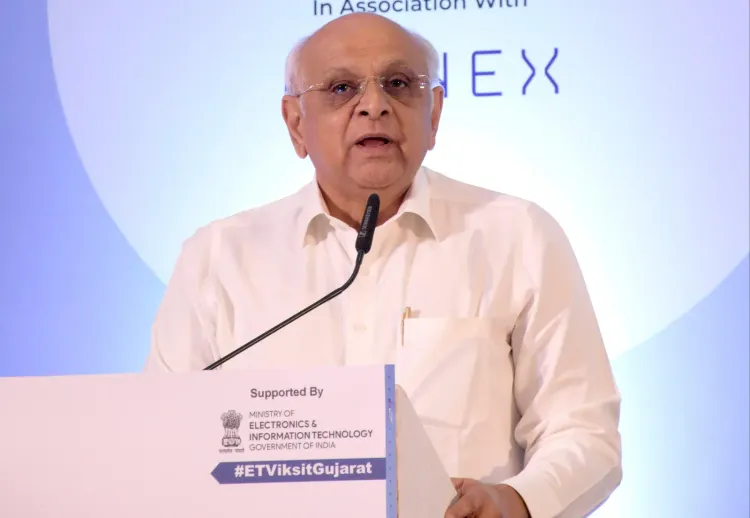
Gujarat isn't just talking tech — it now has three semiconductor plants running, a fresh GCC and Data Centre Policy targeting hyperscale investment, and $73.9 billion in cumulative FDI since 2020. CM Patel's address at the Viksit Gujarat Summit 2026 signals that the state is moving from India's manufacturing backbone to its digital infrastructure spine, faster than most anticipated.
Key Takeaways
Three semiconductor plants are now operational in Gujarat , establishing a new industrial ecosystem in the state.
Gujarat's new GCC and Data Centre Policy aims to attract hyperscale data centres, backed by a central government tax holiday until 2047 .
The state ranked first in the NITI Aayog Investment Friendliness Index 2026 and has led India in cumulative FDI since 2019 .
Gujarat received cumulative FDI of $73.9 billion between April 2020 and 2025 , according to CM Bhupendra Patel .
Nearly 50 space-tech startups have presented prototypes in Gujarat, most already backed by venture funds and holding patents.
Denmark's Ambassador highlighted collaboration on offshore wind, green shipping, and investment at Pipavav Port and the Khavda Renewable Energy Park .
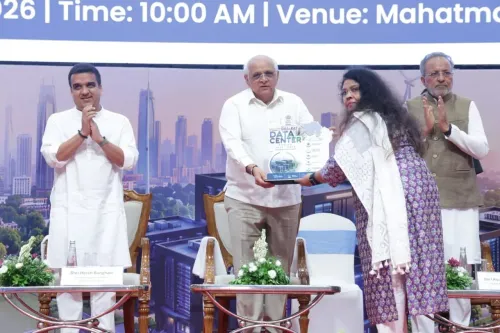
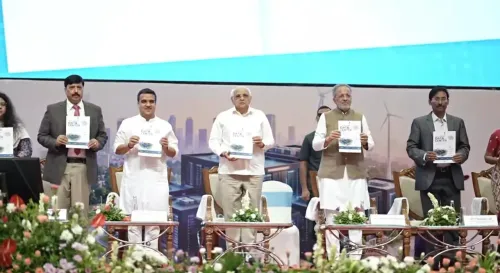
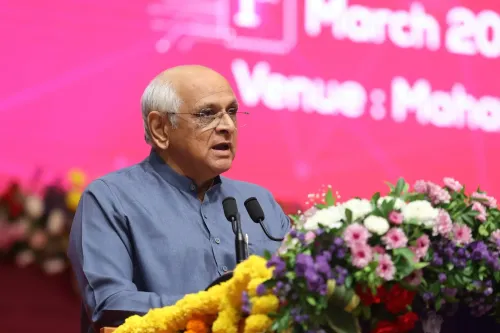
Gujarat is accelerating its transformation from India's manufacturing and renewable energy stronghold into a full-spectrum technology hub, with semiconductor manufacturing, artificial intelligence, and data centre infrastructure powering its next growth phase, Chief Minister Bhupendra Patel said on Friday, 7 August 2026. Speaking at the Viksit Gujarat Summit 2026 held at GIFT City, Gandhinagar, Patel said the state's technology ecosystem was expanding in tandem with its industrial base, positioning Gujarat as a pivotal player in advanced manufacturing and digital infrastructure.
Three Semiconductor Plants Now Operational
Patel announced that three semiconductor plants have become operational in Gujarat, creating an entirely new industrial ecosystem and placing the state prominently on the global technology map. This marks a significant milestone for India's semiconductor ambitions, which have long been concentrated in policy intent rather than ground-level production. Gujarat's emergence as an operational semiconductor hub — rather than merely an aspirational one — represents a concrete shift in the country's chip manufacturing geography.
GCC and Data Centre Policy: What the State Has Announced
The Chief Minister highlighted the state government's recently announced Global Capability Centre (GCC) and Data Centre Policy, which is designed to facilitate the establishment of hyperscale data centres across Gujarat. He noted that the central government's tax holiday for data centres until 2047 would further strengthen investment momentum in the sector. Patel also drew attention to the AI Centre of Excellence at GIFT City, describing it as a critical bridge between technology and industry, underpinned by the financial services ecosystem that GIFT City has developed over recent years.
Gujarat Tops FDI Rankings, Draws $73.9 Billion Since 2020
Citing the recently released NITI Aayog Investment Friendliness Index 2026, Patel said Gujarat ranked first in the country in attracting foreign investment. The state received cumulative foreign direct investment of $73.9 billion between April 2020 and 2025 and has remained India's leading FDI destination since 2019, according to Patel. He attributed this to the state's policy-driven governance, industrial ecosystem, and focus on entrepreneurship, innovation, and employment generation.
Sunrise Sectors and Space Tech: The Broader Picture
Science and Technology Minister Arjun Modhwadia said Gujarat was witnessing rapid growth across sunrise sectors including space technology, electronics, biotechnology, and artificial intelligence, while sustaining its traditional strengths in pharmaceuticals, textiles, and chemicals. He noted that nearly 50 startups had presented space-sector prototypes — a sharp contrast to an era when only ISRO operated in the domain — and that most had already secured venture funding and patents. Modhwadia expressed confidence that Gujarat would become India's leading destination for sunrise industries within the next five years.
International Interest: Denmark's Role in Clean Energy
Denmark's Ambassador to India, Rasmus Abildgaard Kristensen, highlighted the Khavda Renewable Energy Park as a demonstration of integrating solar power, wind energy, and battery storage to advance the clean energy transition. He noted that Danish companies were already investing in Gujarat, including at Pipavav Port, and that India and Denmark were collaborating on offshore wind energy, green shipping, education, and research. The international dimension underscores that Gujarat's technology and energy pivot is attracting not just domestic capital but structured bilateral partnerships.
The Summit's broader theme — 'Viksit Bharat, Viksit Gujarat' — centred on holistic development, equal opportunity, and economic prosperity, with Patel also referencing environmental sustainability initiatives such as 'Ek Ped Maa Ke Naam', natural farming, and the construction of Amrit Sarovars. As Gujarat stacks semiconductor capacity, data centre policy, and international partnerships simultaneously, the state's next phase of growth will be defined by whether execution matches the scale of ambition.
Point of View
Not just intent. The real question is whether the GCC and Data Centre Policy translates into hyperscale commitments from global cloud players, or remains a framework waiting for tenants. With the Centre's 2047 tax holiday as tailwind, the window is open — but Gujarat's ability to deliver power, connectivity, and talent at hyperscale speed will be the actual test.
NationPress
22 Sept 2026
Frequently Asked Questions
What did Gujarat CM Bhupendra Patel announce at the Viksit Gujarat Summit 2026?
Chief Minister Bhupendra Patel announced that three semiconductor plants are now operational in Gujarat and highlighted the state's new GCC and Data Centre Policy aimed at attracting hyperscale data centres. He also cited Gujarat's top ranking in the NITI Aayog Investment Friendliness Index 2026 and cumulative FDI of $73.9 billion since April 2020.
How many semiconductor plants are operational in Gujarat?
Three semiconductor plants have become operational in Gujarat, according to CM Patel's address at the Viksit Gujarat Summit 2026. He described these as creating an entirely new industrial ecosystem and placing Gujarat prominently on the global technology map.
What is the Gujarat GCC and Data Centre Policy?
The Gujarat Global Capability Centre (GCC) and Data Centre Policy is a recently announced state government initiative designed to facilitate the establishment of hyperscale data centres in Gujarat. It is complemented by the central government's tax holiday for data centres, which runs until 2047.
How much FDI has Gujarat attracted and how does it rank nationally?
Gujarat received cumulative foreign direct investment of $73.9 billion between April 2020 and 2025, according to CM Patel. The state ranked first in the NITI Aayog Investment Friendliness Index 2026 and has been India's leading FDI destination since 2019.
What role is Denmark playing in Gujarat's energy and technology growth?
Denmark's Ambassador to India, Rasmus Abildgaard Kristensen, noted that Danish companies are investing in Gujarat including at Pipavav Port, and that India and Denmark are collaborating on offshore wind energy, green shipping, education, and research. He also highlighted the Khavda Renewable Energy Park as a model for integrating solar, wind, and battery storage.