Harsimrat Badal calls for 'thikri pehra' to fight Punjab drug trade

Synopsis
With Punjab's 2027 elections on the horizon, Harsimrat Kaur Badal is reaching back to tradition — reviving the concept of 'thikri pehra', or community night patrols, as a grassroots weapon against drug trafficking. Backed by a pledge for a woman DGP-led task force and 10-year bail denial for traffickers, the SAD campaign is as much electoral mobilisation as it is social activism.
Key Takeaways
Harsimrat Kaur Badal addressed a Maavan Dheeyan Di rally in Kharar on 28 October 2026 , urging women to organise 'thikri pehra' community night patrols against drug trafficking.
SAD has promised, if elected in 2027 , to set up a special anti-drug task force headed by a woman Director General of Police .
Proposed measures include a 10-year denial of bail for drug traffickers and confiscation of their properties to compensate victims.
Badal alleged the AAP government intimidated whistleblowers, citing the cases of Daljit Singh , Parvinder Singh Jhota's family, a CISF constable from Patiala , Mohanjit Singh , and Gulzar Singh of Dirba .
She criticised Chief Minister Bhagwant Mann for allegedly refusing to meet the family of anti-drug campaigner Parvinder Singh Jhota .
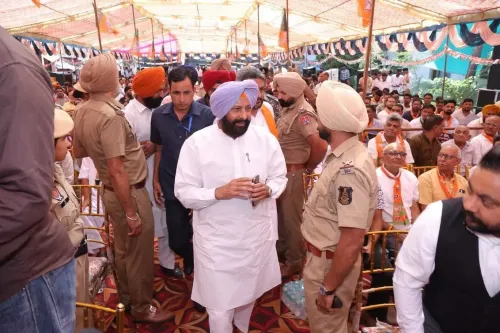
Shiromani Akali Dal (SAD) leader and Bathinda MP Harsimrat Kaur Badal on Wednesday, 28 October 2026, urged the party's women's wing, Maavan Dheeyan Di Fauj, to revive the traditional practice of 'thikri pehra' — community night patrols — across every village and mohalla in Punjab to counter the state's deepening drug trafficking crisis. Speaking at a Maavan Dheeyan Di rally in Kharar town, near Chandigarh, she called on women to become the first line of defence against the drug menace.
The Call to Action
Badal framed the anti-drug campaign as a deeply personal struggle for Punjab's women, who she said had borne the greatest burden of the crisis as families were torn apart by addiction and trafficking. 'For the women of Punjab, ending the scourge of drugs is their number one priority,' she told the gathering, adding that SAD had deliberately launched a women-led campaign because women had suffered the most from the menace.
She urged those present to identify individuals allegedly involved in selling drugs as well as those suspected of shielding traffickers, arguing that community vigilance and collective action were essential to exposing the trade and holding the responsible parties accountable.
SAD's Policy Promises for 2027
Badal outlined a set of legislative and administrative commitments that SAD would pursue if voted to power in the 2027 Punjab Assembly elections. These include the establishment of a special task force headed by a woman Director General of Police specifically mandated to tackle the drug mafia. She also proposed stricter bail conditions — including a 10-year denial of bail to convicted drug traffickers — and the confiscation of their properties, with proceeds earmarked to compensate victims of the drug trade.
Allegations Against the AAP Government
Badal levelled a series of allegations against the ruling Aam Aadmi Party (AAP) government, accusing it of failing to curb trafficking and of intimidating those who speak out. She referred to the reported removal of Daljit Singh's body by police while his mortal remains were being taken to a protest site, alleging that family members were assaulted when they attempted to stop the police — a charge that the government has not publicly addressed.
She linked this incident to the ongoing struggle for justice by the family of Parvinder Singh Jhota, described as an anti-drug campaigner. Badal also raised the reported detention of a CISF constable who had allegedly raised concerns about drug use at Government Rajindra Hospital in Patiala, arguing such cases risk discouraging whistleblowers from coming forward.
Criticising Chief Minister Bhagwant Mann for allegedly refusing to meet Jhota's family, she claimed the government had failed to demonstrate the urgency the situation demands. She further cited the cases of Mohanjit Singh — who she alleged was tortured after protesting against the drug trade — and Gulzar Singh of Dirba, who she said died by suicide after being harassed for questioning the alleged sale of 'chitta', a colloquial term for heroin.
Broader Context
Punjab's drug crisis has remained a flashpoint in state politics for over a decade, with successive governments — the Congress, the SAD-BJP alliance, and now AAP — all facing criticism for their handling of the issue. This is not the first time opposition parties have sought to mobilise grassroots community structures like thikri pehra, which have historically been used in rural Punjab for security and social vigilance. Notably, the AAP government came to power in 2022 partly on a promise to eliminate the drug trade, making Badal's allegations politically pointed ahead of the 2027 election cycle.
What Comes Next
SAD's Maavan Dheeyan Di Fauj campaign is expected to extend its mobilisation drive to other districts across Punjab in the coming weeks. Whether community patrols materialise at scale will depend on the party's organisational strength at the village level. The political temperature around the drug issue is likely to rise further as the 2027 election date approaches.
Point of View
Resonates culturally in rural Punjab, and puts AAP's governance record on the drug crisis squarely in the dock ahead of 2027. The harder question is whether SAD, which governed Punjab for a decade with mixed results on the drug menace, has the credibility to own this issue. The party's own record on curbing trafficking and protecting whistleblowers during its tenure in power remains a liability it has yet to fully address. Framing the campaign around women and mothers is a deliberate softening of that history — emotionally compelling but short on structural accountability.
NationPress
28 Oct 2026
Frequently Asked Questions
What is 'thikri pehra' and why is Harsimrat Badal promoting it?
'Thikri pehra' is a traditional Punjabi practice of community night patrols, historically used in villages for local security and social vigilance. Harsimrat Kaur Badal is promoting it as a grassroots tool to help women identify and report drug traffickers and those alleged to be protecting them in their neighbourhoods.
What anti-drug policies has SAD promised for 2027?
SAD has pledged, if voted to power in the 2027 Punjab Assembly elections, to establish a special anti-drug task force headed by a woman Director General of Police. The party has also proposed a 10-year denial of bail for convicted drug traffickers and the confiscation of their properties, with proceeds used to compensate victims.
What allegations did Harsimrat Badal make against the AAP government?
Badal alleged that the AAP government has failed to curb drug trafficking and has intimidated people who speak out against the trade. She cited the reported removal of Daljit Singh's body by police, the alleged assault on his family, the detention of a CISF constable who raised concerns at Government Rajindra Hospital in Patiala, and Chief Minister Bhagwant Mann's alleged refusal to meet the family of anti-drug campaigner Parvinder Singh Jhota. These are allegations by the opposition and have not been independently verified.
Who is Parvinder Singh Jhota?
Parvinder Singh Jhota is described as an anti-drug campaigner whose family is reportedly seeking justice. Harsimrat Badal referenced his case as an example of the AAP government allegedly failing to protect those who stand up against drug trafficking in Punjab.
What is the political significance of SAD's women-led drug campaign?
The campaign is widely seen as an early mobilisation effort ahead of the 2027 Punjab Assembly elections, with SAD attempting to reclaim the anti-drug issue from AAP, which had made it central to its 2022 election campaign. By centering women and mothers — through the Maavan Dheeyan Di Fauj wing — SAD is seeking to appeal to a constituency that has been directly affected by the drug crisis at the family level.