Haryana CM Saini grants corporators emergency spend powers
Synopsis
Haryana Chief Minister Nayab Singh Saini has authorised municipal representatives to spend on emergency civic works, capping corporators at ₹6 lakh, council members at ₹3 lakh and committee members at ₹1.5 lakh.
Key Takeaways
Haryana Chief Minister Nayab Singh Saini on 27 November 2026 authorised councillors to spend on emergency civic works.
Municipal corporation corporators may spend up to ₹6 lakh .
Municipal council members are capped at ₹3 lakh .
Municipal committee members are capped at ₹1.5 lakh .
The step follows the devolution logic of the 74th Constitutional Amendment Act, 1992 .
The post does not list eligible emergency categories or audit rules; those typically arrive through government orders.
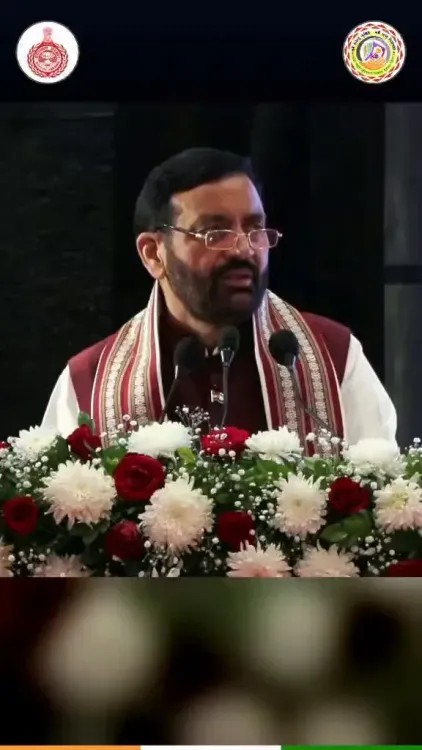
Haryana Chief Minister Nayab Singh Saini on 27 November 2026 authorised municipal representatives across the state to spend directly on emergency civic works, with corporators in municipal corporations allowed up to ₹6 lakh. The three-tier permission, posted on X, is designed so a ward member can move on a collapsed drain or a broken stretch of road without waiting for a full municipal file to travel.
₹6 lakh, ₹3 lakh and ₹1.5 lakh form the new ladder
The Chief Minister set the ceilings by class of urban local body. A corporator of a nagar nigam (municipal corporation) may spend up to ₹6 lakh. A councillor of a nagar parishad (municipal council) is capped at ₹3 lakh. A member of a nagar palika (municipal committee) gets ₹1.5 lakh.
In Hindi he wrote that parshads had been given permission for emergency works at those limits: इमरजेंसी कार्यों के लिए पार्षदों को खर्च की अनुमति. The post named the three civic bodies that run towns and cities in Haryana.
A 1992 devolution promise, updated in rupees
The legal backdrop is the 74th Constitutional Amendment Act, 1992, which required states to devolve functions and funds to urban local bodies. Over the years, states have periodically widened what an individual municipal representative can authorise so that local repairs do not stall on a distant desk.
Haryana’s announcement fits that pattern of incremental decentralisation. It does not, by itself, rewrite the state’s municipal acts. It enlarges what a councillor can sanction when the work is framed as an emergency.
The circular that must define emergency
A rupee cap on social media is not a sanction code. Formal government orders still have to list which categories of work count as emergency, how bills are booked, and how audits will catch misuse. Until that order is issued, the numbers are a political commitment waiting for an administrative spine.
Councillors from corporations, councils and committees now have a figure to cite. The test is whether a blocked drain in a monsoon week is actually cleared on a councillor’s signature — and whether the paper trail stands up later.
Point of View
Not the rupee figure, will decide whether this is real local power or a headline waiting for a circular.
NationPress
27 Nov 2026
Frequently Asked Questions
What emergency spending limits did Haryana CM Nayab Singh Saini announce?
Haryana Chief Minister Nayab Singh Saini announced that municipal corporation corporators may spend up to ₹6 lakh on emergency works, municipal council members up to ₹3 lakh, and municipal committee members up to ₹1.5 lakh. He posted the three-tier ceilings on X on 27 November 2026.
Who can spend ₹6 lakh on emergency works in Haryana?
Corporators of a nagar nigam, or municipal corporation, are allowed to spend up to ₹6 lakh on emergency civic works under the limits the Chief Minister posted. Lower urban local bodies have smaller ceilings.
What is a nagar parishad councillor allowed to spend in Haryana?
A nagar parishad (municipal council) councillor may spend up to ₹3 lakh on emergency works, according to the Chief Minister’s announcement. That sits between the corporation cap of ₹6 lakh and the committee cap of ₹1.5 lakh.
Does this announcement change Haryana’s municipal laws?
The post does not amend Haryana’s municipal acts. It fits a wider pattern of states incrementally raising financial powers of urban local body members so they can respond faster to local emergencies.
What still needs to be issued after the Chief Minister’s post?
Formal government orders typically specify which works count as emergencies and how expenditure will be audited. Those details will determine how the new ceilings operate on the ground.