Haryana CMO launches Record Donation Campaign for state archives

Synopsis
The Chief Minister's Office of Haryana has launched the Abhilekh Daan Abhiyan, calling on citizens to donate historically significant personal and family records to the Haryana State Archives for long-term preservation and research access.
Key Takeaways
The Haryana CMO announced the Abhilekh Daan Abhiyan (Record Donation Campaign) on 29 October 2026 .
Citizens are invited to donate personal, family, or community historical documents to the Haryana State Archives .
The campaign aims to preserve regional heritage and make records accessible to future generations and researchers.
The initiative supplements official state holdings with privately held historical material that is otherwise at risk of loss.
The campaign aligns with the broader national mandate of the National Archives of India on heritage preservation.
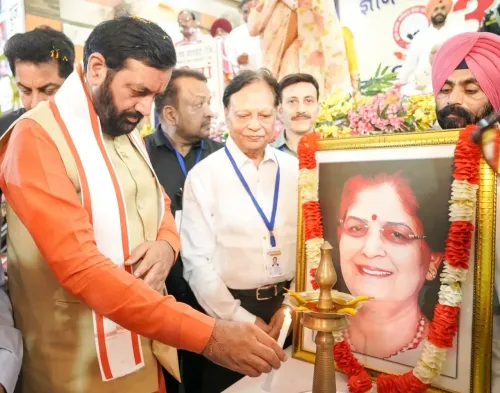
History lives in paperwork — in land deeds, family registers, local court orders, and handwritten letters that most households quietly forget in old trunks. The Chief Minister's Office of Haryana wants those documents out of the dark and into the permanent care of the Haryana State Archives, launching the Abhilekh Daan Abhiyan — the Record Donation Campaign — on Thursday, 29 October 2026.
The campaign's message is direct: 'Preserve your historical records and pass them on to future generations.' Citizens across Haryana are being asked to donate personal, family, or community documents of historical significance to the state's official archival repository, so that the material can be safeguarded and made available for research and public memory.
What the Haryana State Archives actually does
The Haryana State Archives is the state's primary custodian of administrative and cultural records — government documents, revenue records, and private papers that collectively form the evidentiary backbone of the region's history. Its mandate mirrors that of the National Archives of India: collect, preserve, catalogue, and provide access. Where it often falls short, as with archives across India, is in the sheer volume of historically valuable material that remains in private hands — sitting in family homes, village offices, and local institutions, slowly deteriorating.
Public donation drives are a recognised tool to bridge that gap. By inviting citizens to contribute rather than waiting for institutional acquisition, states tap into a distributed network of local memory that no centralised record-keeping system could ever fully capture on its own.
Why private papers matter to public history
The records most at risk are often the most revealing. Personal letters, village-level administrative notes, private land transactions, and community registers illuminate everyday life in ways that official state records rarely do. Historians and researchers working on Haryana's social, agrarian, and administrative history depend on precisely this kind of material — and once it is lost, it is irreplaceable.
The campaign's hashtag, #अभिलेख_दान_अभियान (Record Donation Campaign), signals an intent to build public momentum around what is normally an unglamorous institutional function. Whether district-level collection drives or digitisation efforts follow will determine whether this becomes a sustained programme or a single awareness push.
For now, the ask is simple: if you hold a piece of Haryana's past, consider giving it a future.
Point of View
A state with deep agrarian and administrative history spanning the pre- and post-partition era, the stakes of losing such records are particularly high. The campaign's success will hinge on whether it moves beyond social media visibility into tangible district-level collection infrastructure. If digitisation commitments follow, this could become a model for other states grappling with the same archival gaps.
NationPress
29 Oct 2026
Frequently Asked Questions
What is the Abhilekh Daan Abhiyan in Haryana?
The Abhilekh Daan Abhiyan, or Record Donation Campaign, is a public drive launched by the Haryana CMO urging citizens to donate personal or family historical documents to the Haryana State Archives for long-term preservation.
Where can Haryana citizens donate historical records?
Citizens can donate historically significant documents to the Haryana State Archives , the official state repository responsible for collecting and preserving the region's administrative and cultural records.
What kind of records can be donated under this campaign?
Any personal, family, or community documents of historical significance — such as land deeds, old letters, local administrative papers, or genealogical registers — are the types of material the campaign seeks.
Why is donating old records important for Haryana's heritage?
Private documents often capture everyday history that official state records miss. Once lost or destroyed, they are irreplaceable. Donating them ensures historians, researchers, and future generations can access an authentic record of the region's past.
Is the Abhilekh Daan Abhiyan a central government scheme?
No. This is a state-level initiative by the Government of Haryana, though it aligns with the broader heritage preservation mandate of the National Archives of India.