Haryana Cabinet slashes stamp duty to ₹500 for PMAY-U 2.0 EWS homes
Synopsis
Haryana has slashed the stamp duty and registration fee on EWS homes under PMAY-U 2.0 to just ₹500 per deed — down from a combined levy that could touch 7% of property value plus up to ₹50,000 in fees. In the same Cabinet meeting, the state unveiled an MSME policy targeting ₹55,000 crore in investment, signalling a dual bet on affordable housing and industrial scale-up.
Key Takeaways
Haryana Cabinet on 28 July fixed stamp duty and registration fee at ₹500 per deed for EWS dwelling units up to 60 sq m under PMAY-U 2.0 .
Prevailing stamp duty is 5% + 2% additional duty under Article 23-A of the Indian Stamp Act, with registration fees up to ₹50,000 — making the new rate a near-total waiver.
The Haryana Progressive MSME and Export Promotion Policy 2026 targets ₹55,000 crore investment across 60 initiatives and 6 strategic pillars .
MSME policy covers high-growth sectors including EVs, aerospace, pharma, renewables , and agri-processing , aligned with the Centre's RAMP Programme .
The draft Haryana Local Audit Bill 2026 was also approved to strengthen financial oversight of local bodies.
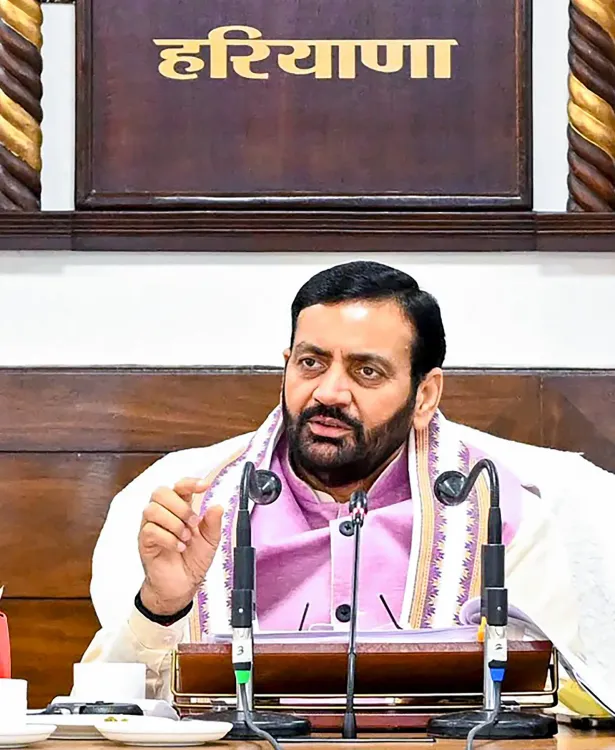
The Haryana Cabinet, chaired by Chief Minister Nayab Singh Saini, on Tuesday, 28 July approved a sharp reduction in stamp duty and registration fee for dwelling units up to 60 sq m registered under Pradhan Mantri Awas Yojana-Urban (PMAY-U) 2.0 for economically weaker sections (EWS). In the same sitting, the Cabinet launched the Haryana Progressive MSME and Export Promotion Policy 2026, targeting ₹55,000 crore in fresh investment.
What the Stamp Duty Relief Means
Under the revised framework, both the stamp duty under Article 23-A of Schedule 1-A of the Indian Stamp Act, 1899 and the registration fee on conveyance deeds for qualifying EWS units have been fixed at a nominal ₹500 per deed. This is a dramatic reduction from the prevailing structure, under which stamp duty stands at 5% of the transaction value under the same Article, plus an additional 2% duty, with registration fees charged on a slab basis up to a maximum of ₹50,000. A 2% rebate on stamp duty is currently available where the conveyance is executed in favour of a woman.
According to an official statement, the concession is a targeted measure to cut transaction costs and ease the financial burden on EWS beneficiaries, directly advancing the 'housing for all' objective embedded in PMAY-U 2.0. The relief is time-bound, tied to the active window of the flagship scheme.
MSME and Export Promotion Policy 2026
The Haryana Progressive MSME and Export Promotion Policy 2026 is built around 60 transformative initiatives anchored across six strategic pillars: finance, infrastructure, technology, exports, sustainability, and skills. The government said the policy is designed to translate commitments under the Sankalp Patra into action aligned with Vision 2047 and to ensure convergence with the Government of India's Raising and Accelerating MSME Performance (RAMP) Programme.
The policy covers enterprises across all geographies of Haryana, with targeted support for both traditional and high-growth sectors. These include automotive and auto components, electric vehicles, aerospace and defence, pharmaceuticals and medical devices, renewable energy, textiles and apparel, agri-based and food processing industries, and several others spanning rubber, plastics, footwear, leather, and green industries.
Haryana Local Audit Bill 2026
The Cabinet additionally approved the draft Haryana Local Audit Bill 2026, which seeks to establish a more effective and efficient audit framework for all local authorities, bodies, institutions, and funds in the state. The Bill is intended to enable stronger oversight of local fund expenditure and provides for matters connected therewith or incidental thereto.
Broader Significance
This comes amid a national push to accelerate PMAY-U 2.0 delivery across states, with the Centre pressing for faster on-ground implementation. Haryana's stamp duty waiver effectively removes one of the most cited barriers to EWS home registration — the upfront transaction cost, which can represent a significant share of a low-income household's savings. Notably, the move also strengthens the state's position ahead of the next round of central fund disbursements under the scheme, where state-level facilitation measures are a key assessment parameter. With the MSME policy simultaneously unveiled, the Cabinet appears to be signalling a twin focus on social housing and industrial competitiveness in a single sitting.
Point of View
Though its real impact will depend on how swiftly PMAY-U 2.0 units are actually constructed and allotted in the state. The simultaneous MSME policy launch, targeting ₹55,000 crore, risks diluting the housing headline — but together they suggest the Saini Cabinet is trying to demonstrate policy momentum on multiple fronts ahead of what remains a politically competitive cycle in the state.
NationPress
27 Oct 2026
Frequently Asked Questions
What is the new stamp duty for EWS homes under PMAY-U 2.0 in Haryana?
The Haryana Cabinet has fixed both stamp duty and registration fee at a nominal ₹500 per deed for dwelling units up to 60 sq m registered under PMAY-U 2.0 for economically weaker sections. This replaces the standard rate of 5% stamp duty plus 2% additional duty, along with registration fees of up to ₹50,000.
Who is eligible for the stamp duty exemption in Haryana?
The relief applies to economically weaker section (EWS) beneficiaries acquiring dwelling units of up to 60 sq m under the Pradhan Mantri Awas Yojana-Urban 2.0 scheme. The concession is time-bound and tied to the active window of PMAY-U 2.0.
What is the Haryana Progressive MSME and Export Promotion Policy 2026?
It is a state industrial policy approved on 28 July by the Haryana Cabinet, targeting ₹55,000 crore in investment through 60 initiatives across six pillars — finance, infrastructure, technology, exports, sustainability, and skills. It covers sectors from EVs and aerospace to agri-processing and renewables, and is aligned with the Centre's RAMP Programme.
What is the Haryana Local Audit Bill 2026?
The draft Haryana Local Audit Bill 2026, approved by the Cabinet on 28 July, seeks to establish a stronger audit framework for all local authorities, bodies, institutions, and funds in the state. It is aimed at improving oversight of local fund expenditure.
How does the stamp duty change compare to what buyers currently pay in Haryana?
Currently, buyers in Haryana pay 5% stamp duty under Article 23-A of the Indian Stamp Act plus a 2% additional duty, with registration fees on a slab basis up to ₹50,000. Women buyers get a 2% rebate. Under the new rule for qualifying EWS units, the entire liability is capped at ₹500 per deed — a near-total waiver of transaction costs.