PMAY-Urban 2.0: Approval for 2.88 Lakh More Houses, Total Reaches 13.61 Lakh

Synopsis
In a significant move to enhance urban housing, the government has sanctioned an additional 2.88 lakh houses under the PMAY-Urban 2.0 scheme. This brings the total to 13.61 lakh, with a focus on women and vulnerable groups.
Key Takeaways
2.88 lakh additional houses sanctioned under PMAY-U 2.0.
Total housing sanctions now exceed 13.61 lakh.
Major focus on women and marginalized communities.
Housing projects prioritized near mass transit corridors.
Promotion of affordable rental housing for vulnerable groups.
New Delhi, Feb 23 (NationPress) The government announced on Monday the approval of 2.88 lakh additional houses under the Pradhan Mantri Awas Yojana–Urban 2.0 (PMAY-U 2.0).
With this recent approval of 2,87,618 houses, the cumulative total of sanctioned houses under the PMAY-U 2.0 scheme now exceeds 13.61 lakh, as stated by the Ministry of Housing and Urban Affairs.
Out of the 2.88 lakh sanctioned houses, over 1.60 lakh are designated for women, including widows, separated, or unmarried females.
Additionally, eight dwelling units have been sanctioned for transgender individuals. Furthermore, 22,581 houses have been allocated for senior citizens, while 35,525 houses are reserved for SC beneficiaries, 9,773 for ST beneficiaries, and 82,190 for OBC beneficiaries.
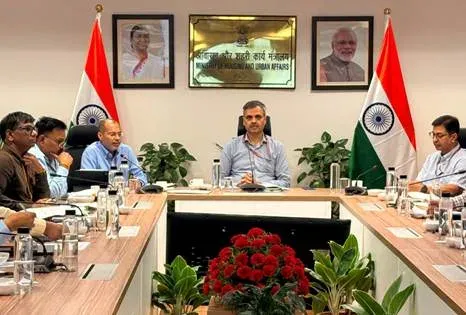
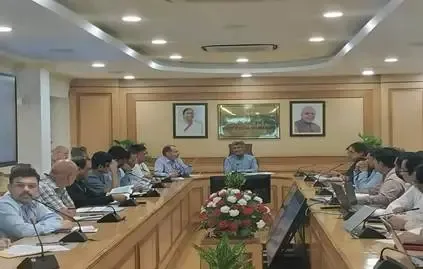
This initiative highlights the government’s ongoing commitment to providing access to dignified and affordable housing for urban families from the Economically Weaker Section (EWS), Low Income Group (LIG), and Middle-Income Group (MIG), as discussed in the sixth meeting of the Central Sanctioning and Monitoring Committee (CSMC).
According to the ministry, these newly-sanctioned houses span across 16 States/UTs including Andhra Pradesh, Arunachal Pradesh, Chhattisgarh, Gujarat, Jammu & Kashmir, Punjab, Puducherry, Rajasthan, Tamil Nadu, Telangana, Maharashtra, Madhya Pradesh, Nagaland, Odisha, Uttar Pradesh, and West Bengal.
These houses have been approved under various categories of PMAY-U 2.0, which include Beneficiary Led Construction (BLC) – 1.66 lakh houses, Affordable Housing in Partnership (AHP) – 1.09 lakh houses, and Affordable Rental Housing (ARH) – 12,846 houses.
Of the total 13.61 lakh houses sanctioned under PMAY-U 2.0, 96 percent are either registered in the names of female heads of households or in joint ownership under the BLC and ISS categories, demonstrating the scheme’s focus on empowering women.
Srinivas Katikithala, Secretary of the Ministry of Housing and Urban Affairs, highlighted the necessity of prioritizing housing projects located near mass transit corridors.
He also remarked that AHP houses should be situated within urban areas to enhance the quality of life. Furthermore, he noted that successful affordable housing projects should be presented as best practices for cross-learning among States/UTs.
The ministry pointed out its promotion of rental housing as a distinct vertical through ARH, aiming to address the affordable rental housing needs of urban migrants, the homeless, industrial workers, working women, construction laborers, and other vulnerable groups.
In total, 12,846 houses have been sanctioned under the ARH initiative.
Point of View
The government's commitment to providing affordable housing through PMAY-Urban 2.0 is a significant step towards addressing urban housing challenges. The focus on women and marginalized groups reflects an inclusive approach to development, which is essential for sustainable urban growth.
NationPress
20 Sept 2026
Frequently Asked Questions
What is the PMAY-Urban 2.0?
The PMAY-Urban 2.0 is a government initiative aimed at providing affordable housing to urban families, particularly targeting Economically Weaker Sections, Low Income Groups, and Middle-Income Groups.
How many houses have been sanctioned under PMAY-Urban 2.0?
As of now, a total of 13.61 lakh houses have been sanctioned under PMAY-Urban 2.0, including the latest approval of 2.88 lakh additional houses.
Who benefits from the housing sanctioned under PMAY-Urban 2.0?
The scheme primarily benefits women, senior citizens, SC, ST, and OBC beneficiaries, as well as urban migrants and other vulnerable groups.
What are the different categories of housing under PMAY-Urban 2.0?
The housing under PMAY-Urban 2.0 is categorized into Beneficiary Led Construction (BLC), Affordable Housing in Partnership (AHP), and Affordable Rental Housing (ARH).
How does this initiative empower women?
The initiative empowers women by ensuring that 96% of the sanctioned houses are registered in the names of female heads of households or in joint ownership.