Is Haryana Minister Taking Steps to Enhance Doctor-Population Ratio?
Synopsis
Haryana's Health Minister Arti Singh Rao outlined the government's initiatives to improve the doctor-population ratio by increasing MBBS seats, aiming to enhance healthcare access for citizens. Key developments include establishing new medical colleges and expanding healthcare facilities, ensuring affordable care for all.
Key Takeaways
Haryana's health initiatives focus on increasing MBBS seats.
The doctor-population ratio is improving with new medical colleges.
Healthcare access is prioritized for economically weaker sections.
Dialysis services are now free in government hospitals.
Healthcare is viewed as a fundamental right.
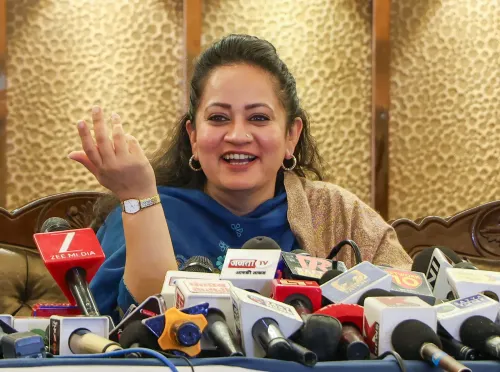
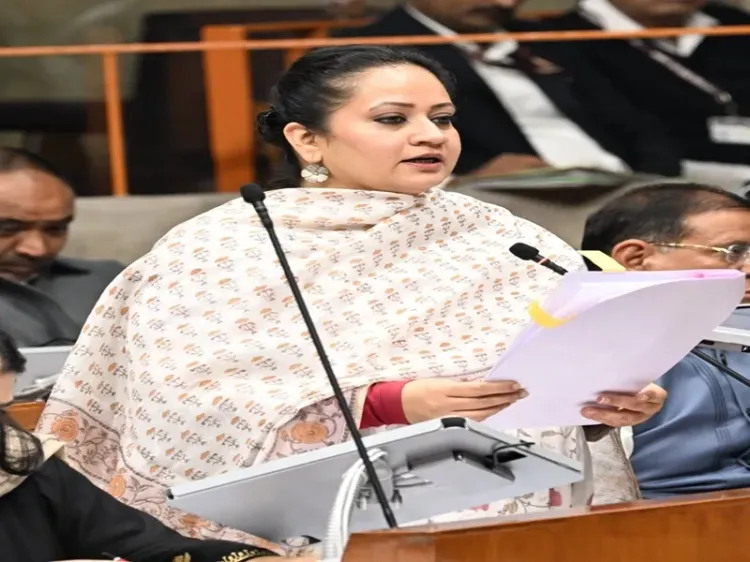
Chandigarh, Dec 19 (NationPress) Haryana's Health Minister Arti Singh Rao announced in the Assembly that the government is actively engaged in efforts to enhance the doctor-population ratio by expanding the number of MBBS seats through the establishment of new medical colleges in both public and private domains.
She highlighted that the count of MBBS seats in Haryana has surged from just 700 in 2014 to an impressive 2,710 today while responding to a question during the winter session of the Vidhan Sabha.
Rao further informed the assembly that, according to the Ministry of Health and Family Welfare's response in the Lok Sabha in 2018, the doctor-population ratio was recorded at one doctor per 1,000 individuals.
Based on data from the Haryana Medical Council as of December 16, she noted that when considering only allopathic doctors, the current ratio in the state stands at one doctor per 1,225 people.
When including registered Ayurveda, Unani, and Homeopathy (AUH) practitioners, the ratio improves to one doctor per 819 people.
Reaffirming the government's commitment, Rao stated that increasing the number of doctors is a priority, and the state is consistently broadening its medical education infrastructure in both public and private sectors to boost MBBS admissions.
She also emphasized the National Health Policy of 2017 and the Indian Public Health Standards that set benchmarks for health service availability, particularly concerning population-to-hospital bed ratios.
According to these standards, the combined government health and medical education sector should provide at least one hospital bed per 1,000 individuals, and when factoring in ESIC and private hospitals, the availability should be two beds per 1,000 population.
In response to a supplementary question, Rao stated that the number of District Civil Hospitals and Sub-Divisional Hospitals has increased from 56 in 2014 to 74 currently.
Moreover, the count of Community Health Centres (CHCs) has risen from 109 in 2014 to 122.
Under Chief Minister Nayab Singh Saini's leadership, the government has made dialysis services available free of charge in government hospitals.
Additionally, economically disadvantaged groups are receiving free treatment up to Rs 5 lakh through the Ayushman Bharat scheme.
The government firmly holds the view that healthcare is a fundamental right rather than a privilege, and is committed to ensuring affordable and accessible health services are within reach of citizens throughout the state, the minister added.
Point of View
The government's commitment to enhancing the doctor-population ratio in Haryana reflects a broader trend of prioritizing healthcare infrastructure and accessibility. It is essential for states to focus on equitable health services to ensure that healthcare is a right for all citizens, not just a privilege for the few.
NationPress
24 Sept 2026
Frequently Asked Questions
What is the current doctor-population ratio in Haryana?
The current doctor-population ratio in Haryana is one doctor per 1,225 people for allopathic doctors. When including Ayurveda, Unani, and Homeopathy doctors, it improves to one doctor per 819 people.
How many MBBS seats are available in Haryana now?
As of now, Haryana has increased its MBBS seats to 2,710 from just 700 in 2014.
What measures are being taken to improve healthcare services?
The government is establishing new medical colleges and expanding existing healthcare facilities to enhance the availability of doctors and medical care for the population.
What benefits does the Ayushman Bharat scheme provide?
The Ayushman Bharat scheme offers free treatment up to Rs 5 lakh for economically weaker sections of society, ensuring access to necessary healthcare services.
What is the significance of the National Health Policy of 2017?
The National Health Policy of 2017 sets important benchmarks for health service availability, including population-to-hospital bed ratios, aiming to improve overall healthcare standards in the country.