Delhi HC: Justice Manoj Jain to hear CBI plea against Kejriwal discharge in excise case
Synopsis
The Delhi High Court has split the Delhi excise policy case across two new benches — Justice Manoj Jain for the CBI's discharge challenge, and a Division Bench for criminal contempt against Kejriwal and five AAP leaders. The restructuring follows Justice Sharma's landmark contempt order targeting an alleged coordinated social media campaign against the judiciary, raising the stakes for both the ruling party and the courts.
Key Takeaways
Justice Manoj Jain will hear the CBI 's revision petition challenging the discharge of Arvind Kejriwal , Manish Sisodia , and others in the Delhi excise policy case.
A Division Bench of Justice Navin Chawla and Justice Ravinder Dudeja will hear criminal contempt proceedings against Kejriwal , Sisodia , Sanjay Singh , Saurabh Bharadwaj , Vinay Mishra , and Durgesh Pathak .
Both matters are listed for hearing on Tuesday .
Justice Swarana Kanta Sharma recused from the main petition after initiating contempt proceedings over an alleged 'coordinated social media campaign' against the judiciary.
The trial court had discharged all accused in a 1,100-paragraph judgment, finding the prosecution failed to establish an overarching conspiracy.
The CBI alleges the excise policy was manipulated to favour select liquor traders in exchange for kickbacks.
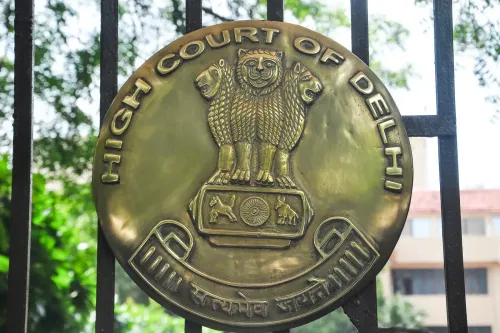
The Delhi High Court has reconstituted its benches to hear two separate but interconnected matters arising from the Delhi excise policy case — a CBI revision petition challenging the discharge of Aam Aadmi Party (AAP) leaders, and criminal contempt proceedings against former Chief Minister Arvind Kejriwal and others. The restructuring follows the recusal of Justice Swarana Kanta Sharma from the main petition after she herself initiated the contempt proceedings on 18 May.
New Bench Assignments
A single-judge bench of Justice Manoj Jain will now hear the CBI's revision petition against the trial court order that discharged Kejriwal, former Deputy Chief Minister Manish Sisodia, and other accused persons in the alleged excise policy corruption case. The matter is scheduled to be taken up on Tuesday.
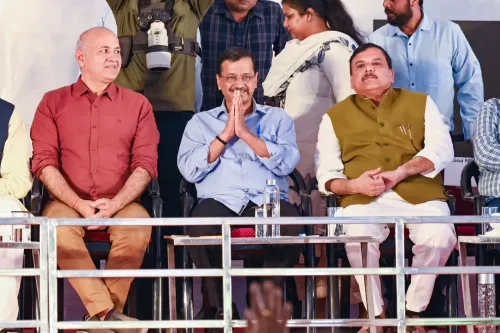
Separately, a Division Bench comprising Justice Navin Chawla and Justice Ravinder Dudeja has been constituted to hear the criminal contempt case. The contempt proceedings name Kejriwal, Sisodia, AAP Member of Parliament Sanjay Singh, and party leaders Saurabh Bharadwaj, Vinay Mishra, and Durgesh Pathak as proposed contemnors. That matter is also listed for Tuesday.
Why Justice Sharma Stepped Back
Justice Sharma initiated criminal contempt proceedings after the court took strong exception to what it described as a 'coordinated social media campaign' designed to scandalise the judiciary in connection with the excise policy case. In a detailed order, the court held that the actions of the proposed contemnors were 'calculated to scandalise the Court, lower the authority of the institution of justice, interfere with the administration of justice, and intimidate the independent exercise of judicial functions.'
The court drew a clear line between permissible criticism and organised pressure, stating: 'There is a distinction between fair criticism and running a campaign to portray a judge as biased.' It warned that such attempts, if left unchecked, could erode public confidence in the judiciary.
Justice Sharma clarified that her recusal from the main revision petition was not a concession to demands made by the accused, but a step required by 'judicial propriety and discipline' following the initiation of contempt proceedings. She emphasised that the earlier order rejecting recusal 'continues to hold the field,' and that the contempt case — directed against the court and the institution — could only be addressed by her bench.
What Triggered the Contempt Proceedings
According to the Delhi High Court, after Justice Sharma declined to recuse herself from the excise policy matter, the accused persons allegedly chose to 'carry the matter to social media' rather than challenge the order before a higher forum. Letters and videos questioning the judge's impartiality were reportedly circulated, which the court found amounted to an attempt to create public distrust in the judiciary and constituted 'defamatory and vilifying' conduct.
The judge stated she 'neither seeks sympathy nor demands immunity from criticism' but is duty-bound to protect the institution. The court further observed: 'The Court cannot permit erosion of the constitutional system and the justice delivery system by tolerating organised assaults in the name of public discourse.'
Background: The Excise Policy Case
The trial court had discharged all accused persons in a judgment running into more than 1,100 paragraphs, holding that the now-scrapped Delhi excise policy was the outcome of a consultative and deliberative process and that the prosecution had failed to establish an overarching conspiracy. In its revision plea before the High Court, the CBI has alleged that the excise policy framed by the then AAP-led Delhi government was manipulated to favour select liquor traders in exchange for kickbacks.
With fresh benches now in place, both the CBI's challenge to the discharge order and the contempt proceedings against senior AAP leaders are set to move forward simultaneously — keeping the excise policy case firmly in the judicial spotlight.
Point of View
100-paragraph discharge order. More significantly, the contempt proceedings represent an unusual escalation: a sitting High Court judge initiating criminal contempt against a former chief minister and five senior politicians over social media conduct. The line between legitimate public criticism of the judiciary and contemptuous conduct has always been contested in Indian law, and this case will test it in real time. If the Division Bench sustains the contempt, it sets a chilling precedent for political commentary on judicial proceedings; if it does not, questions will linger about how the proceedings were initiated in the first place.
NationPress
1 Oct 2026
Frequently Asked Questions
Who is Justice Manoj Jain and what will he hear in the excise policy case?
Justice Manoj Jain is the single-judge of the Delhi High Court now assigned to hear the CBI's revision petition challenging the trial court's decision to discharge Arvind Kejriwal, Manish Sisodia, and other AAP leaders in the Delhi excise policy corruption case. The matter is listed for Tuesday.
Why did Justice Swarana Kanta Sharma recuse from the excise policy case?
Justice Sharma recused from the CBI's main revision petition after she herself initiated criminal contempt proceedings against Kejriwal and others, citing judicial propriety and discipline. She clarified that the recusal was not a concession to demands by the accused, and that her earlier order rejecting recusal remains valid.
Who are the accused in the criminal contempt proceedings?
The criminal contempt case names former Chief Minister Arvind Kejriwal, former Deputy CM Manish Sisodia, AAP MP Sanjay Singh, and party leaders Saurabh Bharadwaj, Vinay Mishra, and Durgesh Pathak as proposed contemnors. A Division Bench of Justices Navin Chawla and Ravinder Dudeja will hear the matter.
What triggered the criminal contempt proceedings against Kejriwal and others?
The Delhi High Court initiated contempt proceedings after the accused persons allegedly circulated letters and videos on social media questioning Justice Sharma's impartiality, instead of challenging her recusal refusal before a higher court. The court described this as a 'coordinated social media campaign' intended to scandalise the judiciary.
What was the trial court's original ruling in the Delhi excise policy case?
The trial court discharged all accused persons in a judgment of more than 1,100 paragraphs, holding that the now-scrapped Delhi excise policy was the product of a consultative process and that the prosecution failed to prove an overarching conspiracy. The CBI has challenged this ruling before the Delhi High Court.