Punjab HC dismisses bail plea of AAP minister Sanjeev Arora in ED money laundering case
Synopsis
A sitting Punjab Cabinet minister from AAP has now been denied bail twice — first by a special PMLA court in Gurugram and now by the Punjab and Haryana High Court. With ₹102.5 crore in alleged irregular mobile phone exports to the UAE at the centre of the ED probe, Sanjeev Arora's only remaining recourse is the Supreme Court.
Key Takeaways
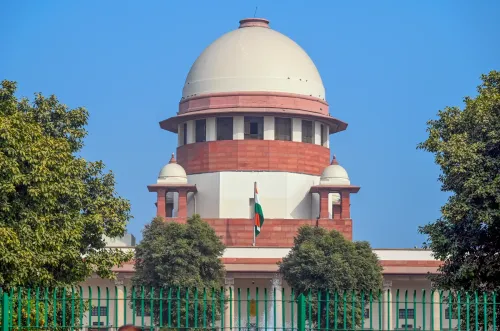
The Punjab and Haryana High Court dismissed the bail plea of AAP minister Sanjeev Arora on 16 October 2026 in an ED money laundering case.
The order was pronounced in open court by Justice Kuldeep Tiwari .
Arora has been in ED custody since 9 May , arrested over alleged irregularities in mobile phone exports worth ₹102.5 crore and suspected GST fraud.
The case involves transactions by Hampton Sky Realty Limited (HSRL) , a company Arora previously headed as promoter and chairman.
His bail was also rejected earlier by a special PMLA court in Gurugram on 15 June — the High Court ruling is the second rejection.
Arora retains the option of appealing before the Supreme Court .
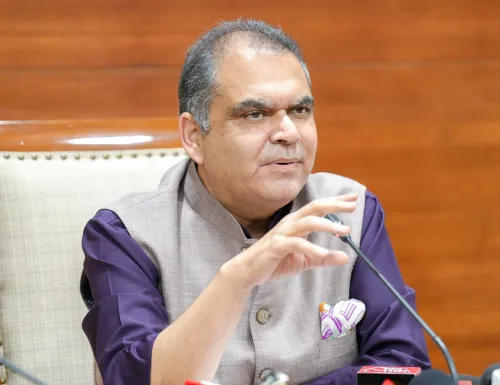
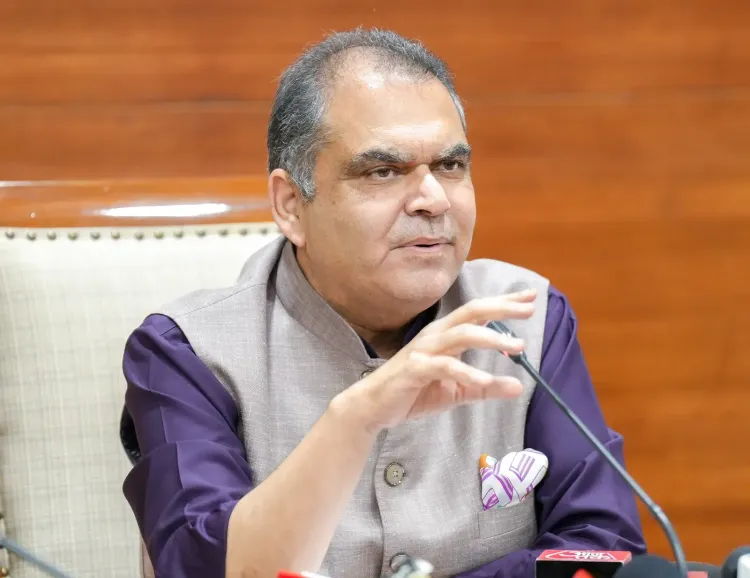
The Punjab and Haryana High Court on Friday, 16 October 2026, dismissed the regular bail application of Punjab Cabinet Minister and Aam Aadmi Party (AAP) leader Sanjeev Arora in a money laundering case being probed by the Enforcement Directorate (ED). The order was pronounced in open court by Justice Kuldeep Tiwari, keeping Arora behind bars as the investigation continues.
Background of the Case
Arora has been in custody since 9 May, when the ED arrested him in connection with alleged financial irregularities involving mobile phone exports and suspected GST fraud. The case centres on transactions worth ₹102.5 crore in mobile phone exports linked to Hampton Sky Realty Limited (HSRL), a company he previously headed as promoter and chairman.
The ED's investigation focuses on alleged irregularities in mobile phone exports to buyers in the United Arab Emirates (UAE) and suspected fraudulent claims involving GST refunds. Arora had earlier approached the High Court after his regular bail application was rejected by a special court under the Prevention of Money Laundering Act (PMLA) in Gurugram on 15 June.
What Arora's Defence Argued
Arora's legal team mounted a multi-pronged challenge to the ED's case. The defence contended that upon assuming office as a Cabinet Minister, he had ceased to participate in the day-to-day affairs of HSRL. Counsel argued that the export transactions in question were genuine commercial dealings, backed by invoices, GST records, customs documents, and banking records.
The defence also submitted that searches conducted at his residence, his son's residence, and the company's premises had yielded no incriminating material against him. It further argued that the case rested entirely on documentary evidence already in the agency's possession, making any prospect of evidence tampering or witness intimidation implausible.
Arora, a former Rajya Sabha member of parliament, had additionally argued that as a serving Cabinet minister with deep roots in society and an unblemished public record, he posed no flight risk.
High Court's Order
Justice Kuldeep Tiwari dismissed the bail plea in open court, rejecting the arguments advanced on Arora's behalf. The court's ruling means Arora remains in ED custody as the money laundering probe progresses. No further reasoning beyond the dismissal was immediately available in open proceedings.
Significance and What Comes Next
The case represents one of the more high-profile instances of a sitting state Cabinet minister facing prolonged custody under PMLA provisions, which place the burden of proof on the accused rather than the prosecution. This is the second court to reject Arora's regular bail — first the special PMLA court in Gurugram, and now the High Court.
Arora retains the option of approaching the Supreme Court for bail relief. The ED's investigation into the alleged GST fraud and irregular mobile phone exports to UAE buyers is expected to continue, with the trial yet to commence before the special PMLA court.
Point of View
By extension, for AAP, which has faced repeated ED actions against its leaders in recent years. PMLA's reverse-burden provisions make bail inherently difficult to secure, and two successive rejections narrow Arora's options considerably. Notably, the defence's argument — that a sitting minister had distanced himself from a company's affairs — has been tested before in similar cases with mixed results. The ED's focus on UAE-directed export transactions and GST refund claims is part of a broader enforcement pattern targeting alleged trade-based money laundering, a trend that courts have generally been reluctant to interrupt at the bail stage.
NationPress
16 Oct 2026
Frequently Asked Questions
Why was Punjab minister Sanjeev Arora's bail dismissed by the High Court?
The Punjab and Haryana High Court dismissed Arora's regular bail plea on 16 October 2026 in a money laundering case investigated by the Enforcement Directorate. The court, presided over by Justice Kuldeep Tiwari, rejected arguments that he posed no flight risk and that no incriminating material had been found at his premises.
What is the ED case against Sanjeev Arora about?
The ED is investigating alleged financial irregularities involving ₹102.5 crore in mobile phone exports by Hampton Sky Realty Limited (HSRL), a company Arora previously headed. The probe centres on exports to buyers in the United Arab Emirates and suspected fraudulent GST refund claims.
How long has Sanjeev Arora been in custody?
Arora has been in ED custody since 9 May, when he was arrested in connection with the money laundering probe. His custody has continued after two successive bail rejections — by a special PMLA court in Gurugram on 15 June and now by the High Court on 16 October.
What legal options does Sanjeev Arora have after the High Court ruling?
Arora can now approach the Supreme Court seeking bail relief, which is his primary remaining legal avenue. The trial before the special PMLA court in Gurugram is yet to commence.
What is PMLA and why does it make bail difficult to get?
The Prevention of Money Laundering Act (PMLA) is a central law under which the Enforcement Directorate investigates financial crimes. Unlike ordinary criminal law, PMLA places the burden of proof on the accused to demonstrate they are not guilty — a provision that courts have consistently held makes bail harder to obtain in such cases.