SC reserves order on Punjab Minister Sanjeev Arora's plea for private hospital treatment
Synopsis
Punjab Cabinet Minister Sanjeev Arora, arrested in a ₹100 crore GST fraud-linked money laundering case, has asked the Supreme Court to let him be treated at Fortis or Medanta in Gurugram rather than AIIMS — invoking Article 21 while insisting he is not seeking release. The court has reserved its order, and the ruling could set a precedent on whether undertrial prisoners can choose private hospitals over government ones.
Key Takeaways
The Supreme Court reserved its order on 28 July on Punjab Minister Sanjeev Arora 's plea to shift his treatment from AIIMS to Fortis or Medanta, Gurugram .
Arora was arrested by the ED on 9 May under the PMLA in an alleged ₹100 crore GST fraud linked to mobile phone sales and Hampton Sky Realty .
Senior advocate Mukul Rohatgi argued Arora's medical history — including a renal transplant , heart failure , and 40% left ventricular ejection fraction — warranted private hospital care under Article 21 .
The AIIMS Medical Board found Arora 'clinically stable' but recommended coronary angiography ; the ED said the procedure would be arranged imminently.
Arora's regular bail was rejected by the Special PMLA Court on 15 June ; the Punjab and Haryana High Court matter is adjourned to 5 August .
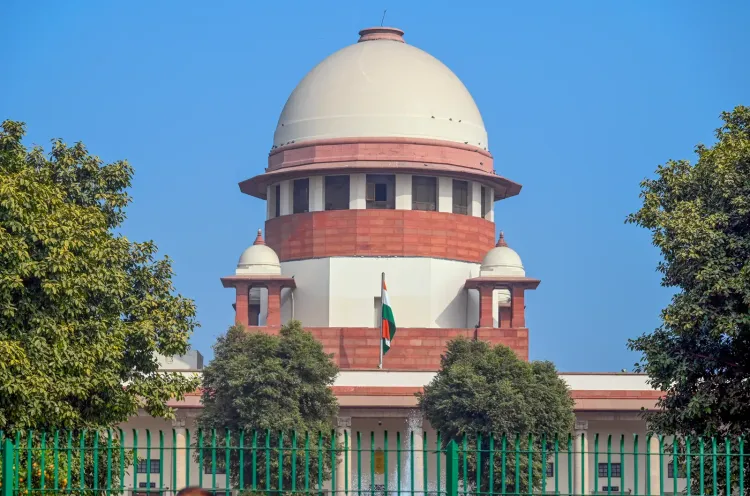
The Supreme Court on Tuesday, 28 July reserved its order on a plea filed by Punjab Cabinet Minister Sanjeev Arora, who is under arrest in a money laundering case being probed by the Enforcement Directorate (ED), seeking permission to receive medical treatment at either Fortis Hospital or Medanta Hospital in Gurugram rather than at AIIMS, New Delhi. A bench of Justice S.C. Sharma and Justice N.K. Singh reserved the verdict after hearing detailed arguments from both sides on Arora's medical condition and his request to shift to a private facility while remaining in judicial custody.
Arguments from Arora's Side
Senior advocate Mukul Rohatgi, appearing for Arora, argued that although the AIIMS Medical Board had described the minister as 'clinically stable', it had itself recommended coronary angiography for further evaluation — making it untenable, in his submission, to return Arora to jail without additional treatment.
Rohatgi walked the bench through Arora's documented medical history, which includes diabetes, hypertension, a renal transplant, heart failure, pulmonary embolism, and a left ventricular ejection fraction of 40 per cent. He contended that this combination of ailments warranted immediate and specialised medical attention.
Invoking Article 21 of the Constitution, Rohatgi submitted: 'I am entitled under Article 21 to be treated in my own hospital, by my own doctor.' He stressed that Arora was 'not asking to be released' and that 'a policeman can remain outside the hospital', citing Supreme Court precedents to argue that a patient in custody retains the right to choose their treating facility.
ED's Counterarguments
Opposing the plea, Additional Solicitor General S.V. Raju, representing the ED, submitted that the AIIMS Medical Board had categorically found Arora to be clinically stable and had discharged him with advice for angiography only 'as and when medically required' — not on an emergency basis.
Raju assured the apex court that authorities would ensure all necessary treatment was provided, adding: 'Either today or tomorrow we're taking him for angiography. If the condition is not good, the hospital will say so and give him all medical facilities.' He further argued that ordinary prisoners are routinely treated in government hospitals and that Arora could not claim a special privilege solely on the basis of preference for a private facility.
Timeline of Court Proceedings
Last week, the Supreme Court had directed the Director of AIIMS, New Delhi, to constitute a Medical Board to examine Arora after the ED stated it had no objection to such an examination. In its 20 July order, the apex court directed jail authorities to shift Arora to AIIMS for evaluation and sought the Board's report within two days.
When the matter was taken up on 24 July, the bench recorded that the medical report had been filed but not yet placed on record, directing the registry to supply copies to both sides and fixing 28 July for hearing. Arora's regular bail plea was earlier rejected by the Special PMLA Court on 15 June, following which he approached the Punjab and Haryana High Court. The High Court, on 7 July, granted the ED time to file a status report and adjourned the matter to 5 August.
The Underlying Case
The ED arrested Arora on 9 May under the Prevention of Money Laundering Act (PMLA) in connection with an alleged ₹100 crore GST fraud linked to the sale of mobile phones. The probe agency has claimed the case involves money laundering connected with Hampton Sky Realty. Arora and the company have denied the allegations, maintaining that the company fully complied with applicable laws and is itself a victim of alleged supplier-side fraud. Arora remains in judicial custody.
With the order now reserved, the Supreme Court's ruling will determine whether a minister in custody can exercise constitutional rights to choose a private hospital — a question with implications beyond this case for undertrial prisoners with complex medical needs.
Point of View
Or does the state's duty of care end at providing adequate government facilities? The ED's position — that ordinary prisoners use government hospitals and Arora deserves no exception — is legally coherent but sidesteps the complexity of his documented multi-organ conditions. If the court rules in Arora's favour, it could open a channel for well-resourced undertrials to routinely seek private care, raising equity concerns. A ruling against him, however, risks setting a precedent that dilutes Article 21 protections for prisoners with genuinely complex medical needs — a balance the bench will have to navigate carefully.
NationPress
28 Oct 2026
Frequently Asked Questions
Why is Punjab Minister Sanjeev Arora in judicial custody?
Arora was arrested by the Enforcement Directorate on 9 May under the Prevention of Money Laundering Act in connection with an alleged ₹100 crore GST fraud linked to mobile phone sales and the company Hampton Sky Realty. He remains in judicial custody after his regular bail plea was rejected by the Special PMLA Court on 15 June.
What is Arora's medical condition?
According to submissions before the Supreme Court, Arora has a documented history of diabetes, hypertension, a renal transplant, heart failure, pulmonary embolism, and a left ventricular ejection fraction of 40 per cent. The AIIMS Medical Board described him as clinically stable but recommended coronary angiography for further evaluation.
Why does Arora want to shift from AIIMS to a private hospital?
Arora's legal team has argued that he is entitled under Article 21 of the Constitution to be treated at a hospital of his choice — specifically Fortis or Medanta in Gurugram — by doctors familiar with his complex medical history. They clarified he is not seeking release, only a change of treating facility while remaining in custody.
What is the ED's position on the hospital transfer?
The ED, represented by Additional Solicitor General S.V. Raju, opposed the plea, stating that the AIIMS Medical Board found Arora clinically stable and that angiography would be arranged imminently. The ED argued that ordinary prisoners are treated in government hospitals and Arora cannot claim a special privilege based on personal preference.
What happens next in the case?
The Supreme Court has reserved its order, meaning a ruling is expected shortly. Separately, Arora's bail matter before the Punjab and Haryana High Court is listed for hearing on 5 August. The Supreme Court's ruling on the hospital choice question could have wider implications for undertrial prisoners seeking private medical care.