Punjab and Haryana HC orders AAP govt to clear ₹14,191 crore DA dues in 15 days
Synopsis
The Punjab and Haryana High Court has dealt a double blow to the AAP government: a 15-day deadline to pay ₹14,191 crore in DA arrears to employees and pensioners, and a ban on large-scale advertising until the dues are cleared. The ruling exposes a stark contradiction — a government spending on publicity while withholding legally owed pay.
Key Takeaways
The Punjab and Haryana High Court on 3 August ordered the Punjab government to clear dearness allowance (DA) dues within 15 days .
The financial liability for clearing all arrears is estimated at ₹14,191 crore .
The court restrained the state from undertaking large-scale advertisement campaigns in print or social media until dues are paid.
Default beyond the deadline will attract simple interest at 6% per annum on unpaid amounts.
A compliance report must be filed before the end of August 2025 .
The ruling upholds an earlier single-judge order that struck down the state's staggered 'Liquidation Plan' of 18 February 2025 as arbitrary and unconstitutional.
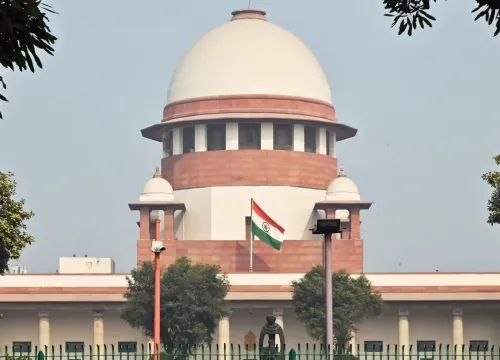
The Punjab and Haryana High Court on Monday, 3 August directed the Aam Aadmi Party (AAP) government in Punjab to clear pending dearness allowance (DA) dues owed to state government employees and pensioners within 15 days, in a significant legal setback for the ruling dispensation. The order carries a financial liability estimated at ₹14,191 crore.
Key Directives from the Court
A Division Bench comprising Acting Chief Justice Ashwani Kumar Mishra and Justice Rohit Kapoor ruled that financial constraints cannot serve as a justification for denying employees and pensioners their accrued service benefits. The Bench further restrained the state from undertaking large-scale advertisement campaigns — in print or on social media — until all pending dues are cleared.
'Till all such dues are cleared, the state of Punjab shall not resort to any unproductive expenditures such as large-scale advertising campaigns in print or social media as these expenses cannot justify the denial of dues admissible to state employees,' the Bench observed.
The court also stipulated that any default beyond the 15-day fortnight window would attract simple interest at 6% per annum on unpaid amounts. A compliance report is to be filed before the end of August 2025.
Background: The Liquidation Plan That Fell Flat
The case traces back to a single-judge order on 8 April, which struck down the Punjab government's 'Liquidation Plan' dated 18 February 2025. That plan had proposed staggered payment of pension arrears based on the age of beneficiaries — an arrangement the single judge deemed arbitrary and violative of Article 14 of the Constitution.
The single judge had directed the state and the Punjab State Power Corporation Limited (PSPCL) to release all pending DA instalments at the same rates paid to All India Services officers serving within Punjab. The state and PSPCL subsequently challenged this order before the Division Bench, which reserved its verdict on 22 July before pronouncing Monday's ruling.
State's Position and Employees' Grievances
State counsel Maninderjit Singh Bedi had argued before the court that the single judge's direction was 'coram non-judice' — a contention the Division Bench did not accept. In an affidavit, the Punjab government had acknowledged that the total financial implication for clearing arrears of revised pay, pension, family pension, DA, dearness relief (DR), and leave encashment stands at approximately ₹14,191 crore.
Employees' groups, meanwhile, maintained that the state had formally committed to aligning DA payments with the Central government pattern but had been deferring disbursements by citing fiscal stress. Notably, this is not the first time a state government has used an advertisement freeze as a judicial tool — courts in other states have issued similar restraints when governments prioritised publicity spending over statutory obligations.
What Happens Next
The Punjab government now faces a tight 15-day deadline to disburse dues amounting to an estimated ₹14,191 crore, failing which interest costs will compound the liability. The advertisement ban adds political pressure on the AAP administration, which has relied heavily on media campaigns to communicate its governance record. The compliance report due before month-end will be a key indicator of whether the state can meet the court's terms.
Point of View
191 crore liability did not appear overnight; it accumulated through a deliberate deferral strategy dressed up as a 'Liquidation Plan,' which the court has now rejected twice. The real question is fiscal: Punjab's finances are under severe stress, and a 15-day window to mobilise that sum is extraordinarily tight. If the state defaults, the interest burden grows and the political cost deepens — a compounding problem that no advertising campaign can paper over.
NationPress
3 Aug 2026
Frequently Asked Questions
What did the Punjab and Haryana High Court order regarding DA dues?
The court directed the Punjab government to clear all pending dearness allowance dues owed to state employees and pensioners within 15 days, on 3 August. It also barred the state from running large-scale advertisement campaigns until the dues are fully paid.
How much money does Punjab owe in DA arrears?
According to the state government's own affidavit filed before the High Court, the total financial liability for clearing arrears — including revised pay, pension, DA, dearness relief, and leave encashment — is approximately ₹14,191 crore.
What happens if Punjab fails to pay within 15 days?
If the state defaults on the 15-day deadline, the unpaid amounts will carry simple interest at 6% per annum. The government is also required to file a compliance report before the end of August 2025.
What was the Punjab government's 'Liquidation Plan' and why was it struck down?
The Liquidation Plan, issued on 18 February 2025, proposed staggered payment of pension arrears based on beneficiaries' age. A single judge struck it down on 8 April, ruling it arbitrary and violative of Article 14 of the Constitution, and the Division Bench has now upheld that position.
Why has the court banned Punjab's advertising campaigns?
The Division Bench ruled that large-scale advertising in print or social media constitutes unproductive expenditure that cannot be justified when the state is withholding legally owed dues from its employees and pensioners.