Health Minister Nadda hails Cabinet nod for women's quota
Synopsis
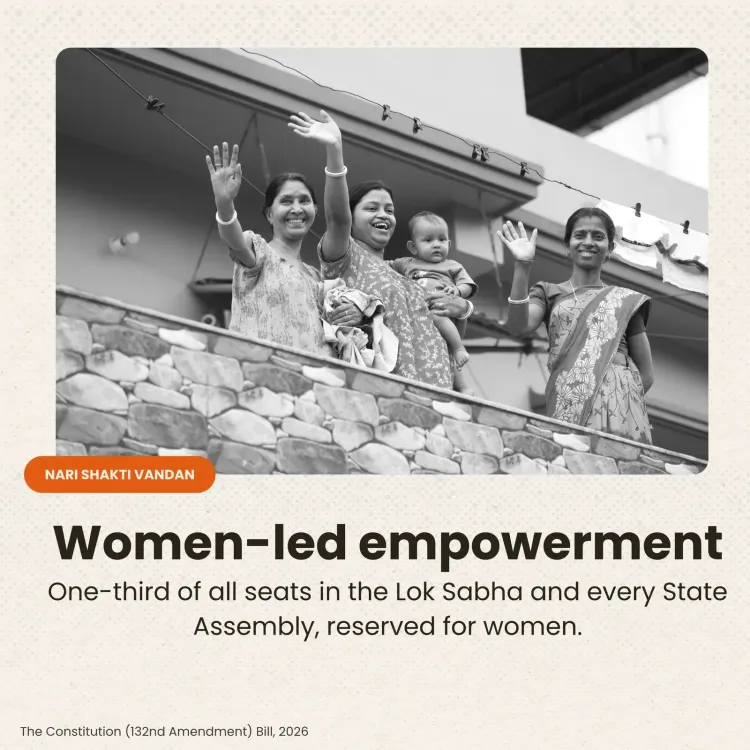
Union Health Minister J. P. Nadda welcomed Cabinet approval of the Constitution (132nd Amendment) Bill, 2026, saying it would enable 33% reservation for women in the Lok Sabha and state assemblies. He credited Prime Minister Narendra Modi and linked the move to Nari Shakti and Viksit Bharat.
Key Takeaways
Union Health Minister J.
Nadda on 28 November 2026 said the Union Cabinet had approved the Constitution (132nd Amendment) Bill, 2026.
He said the Bill would pave the way for implementing 33% reservation for women in the Lok Sabha and state assemblies.
Nadda credited Prime Minister Narendra Modi and tied the decision to Nari Shakti and Viksit Bharat.
The Constitution (106th Amendment) Act, 2023, already inserted one-third women's reservation in the Constitution.
A Women's Reservation Bill was first introduced in 1996 and lapsed across several parliaments before the 2023 amendment.
Cabinet approval is not enactment; the Bill would still have to be introduced and passed in Parliament.
Union Health Minister J. P. Nadda on Saturday said the Union Cabinet had approved the Constitution (132nd Amendment) Bill, 2026, calling it a decisive step toward making one-third reservation for women in the Lok Sabha and state assemblies effective. Writing on X from New Delhi, the BJP national president credited Prime Minister Narendra Modi and framed the decision as women-led progress toward a Viksit Bharat.
Nadda wrote that the resolve of a developed India would be realised through the strength of Nari Shakti (women's power). He said Cabinet approval under Modi's leadership was an important step toward women-led development, and that the Bill would pave the way for implementing 33% reservation so women have a greater voice in the laws that are made and the priorities that are set.
'Women must have their rightful place in leading development, shaping policy and building the nation,' he said, offering 'heartfelt gratitude' to the Prime Minister. The Hindi and English halves of the post carried the same core claim: the Cabinet had cleared a constitutional amendment meant to turn reservation into effective representation.
What Nadda says the 2026 Bill would do
According to Nadda, the measure would open the path to one-third of seats for women in Parliament and the state assemblies. He presented it as more than a seat-sharing formula. The Bill, he argued, would help make women not only partners in development but leaders in nation-building and policy-making.
He placed the decision inside Nari Shakti Vandan — the idea that India's journey to Viksit Bharat must be shaped by women's aspirations, abilities and experience. That vocabulary is familiar in the government's women's empowerment messaging. What is new in this post is his statement that a fresh constitutional amendment has now cleared the Cabinet.
The 2023 Act that first wrote in 33% seats
The Constitution (One Hundred and Sixth Amendment) Act, 2023, enacted in September 2023, already inserted provisions for one-third reservation of seats for women in the Lok Sabha and state legislative assemblies. It closed a long and often stalled campaign: a Women's Reservation Bill was first introduced in 1996 and lapsed across successive parliaments before that amendment finally passed.
Nadda's Saturday message presents the new Bill as the instrument that would make that reservation effective. He did not, in the post, set out further technical details of the draft.
Cabinet paper still has to face Parliament
Cabinet approval is not enactment. The Bill would still have to be introduced, debated and voted upon in Parliament, and a constitutional amendment needs special majorities. Because the quota is meant to apply to state assemblies as well as the Lok Sabha, the state-level implications will be watched closely.
For a reform first tabled in 1996, the test is no longer the slogan. It is the calendar: when the text reaches the House, and when reserved seats actually appear on the map of Indian democracy.
Point of View
Treating a women's legislative quota as both a constitutional project and a development brand. The 2023 amendment already put 33% reservation into the Constitution; the political argument now is about making it operational. By thanking the Prime Minister in Hindi and English, the party president is signalling ownership of the next legislative push. How quickly the text is introduced in Parliament will show whether implementation has moved from slogan to schedule.
NationPress
28 Nov 2026
Frequently Asked Questions
What did JP Nadda say about the Constitution (132nd Amendment) Bill, 2026?
Union Health Minister J. P. Nadda said the Union Cabinet had approved the Constitution (132nd Amendment) Bill, 2026, which he said would pave the way for implementing 33% reservation for women in the Lok Sabha and state assemblies. He credited Prime Minister Narendra Modi and linked the decision to Nari Shakti and Viksit Bharat.
Is 33% women's reservation already in the Indian Constitution?
Yes. The Constitution (One Hundred and Sixth Amendment) Act, 2023, enacted in September 2023, inserted provisions for one-third reservation of seats for women in the Lok Sabha and state legislative assemblies. Nadda presented the 2026 Bill as the step that would make that reservation effective.
When was the Women's Reservation Bill first introduced in India?
A Women's Reservation Bill was first introduced in 1996. It lapsed repeatedly across multiple parliaments before a constitutional amendment on the subject was enacted in 2023.
Does Cabinet approval mean women immediately get 33% of seats?
No. Cabinet approval is not the same as the law coming into force. Nadda said the Bill would pave the way for implementing the reservation; it would still need to be introduced, debated and passed in Parliament.