Nadda: Govt kept fertiliser affordable despite global shocks
Synopsis
Union Health Minister J. P. Nadda, at the FAI Seminar 2026 in New Delhi, said the government had kept urea and DAP available at affordable prices despite global challenges, citing subsidies, new plant capacity, AgriStack and IFMS, and a turnout of about 1,800 delegates from 26 countries.
Key Takeaways
Union Health Minister J.
Nadda attended the valedictory session of the FAI Seminar 2026 in New Delhi on 28 November 2026 .
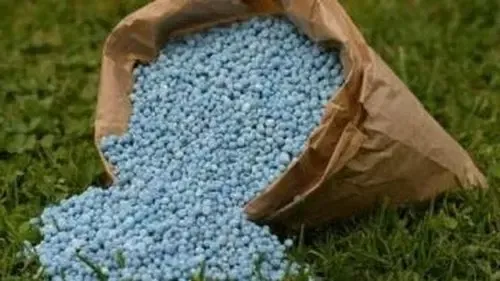
He said the government had kept fertiliser available at affordable prices despite global challenges, with farmers' welfare as the top priority under PM Narendra Modi .
Nadda cited subsidies on urea and DAP , six new fertiliser plants , six additional units backed by ₹54,000 crore , plus AgriStack and IFMS .
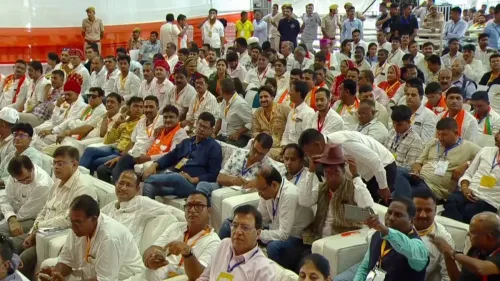
He said about 1,800 delegates from 26 countries took part, underlining the sector's global importance.
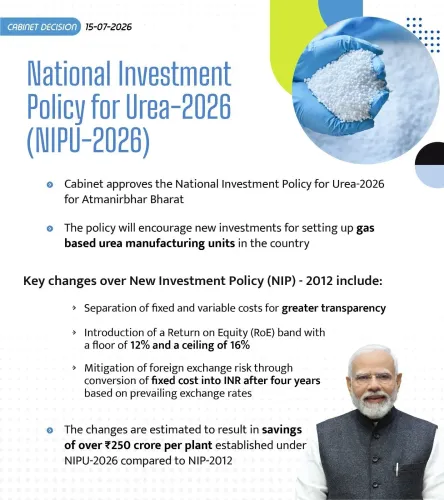
India's fertiliser policy has long combined large subsidies with a push, including after the 2020 Atmanirbhar Bharat package, to expand domestic capacity and cut import risk.
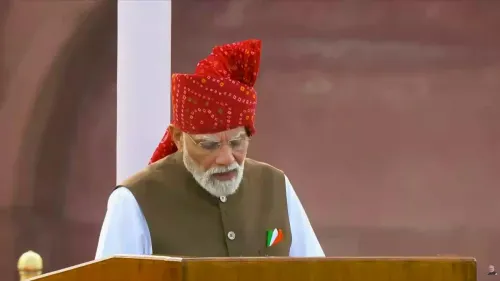
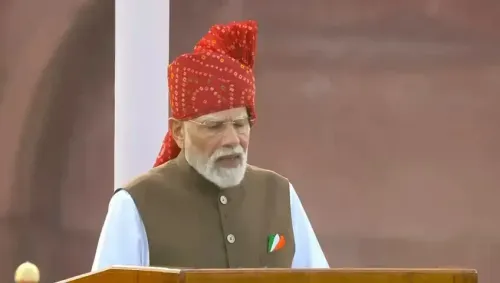
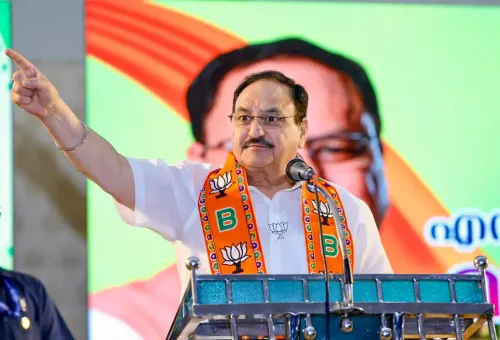
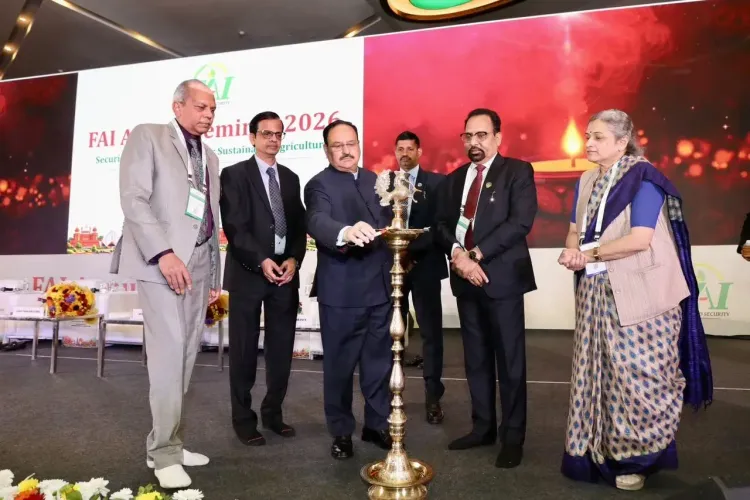
When fertiliser prices spike overseas, the shock usually lands first in the Indian field. On Saturday, 28 November 2026, Union Health Minister J. P. Nadda stood before the industry in New Delhi and said that shock had been absorbed. Addressing the valedictory session of the Fertiliser Association of India (FAI) Seminar 2026, the Chemicals and Fertilisers Minister argued that farmers' welfare remained the government's top priority and that urea and DAP had stayed available at affordable prices despite global turbulence.
In a message after the session, Nadda said that under Prime Minister Narendra Modi the government had 'ensured uninterrupted fertiliser availability at affordable prices.' He pointed to subsidies on urea and DAP, new domestic manufacturing capacity, and digital platforms including AgriStack and IFMS. Around 1,800 delegates from 26 countries, he noted, had come to the seminar, a turnout he said reflected the sector's global importance.
Urea, DAP and the subsidy shield
India has long treated cheap fertiliser as a food-security instrument, not a market afterthought. The Nutrient Based Subsidy regime, introduced in 2010, decontrolled prices of phosphatic and potassic nutrients while keeping the urea subsidy intact. That bargain still shapes the farm economy: a bag that remains affordable at the mandi, paid for by a large line in the Union Budget.
Nadda's pitch on Saturday sat inside that lineage. He said subsidies on urea and DAP, paired with domestic production, had kept supply moving when global markets did not. Successive governments have used the same dual strategy, a heavy subsidy to protect farmers and a slow build-up of plants at home to cut import risk. The Atmanirbhar Bharat package of 2020 revived closed units and pushed new capacity for exactly that reason.
Nadda's capacity numbers: six plants and ₹54,000 crore
The minister listed hardware, not just policy. He said the government had backed six new fertiliser plants and six additional units with an investment of ₹54,000 crore, alongside the urea and DAP subsidy. Those figures come from his account of the day's session. Commissioning timelines, and the next round of Budget debate on subsidy allocations, will be the practical test.
For manufacturers in the FAI hall, the message was continuity: keep producing, keep importing where needed, and expect New Delhi to underwrite affordability. For farmers, the promise is simpler. The bag arrives. The price does not explode.
AgriStack, IFMS and 1,800 delegates from 26 countries
Nadda also folded digital infrastructure into the story. AgriStack is the Centre's farmer-registry and data platform, built to deliver services against verified identities rather than leaky lists. IFMS tracks fertiliser movement through the subsidy chain. Layered onto a decades-old subsidy, those systems are meant to tighten targeting and shrink diversion, the chronic leak in a programme this large.
The FAI is the apex body for fertiliser manufacturers and importers, and its annual seminar is where policy and industry sit in the same room. Nadda thanked 'all stakeholders' for their commitment to farmers' welfare and India's food security. The presence of about 1,800 participants from 26 countries, he said, underlined how closely the world now watches India's fertiliser choices, as a giant consumer and as a country trying to export more of its own technology and output.
Seminars end. Plant commissioning and the next Union Budget's fertiliser subsidy line will show whether the shield Nadda described still holds when global prices move again.
Point of View
Even when world prices do. The 2010 Nutrient Based Subsidy design and the 2020 Atmanirbhar push to revive plants are two chapters of the same story, affordability first, then domestic capacity to reduce import shocks. Digital layers such as AgriStack and IFMS are the newer attempt to stop leakage without shrinking the subsidy. The political risk is familiar: if plants slip or the subsidy bill balloons, the guarantee he described in New Delhi becomes harder to fund.
NationPress
28 Nov 2026
Frequently Asked Questions
What did JP Nadda say at the FAI Seminar 2026?
Union Health Minister J. P. Nadda said the government had ensured uninterrupted fertiliser availability at affordable prices despite global challenges. Speaking at the valedictory session in New Delhi on 28 November 2026, he cited urea and DAP subsidies, new plant capacity, AgriStack and IFMS, and thanked stakeholders for supporting farmers and food security.
Where was the FAI Seminar 2026 held?
The valedictory session of the Fertiliser Association of India Seminar 2026 was held in New Delhi. Nadda attended it on Saturday, 28 November 2026, and said about 1,800 delegates from 26 countries took part.
What is AgriStack in Indian agriculture?
AgriStack is the central government's digital agriculture platform meant to build farmer registries and deliver data-driven services. Nadda listed it, along with IFMS, as part of the effort to strengthen self-reliance and sustainable agriculture.
How does India keep urea and DAP affordable?
India has long subsidised urea heavily and, since the Nutrient Based Subsidy scheme of 2010, supported phosphatic and potassic fertilisers including DAP while keeping prices affordable for farmers. Nadda said those subsidies, with new domestic capacity, had kept supply flowing through global shocks.
What is the Fertiliser Association of India?
The Fertiliser Association of India is the apex industry body for fertiliser manufacturers and importers. It hosts an annual policy seminar; Nadda addressed the 2026 valedictory session and thanked industry stakeholders for their role in farmers' welfare.