Nadda Fires Back at Kharge: Fertiliser Stocks Up 50%, No Crisis
Synopsis
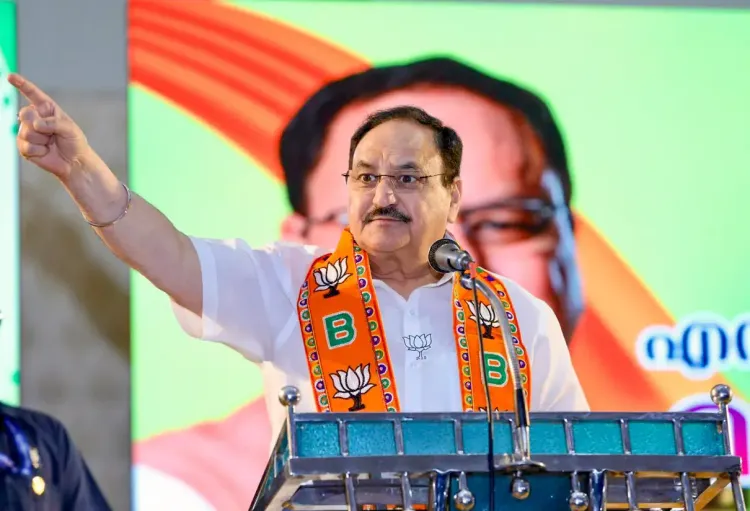
JP Nadda has dismissed Mallikarjun Kharge's fertiliser shortage alarm as political theatre, citing DAP stocks up 50%, NPK up 30%, and 25 lakh MT of urea secured globally. But with fertiliser production at a five-year low and the Kharif season approaching, the ground-level reality will soon put both claims to the test.
Key Takeaways
JP Nadda on April 24, 2026 rejected Mallikarjun Kharge's fertiliser shortage claims as "politically motivated," asserting no crisis exists.
DAP stocks are higher by over 50 per cent and NPK stocks have risen by approximately 30 per cent compared to last year, according to Nadda.
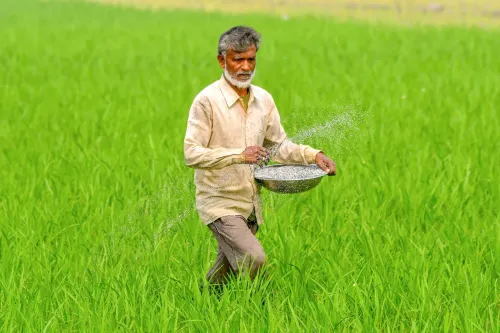
Indian farmers receive urea at ₹266.5 per bag versus an international price of over ₹4,000 , and DAP at ₹1,350 versus a global price exceeding ₹4,000 .
The government has secured 25 lakh metric tonnes of urea through global tendering, with Indian missions abroad sourcing alternative supply.
Kharge cited a 24.6% year-on-year drop in fertiliser production in March 2026 — a five-year low — and accused the Centre of failing to diversify imports after China restricted exports in July 2025 .
Nadda confirmed he has personally spoken to Chief Ministers and Agriculture Ministers of major states and that the Centre is actively cracking down on hoarding, diversion, and black marketing of fertilisers.
New Delhi, April 24: Union Minister J.P. Nadda on Friday sharply rebutted Congress president Mallikarjun Kharge's allegations of a nationwide fertiliser shortage, calling the claims "politically motivated" and designed to manufacture panic among Indian farmers. Nadda asserted that fertiliser availability across the country has consistently exceeded demand and that stocks are actually stronger than the previous year. The minister's counter-offensive came a day after Kharge accused the BJP-led central government of gross negligence in securing fertiliser supplies.
Nadda's Point-by-Point Rebuttal
Taking to X (formerly Twitter), Nadda wrote that Kharge's statement was "a politically motivated attempt to mislead farmers and manufacture panic where none exists." He accused the Congress party of treating India's farmers — whom he referred to as 'annadatas' — as a mere vote bank rather than standing with them in good faith.
Nadda cited specific stock data to back his claims: DAP (Di-Ammonium Phosphate) stocks are higher by over 50 per cent compared to last year, NPK stocks have risen by approximately 30 per cent, and urea availability remains stable and uninterrupted across all major agricultural states.
He also revealed that the government has already secured 25 lakh metric tonnes of urea through global tendering, with Indian diplomatic missions abroad actively working to identify and facilitate alternative supply sources — a direct response to the global supply disruptions Kharge had cited.
Subsidised Prices Shield Indian Farmers from Global Surge
A key pillar of Nadda's defence was the government's fertiliser subsidy architecture. He pointed out that while a bag of urea costs over ₹4,000 internationally, Indian farmers receive it for just ₹266.5 — a subsidy that has been maintained despite significant global price pressures driven by the Russia-Ukraine conflict and export restrictions by major suppliers.
Similarly, a bag of DAP — which costs over ₹4,000 on global markets — has been available to Indian farmers at ₹1,350 since the Covid-19 period, a price point the government has held firm on even as international costs escalated. These subsidies represent a massive fiscal commitment by the Modi government, running into tens of thousands of crores annually.
Nadda said it was "hard to believe" that Kharge could be so "misinformed," adding pointedly that such statements might reflect the influence of those advising the Leader of Opposition in the Rajya Sabha.
Centre's Ground-Level Coordination and Anti-Hoarding Drive
Beyond data, Nadda disclosed that he has personally spoken to Chief Ministers and Agriculture Ministers of major agricultural states to ensure smooth fertiliser distribution ahead of the Kharif sowing season. This direct ministerial engagement signals how seriously the Centre is treating the optics of any supply disruption, even if it disputes the scale.
The central government is also in active coordination with state authorities to crack down on hoarding, diversion, black marketing, and deliberate attempts to create artificial scarcity — a tacit acknowledgement that ground-level distribution challenges do exist, even if the macro supply picture is stable.
What Kharge Had Alleged
On April 23, Kharge had posted on X that fertiliser shortages were being reported across multiple seasons even before recent geopolitical disruptions. He cited a 24.6 per cent year-on-year drop in fertiliser production in March 2026, calling it a five-year low.
Kharge also pointed out that China had restricted exports of specialised fertilisers as early as July 2025, and that Russia — a major global supplier — had now halted fertiliser exports. He accused the Modi government of failing to diversify import sources despite ample advance warning, leaving Indian farmers exposed to global supply shocks.
The Bigger Picture: Politics, Food Security, and Kharif Stakes
This war of words arrives at a critical moment. The Kharif sowing season — which depends heavily on timely fertiliser availability — is approaching, and any real or perceived shortage can have cascading effects on crop yields, farmer incomes, and food inflation. Both sides are acutely aware of the political weight farmers carry in states like Uttar Pradesh, Maharashtra, Madhya Pradesh, and Rajasthan.
Notably, the government's own production data — which Kharge cited — showing a 24.6% production drop in March 2026 is a publicly available figure that the Centre has not directly disputed. Instead, Nadda's response focuses on stock availability and import procurement, suggesting the government's strategy is to bridge any domestic production gap through imports and strategic reserves.
The fertiliser subsidy bill has historically been one of India's largest budgetary expenditures, and with global prices remaining elevated, the fiscal pressure on the government to maintain subsidised rates while ensuring adequate supply is immense. How the Centre navigates this balance in the coming weeks — particularly as sowing picks up — will be closely watched by both farmers and markets.
With the Kharif season set to intensify over the next four to six weeks, the government's claims of adequate stock will face a ground-level stress test. Any reports of shortfall from key agricultural states could reignite this political flashpoint ahead of upcoming state elections.
Point of View
Yet he conspicuously sidesteps the 24.6% production crash in March 2026, choosing instead to fight on the terrain of imports and subsidies. The real contradiction here is that the Centre is simultaneously claiming no crisis while personally calling Chief Ministers and launching anti-hoarding drives — actions that suggest at least an awareness of distribution stress on the ground. If Kharif sowing proceeds smoothly, Nadda wins the argument; if farmers in even one major state face shortfall, Kharge's 'panic' narrative becomes a political wildfire.
NationPress
29 Sept 2026
Frequently Asked Questions
Is there a fertiliser shortage in India in 2026?
The central government, led by Union Minister JP Nadda, denies any fertiliser shortage, citing DAP stocks up 50% and NPK up 30% year-on-year. However, Congress president Mallikarjun Kharge has pointed to a 24.6% year-on-year drop in fertiliser production in March 2026, calling it a five-year low.
What is the current price of urea and DAP for Indian farmers?
Indian farmers currently receive urea at ₹266.5 per bag, compared to the international price of over ₹4,000. DAP is available to farmers at ₹1,350 per bag, while global prices exceed ₹4,000.
Why did Mallikarjun Kharge raise the fertiliser shortage issue?
Kharge alleged that fertiliser shortages were being reported across multiple seasons and that production had hit a five-year low in March 2026. He also cited China's fertiliser export restrictions from July 2025 and Russia halting exports as risks the government failed to prepare for.
How is the Modi government addressing fertiliser supply concerns?
The government has secured 25 lakh metric tonnes of urea through global tendering and is coordinating with Indian missions abroad for alternative supply sources. JP Nadda has personally engaged Chief Ministers and Agriculture Ministers of major states and is working with state authorities to prevent hoarding and black marketing.
How does India's fertiliser subsidy compare globally?
India maintains one of the world's most heavily subsidised fertiliser regimes — urea is sold to farmers at ₹266.5 against an international price of over ₹4,000, and DAP at ₹1,350 against global prices above ₹4,000. The annual fertiliser subsidy bill runs into tens of thousands of crores, making it one of India's largest budgetary expenditures.