Rajasthan CM Bhajan Lal hails Cabinet women-quota step

Synopsis
Rajasthan Chief Minister Bhajan Lal Sharma on 28 November 2026 thanked Prime Minister Narendra Modi after saying Cabinet approval of a 132nd Constitutional Amendment Bill would help deliver 33 percent women's reservation under the Nari Shakti Vandan Adhiniyam.
Key Takeaways
Bhajan Lal Sharma on 28 November 2026 thanked Prime Minister Narendra Modi and the Union Cabinet for a step he said advances women's political representation.
He described Cabinet approval of the 132nd Constitutional Amendment Bill as an important move towards women's empowerment.
He said the Nari Shakti Vandan Adhiniyam would help ensure 33 percent reservation for women in the Lok Sabha and Vidhan Sabhas.
Parliament in September 2023 already passed that Adhiniyam as the 128th Constitutional Amendment , with implementation after census and delimitation.
A women's reservation bill was first introduced in 1996 ; local-body gender quotas date to the 73rd and 74th Amendments of 1992 .
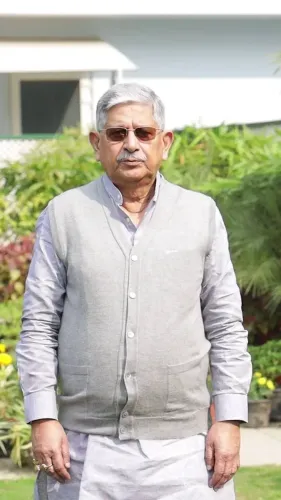
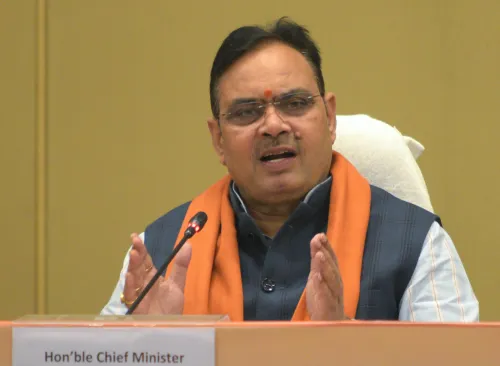
Rajasthan Chief Minister Bhajan Lal Sharma on 28 November 2026 framed a Union Cabinet decision as the next hard click in a 30-year fight to put women in one-third of India's legislatures. He thanked Prime Minister Narendra Modi for what he called a historic push to give Nari Shakti its rightful place in the Lok Sabha and Vidhan Sabhas.
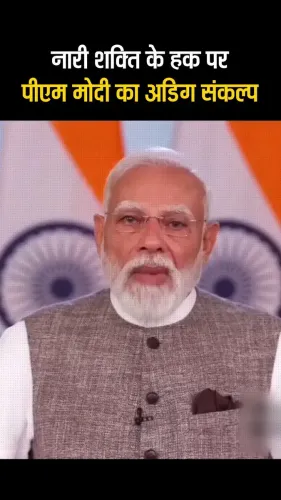
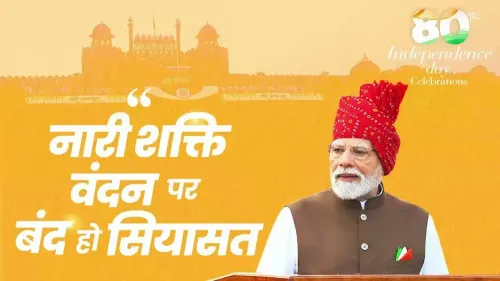
Sharma said Cabinet approval of the 132nd Constitutional Amendment Bill, under Modi's leadership, was an important step towards women's empowerment. Through the Nari Shakti Vandan Adhiniyam, he wrote, the path would open to ensure 33 percent reservation for women in the Lok Sabha and state assemblies.
Sharma's call on matrishakti in the legislatures
The Chief Minister argued that the move would raise the representation of matrishakti (women's power) in the democratic system and strengthen their role in policy-making and decision-making. He offered 'heartfelt gratitude and congratulations' to the Prime Minister and the Union Cabinet for an initiative he said would give Nari Shakti proper representation.
His hashtags paired women reservation with a delimitation bill — the two tracks Indian constitutional law has bound together since 2023. The signal from Jaipur is political as much as legal: a state BJP chief lining up behind the Centre on a reform that will change who can contest a third of every assembly seat.
The 2023 law that already promised one-third seats
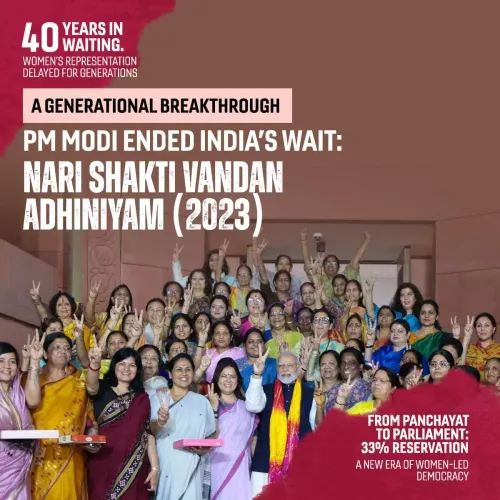
Parliament in September 2023 passed the Nari Shakti Vandan Adhiniyam as the 128th Constitutional Amendment, reserving one-third of seats for women in the Lok Sabha and state legislative assemblies. That statute does not switch on by itself. It is written to take effect only after the next census and a fresh delimitation of constituencies.
The demand is nearly three decades old. A Women's Reservation Bill was first introduced in 1996 as the 81st Amendment and lapsed more than once. The Rajya Sabha passed a later version in 2010 as the 108th Amendment, but the Lok Sabha never took it up. Gender quotas in panchayats and municipalities, by contrast, have been in force since the 73rd and 74th Amendments of 1992.
Census and delimitation still decide when seats appear
Sharma's congratulations sit on that unfinished stretch. Until a census is completed and a delimitation commission redraws the map, the 33 percent floor remains a constitutional promise, not a list of constituencies. That sequence also overlaps with a wider debate on simultaneous elections and how India's federal electoral architecture should be recast.
Women candidates, party ticket committees and sitting legislators will feel the change first when it comes: one in three seats will have to be fought by women, rewriting slates from Rajasthan outward. The horizon the 2023 law itself pointed towards is the cycle before 2029.
Law on paper does not fill a ballot. The map that follows the census will.
Point of View
Which already wrote 33 percent reservation into the Constitution and parked it behind census-based delimitation. That is the political tell: the fight has moved from whether women get a third of the seats to who controls the map and the calendar. For the BJP, a Rajasthan CM lining up behind that sequence also keeps women's reservation hitched to a larger federal rewrite — delimitation, and the long-running push toward simultaneous elections — rather than as a stand-alone social reform.
NationPress
28 Nov 2026
Frequently Asked Questions
What did Rajasthan CM Bhajan Lal Sharma say about women's reservation?
On 28 November 2026 he posted that Union Cabinet approval of the 132nd Constitutional Amendment Bill under Prime Minister Narendra Modi was an important step towards women's empowerment. He said the Nari Shakti Vandan Adhiniyam would help ensure 33 percent reservation for women in the Lok Sabha and state assemblies.
What is the Nari Shakti Vandan Adhiniyam?
It is the 2023 law, enacted as the 128th Constitutional Amendment, that reserves one-third of seats for women in the Lok Sabha and state legislative assemblies. It is designed to come into force only after the next census and a delimitation of constituencies.
When will 33 percent women's reservation start in the Lok Sabha?
It is not in force yet. The 2023 constitutional amendment ties implementation to completion of the census and the subsequent delimitation exercise, a sequence watched ahead of the 2029 Lok Sabha elections.
Why is delimitation linked to women's reservation in India?
The 2023 law was drafted so that reserved seats are identified only after constituencies are redrawn following the census. That is why political debate now sits on the census-to-delimitation timeline rather than on the principle of a one-third quota.
Who is Bhajan Lal Sharma?
Bhajan Lal Sharma is the Chief Minister of Rajasthan and a Bharatiya Janata Party leader. He issued the 28 November 2026 statement thanking Prime Minister Narendra Modi and the Union Cabinet.