Union Minister Lalan Singh hails Nari Shakti Vandan Act
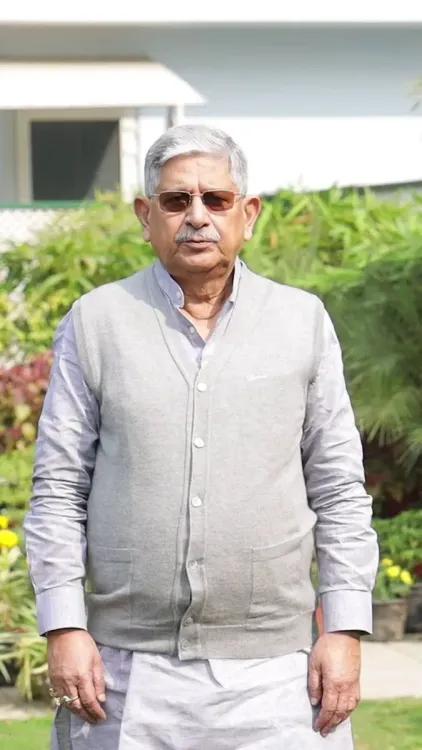
Synopsis
Union Panchayati Raj Minister Rajiv Ranjan Singh welcomed the Nari Shakti Vandan Adhiniyam as a historic boost to women's political representation. The 2023 law reserves one-third of Lok Sabha and assembly seats for women, pending census and delimitation.
Key Takeaways
Union Minister Rajiv Ranjan Singh on 28 November 2026 called the Nari Shakti Vandan Adhiniyam a historic step for women's participation in Indian democracy.
He credited Prime Minister Narendra Modi and said the Cabinet had ensured women's reservation.
The law is the 128th Constitutional Amendment, passed by Parliament in September 2023, reserving one-third of Lok Sabha and assembly seats for women.
The Women's Reservation Bill was first introduced in 1996 and lapsed multiple times before revival.
Reserved seats take effect only after the next census and a delimitation exercise.
Singh is a senior JD(U) leader and Union Minister of Panchayati Raj, Fisheries, Animal Husbandry and Dairying.
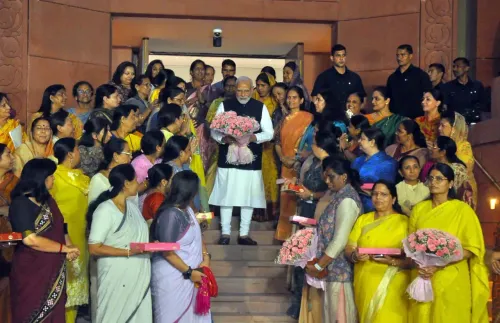
Union Panchayati Raj and Fisheries Minister Rajiv Ranjan Singh on 28 November 2026 called the Nari Shakti Vandan Adhiniyam a historic step to raise women's participation in Indian democracy, crediting Prime Minister Narendra Modi with putting a decades-old promise onto the statute book. The senior Janata Dal (United) leader said the Cabinet under Modi's leadership had ensured women's reservation, and that mothers and sisters would see a larger presence in politics.
Writing in Hindi on X, Singh said the law is ek aitihasik kadam (a historic step) towards increasing women's participation in Indian democracy. He added that what the Prime Minister says, he implements on the ground, that he welcomed and congratulated the historic decision, and that the measure would contribute greatly to the resolve of a developed India.
From a 1996 bill to the 128th Amendment
The Women's Reservation Bill first entered the Lok Sabha in 1996. It lapsed again and again. Nearly three decades later, the Union Cabinet in 2023 cleared the 128th Constitutional Amendment Bill. Parliament passed it in September 2023, locking in a one-third reservation for women in the Lok Sabha and in state assemblies.
That lineage matters. Parties had demanded the quota across the aisle since the mid-1990s. Women's groups kept the pressure on. NDA consensus in 2023 is what finally moved the text from draft to Constitution.
Why reserved seats are not yet on the map
Passage is not the same as polling day. The reservation takes effect only after the next census is completed and a delimitation exercise redraws constituencies. Until those two steps finish, one-third of the House remains a constitutional promise, not a notified seat list.
Singh's welcome treats the enacted amendment as the political fact that counts. The administrative clock, however, still runs on census and delimitation.
Panchayats already reserved, Parliament next
The minister's own brief is Panchayati Raj — the tier where women already sit in constitutionally reserved seats. Extending that architecture to Parliament and the Vidhan Sabhas is the core of the Nari Shakti Vandan Adhiniyam. For JD(U), an NDA partner, the message also signals coalition ownership of a gender-and-governance story now tied to the developed India pitch.
The law is written. The next census will decide when India's legislatures actually look different.
Point of View
From a portfolio that already rests on reserved seats for women at the grassroots. The political signal is continuity inside the NDA, not a new timetable. How fast census and delimitation move will decide whether the welcome stays rhetoric or becomes arithmetic in the House.
NationPress
28 Nov 2026
Frequently Asked Questions
What is the Nari Shakti Vandan Adhiniyam?
The Nari Shakti Vandan Adhiniyam is the 128th Constitutional Amendment Act that reserves one-third of seats for women in the Lok Sabha and state assemblies. Parliament passed it in September 2023 after decades of failed attempts to enact a women's reservation bill.
When will women's reservation in Lok Sabha start?
The reservation cannot take effect until the next census is completed and a delimitation exercise redraws constituencies. Until those two steps finish, the one-third quota remains a constitutional provision rather than an applied seat map.
Who is Rajiv Ranjan Singh or Lalan Singh?
Rajiv Ranjan Singh, popularly known as Lalan Singh, is the Union Minister of Panchayati Raj, Fisheries, Animal Husbandry and Dairying and a senior Janata Dal (United) leader. He issued the X post welcoming the Nari Shakti Vandan Adhiniyam.
When was the women's reservation bill first introduced in India?
The Women's Reservation Bill was first introduced in the Lok Sabha in 1996. It lapsed several times before the Union Cabinet approved the 128th Constitutional Amendment Bill in 2023 and Parliament enacted it that September.
How does this law relate to women in panchayats?
Women already have constitutionally reserved seats in panchayati raj institutions, the local bodies under Singh's ministry. The Nari Shakti Vandan Adhiniyam extends a similar one-third reservation to Parliament and state legislatures.