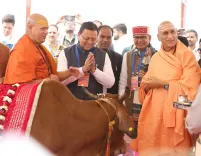
CM Dhami: Women will be India's future decision-makers
Synopsis
Uttarakhand Chief Minister Pushkar Singh Dhami said nari shakti will be both a partner in India's development and the decisive leadership of its future. His 28 November 2026 post linked that claim to delimitation and women's reservation, the two reforms the 2023 constitutional amendment already sequences together.
Key Takeaways
Uttarakhand CM Pushkar Singh Dhami on 28 November 2026 said nari shakti will become the decisive leader of India's future.
He tagged DelimitationBill and WomenReservation with the post.
The Nari Shakti Vandan Adhiniyam (106th Constitutional Amendment, 2023 ) reserves one-third of Lok Sabha and state assembly seats for women.
Implementation is tied to delimitation after the first census conducted after 2026 .
Constituency delimitation remains frozen until that census-based exercise is completed.
Uttarakhand Chief Minister Pushkar Singh Dhami on 28 November 2026 put women's political power at the heart of the next electoral map, arguing that nari shakti will not only share in India's development but will also become its decisive future leadership. The BJP leader's message landed with two hashtags that now travel together in Indian law: DelimitationBill and WomenReservation.
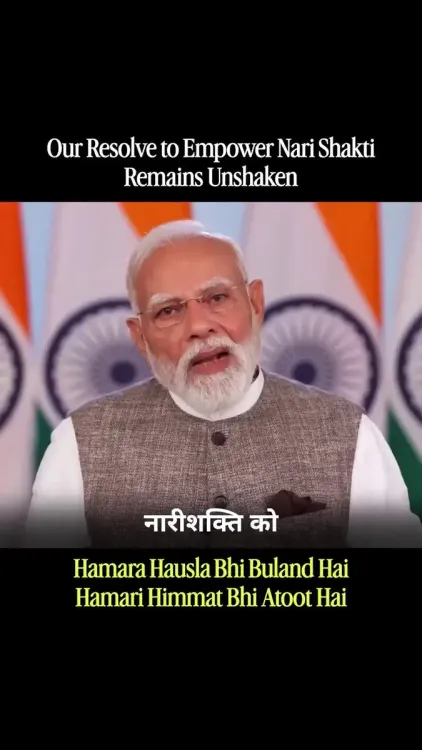
In Hindi, he wrote: नारी शक्ति देश के विकास में भागीदार के साथ-साथ भविष्य की निर्णायक नेतृत्वकर्ता भी बनेगी — women's power will be a partner in the country's development and will also become the decisive leader of the future.
Why women's seats wait on a new map
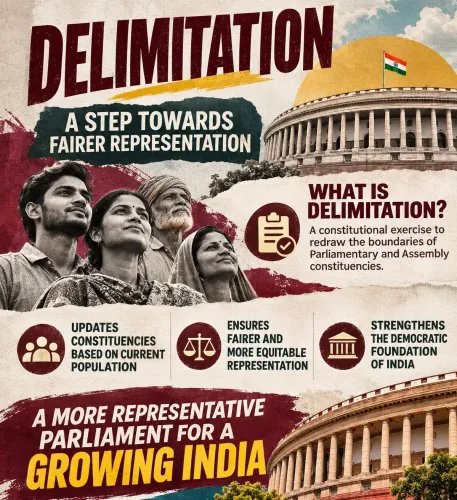
The promise Dhami invoked is already on the statute book. The Nari Shakti Vandan Adhiniyam — the Constitution (One Hundred and Sixth Amendment) Act 2023 — reserves one-third of seats in the Lok Sabha and in state assemblies for women. It does not switch on immediately. Implementation is chained to delimitation, the redrawing of parliamentary and assembly constituencies, which remains frozen until after the first census conducted after 2026.
That sequencing is not a footnote. Successive governments have tied women's political reservation to census-based constituency adjustment, treating the two as one reform rather than two. Dhami's hashtags simply named the lock and the key.
One-third of the House, after the count
Once census figures are in, a delimitation exercise would recast seat boundaries. Only then would the reserved one-third for women be allotted across the new map — a change that would reshape candidate lists for women aspirants and the arithmetic of every state legislature, including Uttarakhand.
The names on the next ballot are the real stake: women who will contest the reserved seats, parties that must find them, and assemblies whose membership will look different the cycle after the order is notified.
The census-to-reservation pipeline
What follows is machinery, not another slogan: census completion, delimitation orders, and the subsequent rollout of reserved seats in Parliament and the states. Until those orders exist, the 2023 amendment remains a ceiling of ambition rather than a floor of representation.
Dhami's line about decisive leadership points past the quota itself. Reservation puts women in the House. Leadership is what they do once they are there.
When the new constituencies are finally drawn, a third of those seats will pose a sharper question than whether women enter the legislature — who among them will run it.
Point of View
Delimitation after the next census. Dhami's November 2026 message sits at the political edge of that fuse, treating nari shakti as a leadership pipeline rather than a welfare gesture. Pairing future decision-makers with the delimitation hashtag is a reminder that the quota only becomes real when the map is redrawn. The sharper test for parties will be whether they search for women who can run houses and ministries, not merely fill reserved tickets.
NationPress
28 Nov 2026
Frequently Asked Questions
What did Uttarakhand CM Pushkar Singh Dhami say about nari shakti?
He said women's power will be a partner in India's development and will also become the decisive leader of the future. The 28 November 2026 post was tagged with delimitation and women's reservation.
What is the Nari Shakti Vandan Adhiniyam?
It is the Constitution (One Hundred and Sixth Amendment) Act 2023, which reserves one-third of seats for women in the Lok Sabha and state assemblies. Commencement is linked to a later delimitation exercise.
Why is women's reservation linked to delimitation in India?
The 2023 amendment ties the reservation's start to delimitation after the first census conducted after 2026. The design is to allot reserved seats on a freshly drawn constituency map rather than on the existing frozen boundaries.
When will one-third women's reservation in Parliament start?
It is designed to take effect only after delimitation that follows the first census after 2026, not from the date the amendment was passed. Census data and delimitation orders are the remaining steps.
What is delimitation in the Indian electoral system?
Delimitation is the official redrawing of parliamentary and assembly constituency boundaries, typically using new census population data. In this case it is also the legal trigger for women's reserved seats.