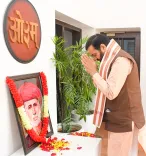
Delhi CM Rekha Gupta hails Cabinet nod to delimitation bills
Synopsis
Delhi Chief Minister Rekha Gupta said the Union Cabinet, led by Prime Minister Narendra Modi, has approved bills on delimitation and women's reservation. She said their passage would enable a 50% proportional rise in state seats and 33% women's quota in the 2029 Lok Sabha polls.
Key Takeaways
Delhi Chief Minister Rekha Gupta on 28 November 2026 said the Union Cabinet had approved bills on delimitation and women's reservation.
She said passage would enable a 50% proportional increase in seats of all states and 33% reservation for women in the 2029 Lok Sabha elections.
Gupta framed the step as new leadership opportunities for crores of women in Parliament and assemblies.
Parliament in 2023 passed the Nari Shakti Vandan Adhiniyam, tying the 33% quota to a post-census delimitation.
Delimitation has been frozen after the 2001 census until 2026 ; census completion and parliamentary passage remain the gates ahead.
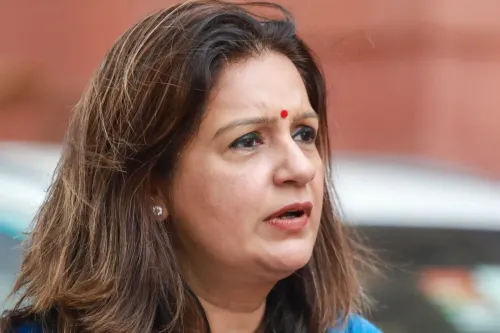
Delhi Chief Minister Rekha Gupta on Saturday put women at the centre of the next redraw of Indian power. In a post on 28 November 2026, the BJP leader said the Union Cabinet under Prime Minister Narendra Modi had approved bills on delimitation and women's reservation. She argued those bills would enlarge legislatures across states and open the 2029 Lok Sabha elections to a 33% women's quota.
Gupta wrote that the participation of the country's mothers, sisters and daughters — already walking kadam se kadam (step by step) with national progress — should now also rise in the country's decisions. An important step, she said, had been taken in that direction.
‘Under the leadership of Hon'ble Prime Minister Shri Narendra Modi, the Union Cabinet has approved bills related to delimitation and women's reservation,’ she posted. Their passage, she added, would pave the way for a 50% proportional increase in the seats of all states and for 33% reservation for women in the 2029 Lok Sabha elections.
She called it a door to new leadership opportunities for crores of women. Growing numbers of sisters in Parliament and assemblies, she said, would give their dreams and aspirations a new voice. The journey of a developed India, she concluded, would be enriched by the capability and leadership of Nari Shakti (women's power). The post was tagged #DelimitationBill.
Why Gupta timed the quota to 2029
The numbers she put on the table are not a small tweak. A 50% proportional rise in seats, if enacted, would recast every state assembly and the Lok Sabha before the women's quota is overlaid. Gupta presented 2029 as the election in which that overlay would finally apply.
That sequencing matters because a quota without more seats is a zero-sum fight over existing chairs. A quota after expansion is a different political bargain — one national parties have spent years trying to strike.
The 2023 law that locked the quota to a new map
Parliament in 2023 passed the Constitution (One Hundred and Twenty-eighth Amendment) Bill, known as the Nari Shakti Vandan Adhiniyam. It reserves 33% of seats for women in the Lok Sabha and state assemblies. The catch was written into the law itself: the reservation would take effect only after a delimitation exercise based on the next census.
Delimitation — the redrawing of constituency boundaries and, potentially, the number of seats — has been frozen after the 2001 census until 2026. Population has not stood still in those years. States that grew faster and states that slowed earlier are watching the same map for very different reasons. Any bill on delimitation therefore sits at the junction of gender politics and federal arithmetic.
From panchayat benches to Parliament
India has already reserved seats for women at the grassroots. The 73rd and 74th Constitutional Amendments of 1992 put women into panchayats and municipalities, building a generation of local office-holders. The 2023 national law was meant to lift that principle to the highest legislatures. Gupta's statement treats the latest bills as the machinery that would finally switch that law on.
What still has to happen is unromantic and decisive. Parliament must pass the bills she says the Cabinet has approved, the census must be completed, and a delimitation commission must draw the lines. Until those clocks move, the 33% remains a constitutional commitment waiting for a map.
The question is no longer whether women get a third of the benches. It is how soon India redraws the House — and who writes the new lines.
Point of View
Census-updated House rather than from today's map. Rekha Gupta's intervention treats Cabinet action on delimitation bills as the political switch for that sequence, and she explicitly clocks the outcome to the 2029 Lok Sabha election. The harder politics sit underneath the gender headline: extra seats will not fall evenly across states whose populations have diverged since the freeze after the 2001 census. Census completion, parliamentary passage, and the delimitation exercise will decide whether Nari Shakti arrives as new women in a larger Parliament, or as another wait.
NationPress
28 Nov 2026
Frequently Asked Questions
What did Delhi CM Rekha Gupta say about delimitation and women's reservation?
She said the Union Cabinet under Prime Minister Narendra Modi has approved bills linked to delimitation and women's reservation. According to her, their passage will enable a 50% proportional increase in seats across states and 33% reservation for women in the 2029 Lok Sabha elections.
When will the 33% women's reservation in Lok Sabha come into force?
The 2023 constitutional amendment ties the quota to a post-census delimitation, not to an immediate election. Rekha Gupta said the bills she cited would pave the way for the reservation to apply in the 2029 Lok Sabha elections.
What is the Nari Shakti Vandan Adhiniyam?
It is the 2023 Constitution (One Hundred and Twenty-eighth Amendment) that reserves 33% of seats for women in the Lok Sabha and state assemblies. Implementation was made contingent on delimitation after the next census.
Why is women's reservation linked to delimitation in India?
Delimitation redraws constituencies and can change how many seats each state has, based on population. The 2023 law waits for that exercise so the 33% quota can be applied on a revised map rather than simply slicing existing seats.
Will the number of Lok Sabha and assembly seats increase?
Rekha Gupta said the bills would lead to a 50% proportional increase in seats of all states. Any such change would still require parliamentary passage and a completed delimitation after the census.