Pralhad Joshi Marks 33% Women's Quota Milestone
Synopsis
Union Minister Pralhad Joshi marked the Nari Shakti Vandan Adhiniyam anniversary on June 12, 2026, celebrating the 128th Constitutional Amendment Act's 33% women's reservation in Parliament and state assemblies as a milestone for inclusive governance.
Key Takeaways
Union Minister Pralhad Joshi commemorated the anniversary of the Nari Shakti Vandan Adhiniyam on June 12, 2026 .
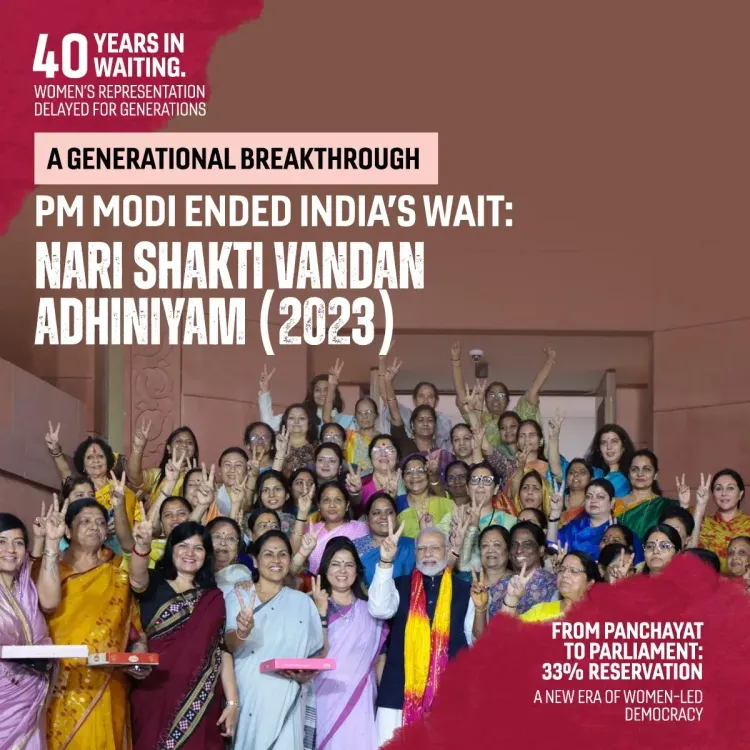
The Act — the 128th Constitutional Amendment Act, 2023 — guarantees 33 per cent reservation for women in the Lok Sabha and state legislative assemblies.
The bill was first introduced in 1996 and took nearly three decades to become law, finally passing during a special parliamentary session in September 2023 .
Actual implementation is linked to a fresh delimitation exercise and a new national census , both yet to be completed.
The legislation is widely cited by the ruling coalition as a landmark constitutional intervention on gender representation in elected bodies.
Union Consumer Affairs Minister Pralhad Joshi on Friday, June 12, 2026, marked the anniversary of the Nari Shakti Vandan Adhiniyam, calling it 'a new chapter in India's democratic journey' and underscoring the landmark legislation's role in empowering women to shape the nation's future.
Context
Joshi's post, shared under the hashtag #12YearsOfNariShakti, celebrated the 33 per cent reservation for women in the Lok Sabha and state legislative assemblies as the fulfilment of 'decades of aspiration.' The minister described the law as having 'transformed' those aspirations into reality, strengthening what he termed 'inclusive governance.'
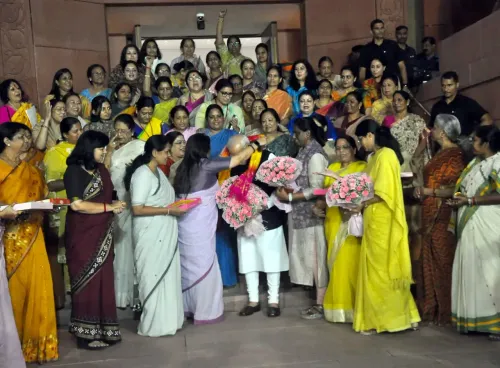
The Nari Shakti Vandan Adhiniyam — formally the 128th Constitutional Amendment Act, 2023 — was enacted during a special parliamentary session in September 2023, making it one of the most consequential constitutional changes in recent decades.
Policy Backdrop
The road to the legislation was long and contested. A women's reservation bill was first introduced in 1996 and passed by the Rajya Sabha in 2010, but stalled repeatedly in the Lok Sabha over nearly three decades before finally being enacted in 2023.
The Act mandates that one-third of seats in the lower house of Parliament and in state assemblies be reserved for women. However, operationalisation of the quota is explicitly tied to the completion of a fresh delimitation exercise and a national census — both of which are referenced in the Act's clauses and remain pending.
Stakeholders and Impact
The legislation directly affects women political aspirants across all parties, who stand to benefit from constitutionally guaranteed seats once the enabling conditions are met. Political parties will be required to reorganise candidate selection strategies once delimitation is carried out.
Advocates of gender-inclusive governance have long argued that mandatory quotas in elected bodies are essential to moving beyond token representation. Critics, meanwhile, have pointed to the delimitation linkage as a structural delay that defers the law's practical impact.
What's Next
The timeline for actual implementation remains contingent on two major administrative exercises: the next national census and the subsequent delimitation of parliamentary and assembly constituencies. Until both are completed, the reservation provisions cannot be operationalised, making the census and delimitation schedule the most closely watched variables for women entering electoral politics.
As the ruling coalition continues to cite the Nari Shakti Vandan Adhiniyam as a signature governance achievement, senior leaders like Joshi are expected to amplify its significance ahead of state election cycles — keeping the spotlight on a law whose transformative promise is still awaiting full execution.
Point of View
Reinforcing the party's claim to the women's empowerment narrative ahead of electoral cycles. The commemoration is notable because the law's practical impact — actual reserved seats — remains deferred pending delimitation and census, meaning the political messaging outpaces on-the-ground implementation. By framing the legislation as a completed achievement rather than a work in progress, the ruling coalition is betting that the symbolic weight of the constitutional change carries electoral resonance even before a single reserved seat is filled. This gap between legislative enactment and operational reality will likely become a sharper point of contestation as opposition parties and women's groups press for a firm implementation timeline.
NationPress
22 Sept 2026
Frequently Asked Questions
What is the Nari Shakti Vandan Adhiniyam?
The Nari Shakti Vandan Adhiniyam is the 128th Constitutional Amendment Act, 2023, which provides 33 per cent reservation for women in the Lok Sabha and state legislative assemblies. It was passed during a special parliamentary session in September 2023 after nearly three decades of legislative attempts dating back to 1996.
When will the 33% women's reservation actually come into effect?
The reservation cannot be operationalised until after the completion of a new national census and a subsequent delimitation of parliamentary and assembly constituencies, both of which are explicitly required by the Act's clauses and remain pending as of 2026.
Who is Pralhad Joshi?
Pralhad Joshi is a senior BJP leader from Karnataka and currently serves as Union Minister of Consumer Affairs, Food and Public Distribution, and Minister of New and Renewable Energy in the Union Cabinet.
What was the history of the women's reservation bill in India?
A women's reservation bill was first introduced in the Indian Parliament in 1996. It passed the Rajya Sabha in 2010 but was repeatedly blocked in the Lok Sabha. It was finally enacted as the Nari Shakti Vandan Adhiniyam during a special session of Parliament in September 2023.
What does the Nari Shakti Vandan Adhiniyam mean for women in politics?
Once operationalised, the Act will constitutionally guarantee one-third of seats in Parliament and state assemblies for women, requiring all political parties to field women candidates in reserved constituencies — a structural shift in how electoral representation is mandated in India.