DMK president Stalin backs delimitation draft on 1971 formula
Synopsis
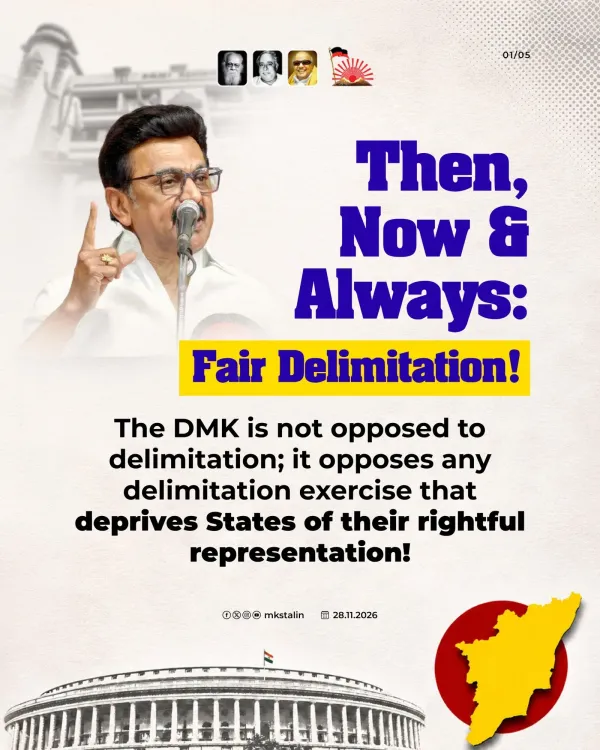
DMK president M. K. Stalin said his party will back a revised Delimitation Bill after two April demands were written into the draft, calling a 50 percent seat rise on 1971 population a win for southern states.
Key Takeaways
Stalin said on 28 November 2026 that the DMK will support a revised Delimitation Bill.
He said the two demands behind the party's April opposition have been included in writing in the new draft.
Stalin described the draft as a 50 percent rise in constituencies for all states, based on 1971 population.
He called the shift a victory for DMK campaigns since 2024 and for southern states including Tamil Nadu.
The stance was adopted at a meeting of the party's Members of Parliament the same day.
India's 2001 constitutional freeze kept seat readjustment tied to 1971 data through 2026 to avoid penalising states with lower fertility.
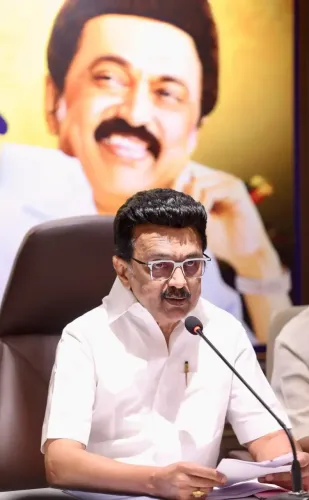
DMK president M. K. Stalin on Saturday, 28 November 2026, told party parliamentarians that the Dravida Munnetra Kazhagam will support a revised Delimitation Bill after the two conditions that had driven its opposition in April were, he said, placed in writing in the new draft. The former Tamil Nadu chief minister called the rewrite a victory for struggles begun in 2024 and for every southern state, and warned against missing a formula that would raise constituencies by 50 percent for all states on the 1971 population.
Posting in Tamil on X, Stalin put the party's new line in plain terms. 'The two demands for which we opposed the delimitation draft last April have been included in writing in the new draft legislation,' he wrote. 'This is a victory for the continuous struggles undertaken by the DMK from 2024. A victory for all southern states including Tamil Nadu.'
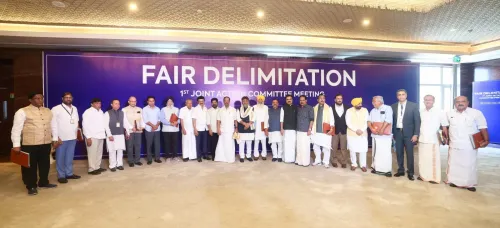
MPs lock in support after the April stand-off
The decision, he said, came at a meeting of the party's Members of Parliament on Saturday. Stalin asked colleagues to weigh, without emotion, what would follow if they let this bill pass them by. After examining what is practically possible, he added, the DMK would back delimitation in this form because it is favourable to Tamil Nadu.
He did not name the two April demands in the post. He did describe the draft as providing a 50 percent increase in constituencies for every state, calculated on 1971 population figures, the same census year that has underpinned India's long freeze on Lok Sabha seat shares.
A 50 percent rise tied to the 1971 census
That baseline is not a technical footnote. It is the heart of a decades-old bargain. The Constitution (Eighty-fourth Amendment) Act, 2001 extended the freeze on readjusting parliamentary constituencies until 2026, still using 1971 census data, so that states which cut fertility through family planning would not lose seats to those that grew faster.
Tamil Nadu, Kerala and Karnataka sit on the lower-growth side of that ledger. Any post-freeze exercise that simply followed the latest headcount would shrink their relative weight in the Lok Sabha. Southern parties, the DMK among them, have pressed for existing shares to be protected or for compensatory mechanisms before that freeze lifts.
Southern weight in a larger House
Stalin's message treats a uniform 50 percent expansion on the old 1971 base as the workable floor. It is not framed as the maximal demand. It is framed as the version that, in his telling, can actually pass and still shield the south. Missing it, he argued, is a risk, not a bargaining chip to throw away in anger.
Other southern governments have not been spoken for in this announcement. Their formal responses to any seat-allocation formula will matter as much as the DMK whip. So will the fine print when the bill reaches Parliament, wording the party says is now in writing, yet still a legislative fight rather than a closed file.
The next test is whether that 1971-plus-half formula survives the floor of the House, and whether other southern capitals call it enough.
Point of View
Not strategic. The larger arc is familiar: northern population weight versus southern demographic success, with Parliament as the venue where that arithmetic becomes power.
NationPress
28 Nov 2026
Frequently Asked Questions
What did M. K. Stalin say about the Delimitation Bill?
DMK president M. K. Stalin said his party will support a revised Delimitation Bill because two demands that led it to oppose an April draft have, in his account, been included in writing. He described the draft as raising constituencies by 50 percent for all states on 1971 population figures and called the outcome a win for southern states including Tamil Nadu.
Why does the DMK want delimitation based on the 1971 census?
Using 1971 population as the baseline is meant to stop states that lowered fertility through family planning from losing Lok Sabha weight to faster-growing states. Tamil Nadu and other southern states have lower population growth than much of the north, so a fresh census-only redraw could cut their relative share of seats.
What is delimitation in India?
Delimitation is the legal process of redrawing Lok Sabha and assembly constituency boundaries and, when allowed, changing how many seats each state gets. A constitutional freeze has long kept parliamentary seat totals tied to 1971 data so that population control would not be penalised.
How could delimitation affect Tamil Nadu's Lok Sabha seats?
If seats were reallocated purely on recent population, Tamil Nadu's share of the Lok Sabha could fall relative to higher-growth states. Stalin argued that a 50 percent increase for every state calculated on 1971 figures is a practical way to expand the House without stripping the south of weight.
What is the 84th Constitutional Amendment on delimitation?
The Constitution (Eighty-fourth Amendment) Act, 2001 extended the freeze on readjusting parliamentary constituencies until 2026, still using 1971 census data. That freeze is the legal backdrop against which any new Delimitation Bill will be judged by southern parties.