TVK mocks Stalin as 'Savarkar 2.0' over DMK delimitation stand
Synopsis
Tamil Nadu's ruling TVK has branded M.K. Stalin 'Savarkar 2.0', circulating a morphed image of him in RSS uniform. The trigger was the DMK's support for the Centre's revised delimitation Bill, which freezes seat shares on the 1971 Census for 25 years. Stalin calls it a victory for Tamil Nadu. The TVK calls it ideological surrender.
Key Takeaways
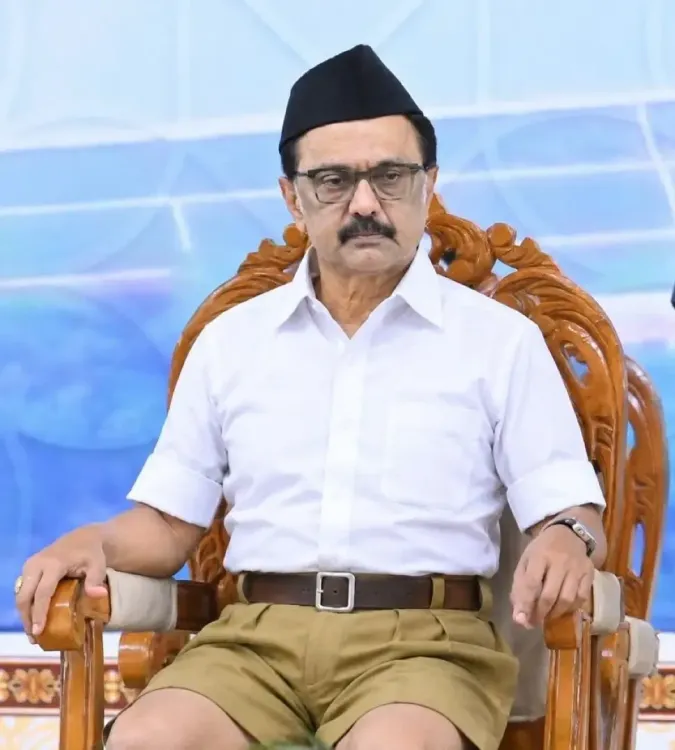
The TVK IT wing circulated a morphed image of M.K.
Stalin in RSS uniform, captioned 'Stalin, aka Savarkar 2.0' , on 28 November 2026 .
A second animated post showed Stalin and Udhayanidhi Stalin taking an oath as RSS members.
The DMK backed the Centre's revised delimitation Bill, saying its key demands were met.
Raja said the Bill provides a uniform 50 per cent increase in Lok Sabha seats across all states.
The revised Bill retains the 1971 Census as the basis for representation, which Stalin says protects Tamil Nadu's share for 25 years .
The DMK has 22 Lok Sabha and eight Rajya Sabha MPs.
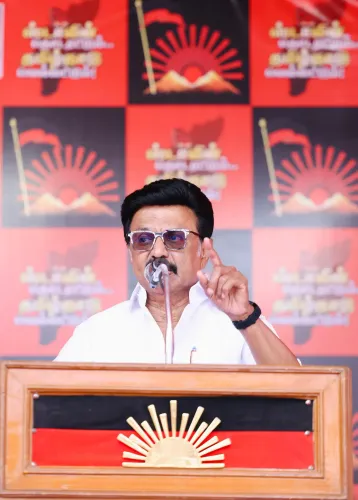
Tamil Nadu's ruling Tamilaga Vettri Kazhagam (TVK) on Saturday, 28 November 2026, attacked DMK President and former Chief Minister M.K. Stalin in Chennai after his party chose to back the BJP-led Union government's revised delimitation Bill in Parliament. The TVK's Information Technology wing circulated a morphed photograph showing Stalin in the uniform of a Rashtriya Swayamsevak Sangh (RSS) activist, questioning the Dravidian party's ideological position.
The Morphed Image and Social Media Campaign
The doctored image carried the caption 'Stalin, aka Savarkar 2.0'. It set off a fresh political controversy over the Dravida Munnetra Kazhagam's stand on the contentious delimitation exercise.
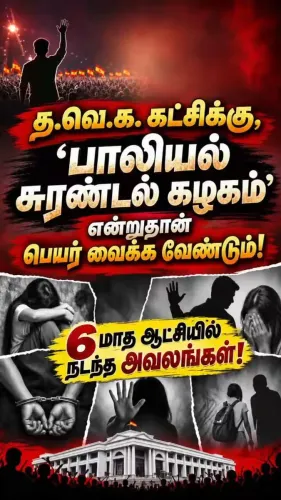
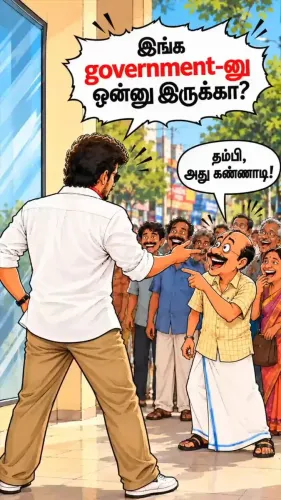
The TVK followed it with an animated social media post. That post showed Stalin and his son, Leader of the Opposition Udhayanidhi Stalin, taking an oath as RSS members. The message was that the DMK had compromised its long-held ideological commitments.
Notably, the attack draws on the DMK's own political vocabulary. The party has built its identity on opposing the Sangh Parivar, and its critics are now turning that identity against it.
Why the DMK Backed the Revised Bill
The broadside came shortly after the DMK announced its support for the revised Bill. The party said the Centre had accepted its principal demands on protecting Tamil Nadu's representation in Parliament.
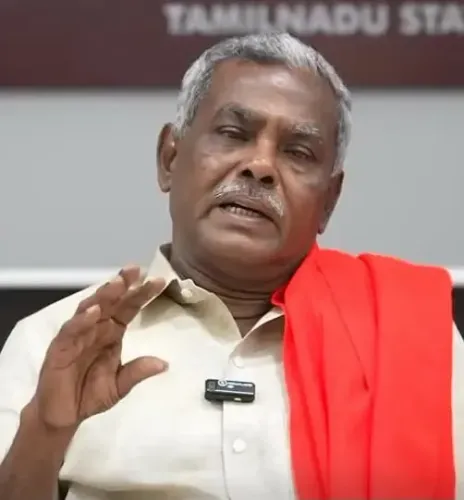
DMK Deputy General Secretary and Lok Sabha MP A. Raja said the proposed law provides for a uniform 50 per cent increase in Lok Sabha constituencies across all states. He said this would preserve each state's existing proportion of parliamentary representation.
The DMK currently has 22 members in the Lok Sabha and eight in the Rajya Sabha. That makes its support significant for passing the legislation.
What Stalin Said
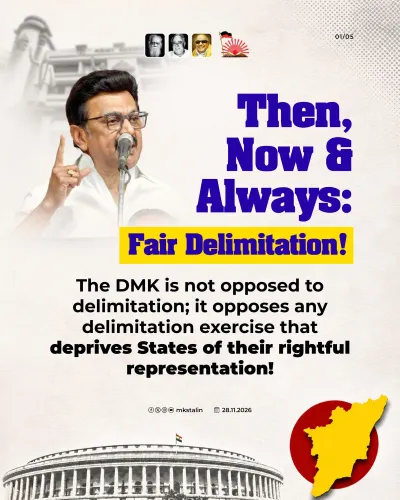
Stalin described the revised Bill as a major victory for Tamil Nadu's sustained struggle for fair delimitation and for the political interests of southern states. He said the Centre had incorporated two major demands raised in the DMK's 2024 Assembly resolution.
Under the earlier proposal, the DMK had feared that northern states with higher population growth would gain disproportionately. The revised legislation instead retains the 1971 Census as the basis for deciding parliamentary representation.
Stalin argued that the arrangement would allow Tamil Nadu to gain additional Lok Sabha seats without losing its existing share of representation for the next 25 years.
A Reversal Under Scrutiny
The DMK had strongly opposed the earlier version of the legislation. It had accused the Union government of trying to push through delimitation without adequately addressing the concerns of southern states.
This comes amid a longstanding debate in states that controlled population growth. Their leaders have repeatedly argued that a population-based redrawing of seats would penalise them for meeting national family-planning goals.
The DMK says the shift reflects changes the Centre made to the Bill. The TVK's campaign paints it as an ideological climbdown.
What Happens Next
The confrontation has intensified the rivalry between the TVK and the DMK over delimitation. As the Bill moves through Parliament, the fight over who speaks for Tamil Nadu's interests is likely to grow sharper in the state's politics.
Point of View
Which is exactly what the party demanded. But a 25-year freeze only postpones the North-South representation question rather than resolving it. The TVK, meanwhile, is choosing morphed images over a substantive critique of the Bill. If the ruling party has real objections to the arrangement, it owes voters an argument, not a meme.
NationPress
28 Nov 2026
Frequently Asked Questions
Why did TVK call M.K. Stalin 'Savarkar 2.0'?
The TVK used the label to mock the DMK's decision to support the BJP-led Centre's revised delimitation Bill. Its IT wing circulated a morphed image of Stalin in RSS uniform with that caption.
Why is the DMK supporting the revised delimitation Bill?
The DMK says the Centre accepted its main demands. These include a uniform 50 per cent increase in Lok Sabha seats across states and retaining the 1971 Census as the basis for representation.
How does the revised delimitation Bill affect Tamil Nadu?
According to Stalin, Tamil Nadu would gain additional Lok Sabha seats without losing its existing share of representation for the next 25 years.
How many MPs does the DMK have in Parliament?
The DMK has 22 members in the Lok Sabha and eight in the Rajya Sabha, which makes its backing significant for the Bill.
Did the DMK oppose delimitation earlier?
Yes, the DMK strongly opposed the earlier version of the legislation. It accused the Centre of pushing delimitation without addressing southern states' concerns about losing representation to more populous northern states.