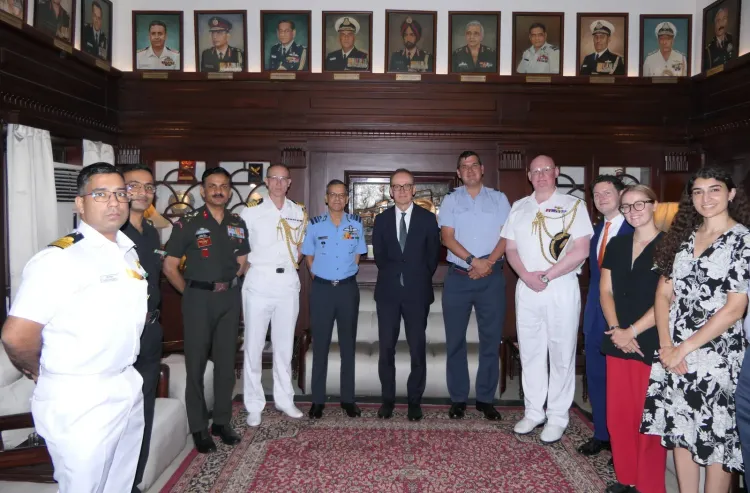
UK defence chief Jeremy Pocklington visits National Defence College in New Delhi
Synopsis
The UK’s top defence civil servant visiting India’s National Defence College is not a routine courtesy call — it is the latest in a rapid series of senior-level India-UK defence engagements spanning institutional exchanges, joint exercises, and industrial cooperation, pointing to a relationship that is quietly but deliberately upgrading its strategic depth.
Key Takeaways
Jeremy Pocklington CB , Permanent Secretary at the UK Ministry of Defence , led a high-level delegation to the National Defence College (NDC) in New Delhi on 21 August .
The visit aimed to enhance senior leadership interactions and share best practices, according to the NDC .
In June , India and the UK held the 15th Executive Steering Group (ESG) meeting in London , covering interoperability, joint exercises, and emerging military technologies.
CDS General Anil Chauhan visited the UK in April in what was described as a landmark moment in the bilateral defence partnership.
Both nations have reaffirmed commitment to Indo-Pacific stability, cyber threat cooperation, and defence industrial collaboration.
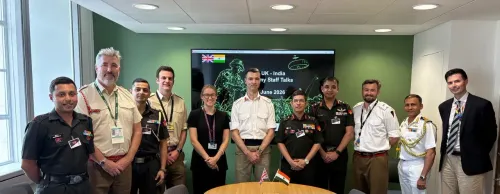
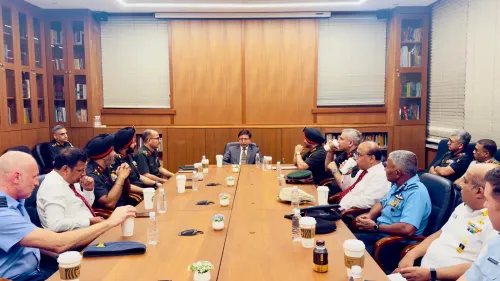
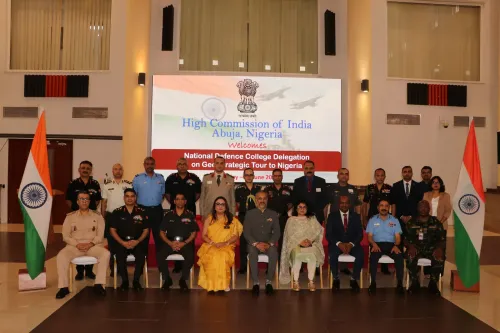
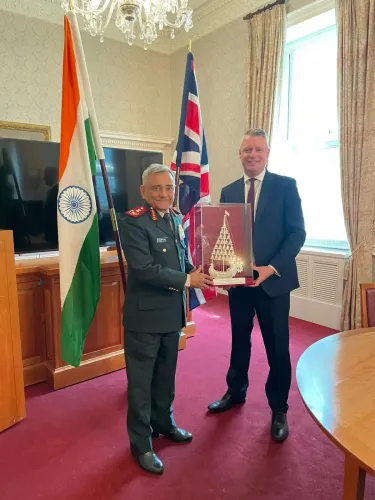
A high-level delegation from the United Kingdom, led by Jeremy Pocklington CB, Permanent Secretary at the UK Ministry of Defence, visited the National Defence College (NDC) in New Delhi on 21 August, reinforcing the growing momentum in bilateral defence engagement between India and the UK.
Purpose of the Visit
The NDC confirmed the visit in a post on X, stating that the objective was “to enhance interactions at the senior leadership level and sharing of best practices.” The delegation’s presence at one of India’s premier defence institutions signals a deliberate push to deepen institutional ties beyond routine diplomatic exchanges.
Recent Milestones in India-UK Defence Ties
The visit follows a string of high-level engagements between the two nations. In June, India and the UK held the 15th Executive Steering Group (ESG) meeting in London from 17 to 19 June, where both sides discussed advancing multi-tiered military cooperation. The talks covered enhanced interoperability, bilateral joint exercises and training, subject matter expert exchanges in niche and emerging military technologies, and increased engagement between defence think tanks. Delegations also visited the UK Trials and Experimental Group during the engagements.
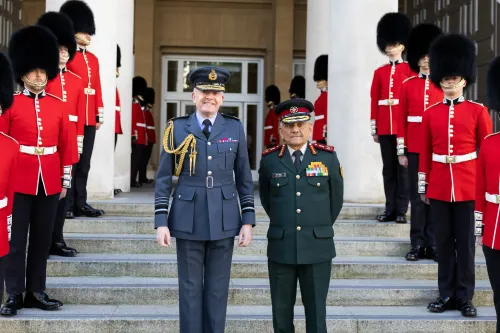
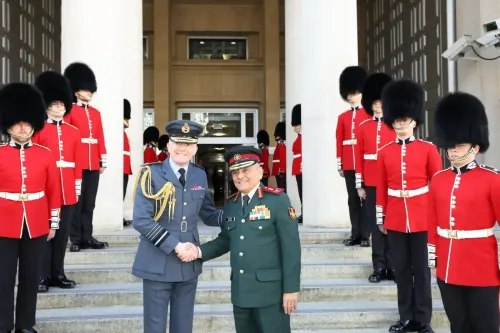
In April, Chief of Defence Staff (CDS) General Anil Chauhan made a landmark visit to the UK, hosted by UK Chief of the Defence Staff Air Chief Marshal Sir Richard Knighton. The three-day visit included bilateral talks, ministerial engagement, and defence industry collaboration sessions with senior UK military officials, ministers, academics, and think tanks.
Shared Strategic Priorities
During General Chauhan’s April visit, India and the UK reaffirmed their shared resolve to collaboratively address contemporary challenges — from global trade imbalances to emerging cyber threats — while advancing a peaceful and prosperous Indo-Pacific and harnessing accelerated technological transformation. British industry representatives also met CDS Chauhan to advance talks on greater defence cooperation supporting jobs, growth, and security for both nations.
General Chauhan additionally visited the Royal College of Defence Studies, meeting international course members of both the Global Strategic Program and the Pinnacle Course — future senior military and cross-government leaders from across the world.
What This Signals
Taken together, the NDC visit, the ESG meeting, and the CDS’s UK trip represent a structured, multi-track defence relationship that is accelerating across institutional, operational, and industrial dimensions. As both nations navigate a shifting Indo-Pacific security landscape, the pace and seniority of these exchanges suggest the India-UK defence partnership is moving well beyond ceremonial engagement into substantive strategic alignment. Further institutional interactions are expected in the months ahead.
Point of View
And the pattern is telling. These are not isolated goodwill gestures — they form a structured engagement ladder: think-tank exchanges, ESG-level talks, CDS visits, and now a senior civilian delegation to a military education institution. What mainstream coverage tends to underplay is the institutional dimension: embedding the relationship in colleges, think tanks, and training frameworks creates durability that outlasts any single government. The open question is whether the industrial cooperation thread — flagged during General Chauhan’s April visit — translates into concrete procurement or co-development agreements, or remains aspirational.
NationPress
21 Aug 2026
Frequently Asked Questions
Who led the UK delegation to India's National Defence College?
The delegation was led by Jeremy Pocklington CB, Permanent Secretary at the UK Ministry of Defence. The visit took place on 21 August at the National Defence College in New Delhi.
What was the purpose of the UK delegation's visit to the NDC?
According to the NDC, the objective was to enhance interactions at the senior leadership level and facilitate the sharing of best practices between Indian and UK defence institutions.
What is the 15th Executive Steering Group meeting between India and the UK?
The Executive Steering Group (ESG) is a bilateral forum for India-UK defence cooperation. The 15th meeting was held in London from 17 to 19 June, covering joint exercises, interoperability, emerging military technologies, and training collaboration.
What happened during CDS General Anil Chauhan's visit to the UK?
CDS General Anil Chauhan visited the UK in April in a three-day trip described as a landmark moment in the defence partnership. He held bilateral talks, met ministers, academics, and industry representatives, and visited the Royal College of Defence Studies.
Why are India-UK defence ties significant in the current context?
Both nations share strategic interests in Indo-Pacific stability, cyber security, and emerging technology. The series of high-level engagements in 2025 reflects a deliberate effort to move the relationship from ceremonial ties toward substantive military and industrial cooperation.