CM Himanta rallies Dibrugarh against fake voters, illegal immigration

Synopsis
Assam Chief Minister Himanta Biswa Sarma on October 15, 2026 rallied a massive crowd in Dibrugarh at a Jan Jagran Rally, framing the turnout as a constitutional stand against fake voters and illegal immigration ahead of the assembly election cycle.
Key Takeaways
Assam CM Himanta Biswa Sarma addressed a large Jan Jagran Rally in Dibrugarh on October 15, 2026 .
He described the crowd as a 'fitting reply' to forces disrespecting the Constitution and constitutional institutions.
The rally specifically focused on opposition to fake voters and support for national security and border integrity.
The event draws on Assam's long-running immigration debate anchored in the Assam Accord (1985) and the NRC finalised in August 2019 .
The BJP-led state government has argued the published NRC list requires revision and that electoral rolls contain fraudulent entries.
Petitions related to NRC revision remain active before the Gauhati High Court and Supreme Court , with Assam assembly elections on the horizon.
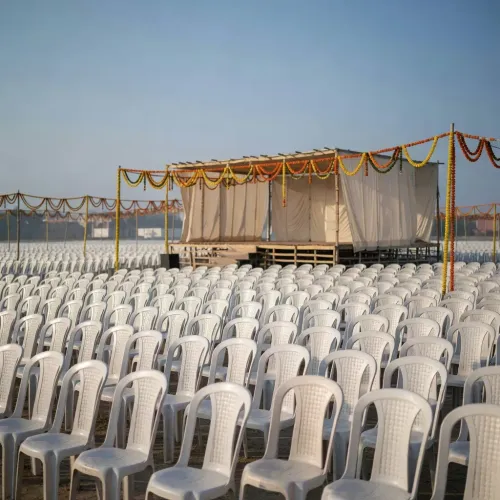
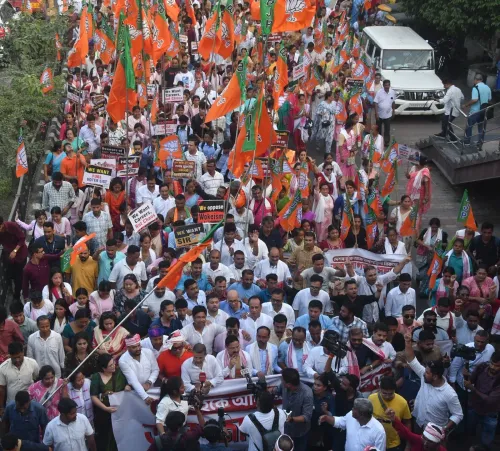
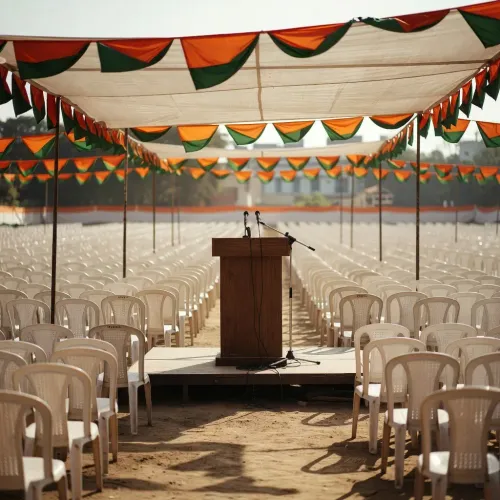
A sea of citizens in Dibrugarh turned out on Thursday, October 15, 2026, for what Assam Chief Minister Himanta Biswa Sarma called a thunderous public verdict — one aimed squarely at forces he accused of disrespecting the Constitution, constitutional institutions, and the will of the people.
Sharing footage of the rally on X, CM Sarma wrote in Hindi: 'डिब्रूगढ़ में उमड़ा यह जनसैलाब उन ताकतों को करारा जवाब है, जो देश के संविधान, संवैधानिक संस्थानों और जनता की राय का अनादर करना चाहते हैं।' — 'This flood of people in Dibrugarh is a fitting reply to those forces that want to disrespect the Constitution, constitutional institutions, and the opinion of the people.' Every citizen at the Jan Jagran Rally, he said, was raising their voice against fake voters and in favour of national security.
Dibrugarh's Jan Jagran Rally and what it signals
The choice of Dibrugarh — the commercial nerve centre of Upper Assam — is deliberate. The city sits at the heart of a region long marked by anxieties over demographic change and contested electoral rolls. A rally of this scale in the city sends a pointed message about grassroots sentiment on the issue of voter integrity, well ahead of the next assembly election cycle.
The term 'jan jagran' — literally 'public awakening' — frames the gathering not as a party event but as a civic mobilisation. CM Sarma's framing explicitly links the crowd's presence to constitutional legitimacy, positioning those who question the state's immigration-detection efforts as opponents of democratic norms rather than legitimate dissenters.
The long shadow of the NRC and the Assam Accord
Assam's politics has been shaped for decades by the question of illegal immigration from Bangladesh. The Assam Accord, signed in 1985, established March 24, 1971 as the cut-off date for identifying and deporting illegal immigrants — a date tied directly to the Bangladesh Liberation War. Four decades later, the National Register of Citizens (NRC) was finalised and published in August 2019 after a Supreme Court-supervised exercise designed to operationalise that cut-off date.
Yet the NRC's final list satisfied few stakeholders. The BJP government, including CM Sarma, has repeatedly argued that the published list contains errors and that genuine infiltrators slipped through while genuine citizens were excluded. That unresolved tension — over who belongs on Assam's electoral rolls — is exactly the fault line the Dibrugarh rally is meant to energise.
Electoral rolls, border fencing, and the courts
The broader pattern in Assam is one of layered, overlapping processes: NRC revision petitions pending before courts, ongoing border fencing projects along the India-Bangladesh boundary, and periodic drives to detect and de-list what the state government describes as fake or fraudulent voter registrations. CM Sarma's post frames each of these as a single, coherent project of constitutional self-defence — one that he argues enjoys overwhelming popular support, as evidenced by the turnout in Dibrugarh.
With Assam's assembly election cycle approaching, any movement on electoral roll revisions or related petitions before the Gauhati High Court and the Supreme Court will be watched closely. Today's rally makes clear that the ruling dispensation intends to keep voter integrity at the top of the public agenda.
The crowd in Dibrugarh did not just fill a ground — it marked a political temperature. Whether that temperature translates into policy movement in the courts or the Election Commission is the question Assam is now waiting to answer.
Point of View
He pre-empts critics who might characterise the drive as minority-targeting, repositioning it instead as a defence of the rule of law. The timing, ahead of the next Assam assembly election cycle, signals that voter-roll integrity will be the BJP's defining ground-level issue in the state. With NRC revision petitions still live in court, the rally also functions as political pressure on the judicial and administrative processes that will determine Assam's electoral landscape.
NationPress
15 Oct 2026
Frequently Asked Questions
What is the Jan Jagran Rally in Dibrugarh about?
The Jan Jagran Rally held in Dibrugarh on October 15, 2026 was a public mobilisation organised around the issues of fake voters on electoral rolls and illegal immigration, with Assam CM Himanta Biswa Sarma framing it as a defence of the Constitution and national security.
What is the NRC in Assam?
The National Register of Citizens (NRC) is a register of verified Indian citizens in Assam, finalised in August 2019 under Supreme Court supervision, aimed at identifying illegal immigrants based on the March 24, 1971 cut-off date set by the Assam Accord.
What is the Assam Accord and why does it matter?
The Assam Accord was signed in 1985 between the central government and Assam movement leaders. It set March 24, 1971 as the legal cut-off date for detecting and deporting illegal immigrants, making it the foundational document for all subsequent NRC and immigration-related exercises in the state.
Why is Dibrugarh significant for Assam politics?
Dibrugarh is the main commercial and administrative hub of Upper Assam, a region historically sensitive to concerns about illegal immigration and demographic change. Rallies there carry strong symbolic weight in state-level political battles.
What happens next with fake voter concerns in Assam?
Any revision of Assam's electoral rolls is subject to Election Commission processes, while NRC-related petitions remain active before the Gauhati High Court and the Supreme Court. With the Assam assembly election approaching, these proceedings are expected to intensify.