CM Himanta calls rallies in Dibrugarh, Barpeta Road against street-led regime change
Synopsis
Assam CM Himanta Biswa Sarma announced massive peaceful rallies in Dibrugarh and Barpeta Road on October 15, 2026, declaring firm opposition to any effort to change the government through street protests rather than electoral processes.
Key Takeaways
Assam CM Himanta Biswa Sarma announced rallies in Dibrugarh and Barpeta Road on October 15, 2026 .
The rallies are framed as 'massive' and 'peaceful,' directly countering what Sarma calls 'regime change through street protests and political pressure.' Dibrugarh serves as Assam's second capital and a key economic hub; Barpeta Road holds significant political weight in western Assam.
The geographic spread — eastern and western Assam — signals a statewide, not localised, show of force by the ruling alliance.
The BJP's stance mirrors its broader Northeast doctrine of upholding constitutional and electoral processes over street-led political change.
As NEDA convenor, Sarma's messaging carries weight beyond Assam across multiple Northeast states.
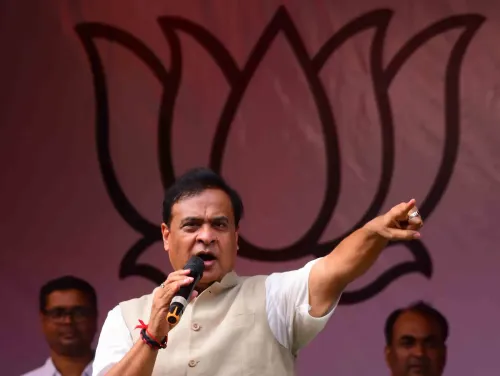
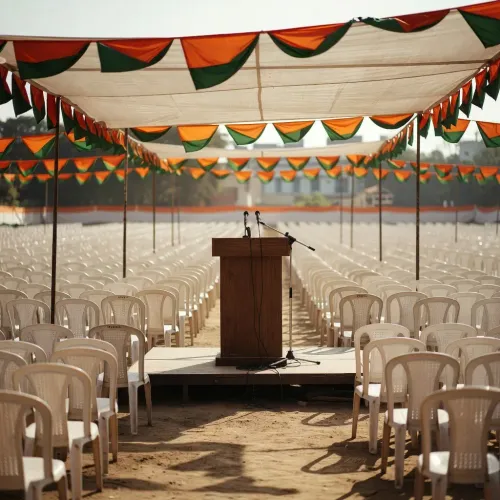
A direct challenge to street-politics as a tool of government removal — that is the message Assam Chief Minister Himanta Biswa Sarma fired on Thursday, October 15, 2026, announcing mass peaceful rallies in two of Assam's most politically significant cities to push back against what he called attempts at 'regime change through street protests and political pressure.'
Two cities, one message: Dibrugarh and Barpeta Road take centre stage
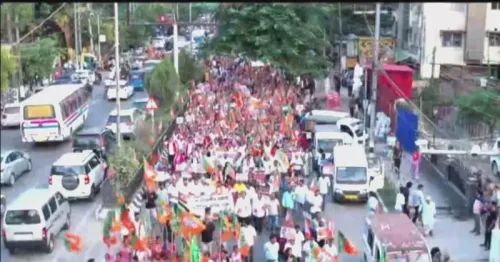
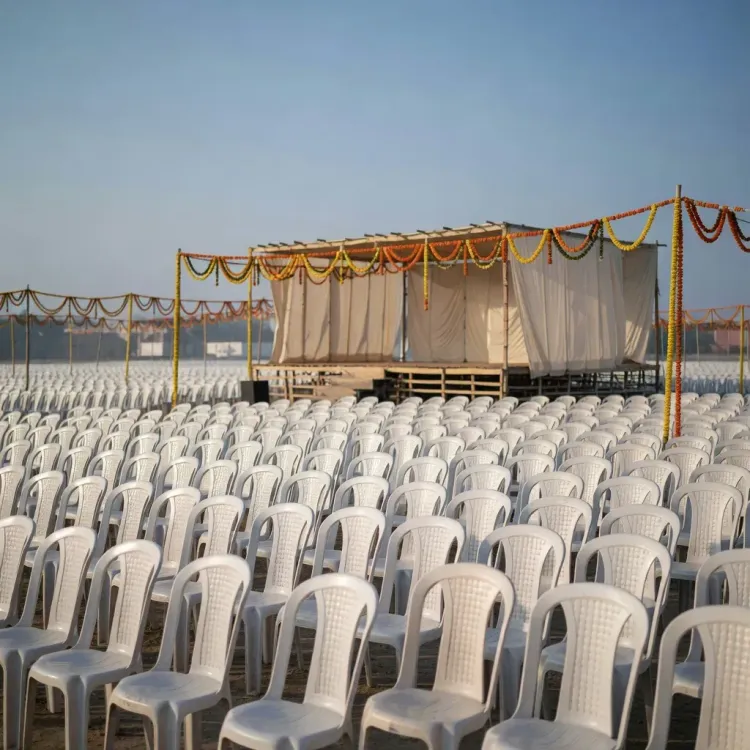
Dibrugarh, the eastern Assam city that doubles as the state's second administrative capital, and Barpeta Road, a politically active town in western Assam's Barpeta district, will both host what Sarma described as 'massive, peaceful rallies.' The geographic spread is deliberate — east to west, upper Assam to lower Assam — signalling that the BJP-led government's counter-mobilisation is not a localised affair but a statewide statement.
Dibrugarh carries particular symbolic weight: its tea gardens and oil fields have long made it the economic engine of eastern Assam, and the state legislature has periodically convened there, lending it an authority beyond a typical district headquarters. Barpeta Road, meanwhile, sits in a district with a complex demographic and electoral history, making a show of strength there politically pointed.
The BJP's constitutional-process doctrine in Assam
Sarma's framing — 'firm opposition to any attempt at regime change through street protests' — draws directly from a posture the Bharatiya Janata Party has consistently held in the Northeast since its rise to power in Assam in 2016. The argument is institutional: governments are made and unmade at the ballot box, not at the barricade. Under Sarma's watch since May 2021, that line has been articulated with increasing sharpness whenever opposition movements gain street momentum.
As convenor of the North-East Democratic Alliance (NEDA), Sarma is also speaking to a broader regional audience. NEDA-governed states have collectively emphasised electoral legitimacy over protest-driven change — and a high-profile rally in Assam sends a signal well beyond the state's borders.
What the rallies are meant to prove
Peaceful mass mobilisation as a counter to street agitation is a carefully chosen instrument. By mirroring the form of protest — large public gatherings — while rejecting its purpose, the ruling alliance attempts to demonstrate that popular support, not demonstrators alone, defines political legitimacy. The choice of two cities rather than one amplifies that arithmetic.
Opposition parties and civil society groups in Assam have not yet publicly responded to the announcement. What they say next — and how large the rallies actually turn out — will be the real measure of the moment.
In Assam's volatile political landscape, a government that takes to the streets to defend its right to govern is making one thing unmistakably clear: it intends to fight for every inch of its mandate.
Point of View
The BJP signals that it commands the streets of both upper and lower Assam, not just state offices. This fits a deliberate Northeast BJP playbook of linking democratic legitimacy exclusively to electoral outcomes, shutting the door rhetorically on protest as a governance lever. The NEDA convener dimension adds a regional multiplier — the message lands in Nagaland, Manipur, and Meghalaya as much as it does in Guwahati.
NationPress
15 Oct 2026
Frequently Asked Questions
Why is Himanta Biswa Sarma holding rallies in Dibrugarh and Barpeta Road?
CM Sarma announced the rallies to reaffirm the BJP-led government's opposition to any attempt at removing it through street protests, choosing the two cities to demonstrate statewide support across eastern and western Assam.
What is Dibrugarh's significance as Assam's second capital?
Dibrugarh is a major city in eastern Assam known for its tea and oil industries. The Assam state legislature has periodically held sessions there, giving it a secondary administrative status alongside Guwahati.
What is NEDA and what role does Himanta Biswa Sarma play in it?
The North-East Democratic Alliance (NEDA) is a BJP-led coalition of political parties governing several Northeast Indian states. Himanta Biswa Sarma serves as its convenor, making him one of the most influential political figures in the region.
What does 'regime change through street protests' mean in the context of Assam politics?
It refers to opposition attempts to use public agitations or mass protests to pressure the elected government to resign or change policy, a method that Sarma and the BJP argue bypasses constitutional democratic processes.
How long has the BJP governed Assam?
The BJP-led alliance has governed Assam since 2016. Himanta Biswa Sarma became Chief Minister in May 2021 after the party secured a second consecutive term in the state assembly elections.