CM Naidu Remembers Kalam on His Birth Anniversary
Synopsis
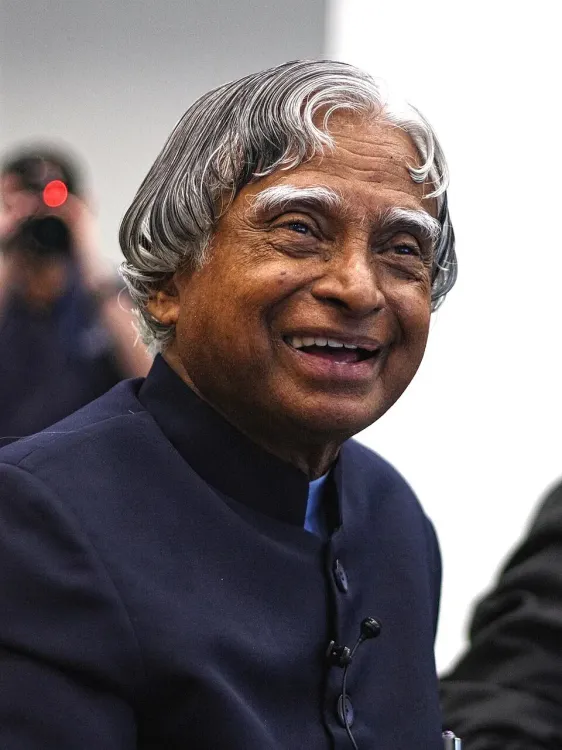
On Abdul Kalam's birth anniversary — observed globally as World Students' Day — Andhra Pradesh CM N. Chandrababu Naidu honoured the former President and missile scientist, describing him as a 'peak of inspiration' who gave India's nuclear and technology sectors new direction.
Key Takeaways
Chandrababu Naidu posted a tribute on 15 October 2026 , the birth anniversary of former President A.P.J.
Naidu described Kalam as a 'peak of inspiration' and a visionary who charted new directions for India's nuclear and technology sectors .
Kalam served as President of India from 2002 to 2007 and was the architect of landmark programmes including the Agni missile series.
October 15 is observed as World Students' Day globally in Kalam's honour, marked by events in schools and scientific institutions across India.
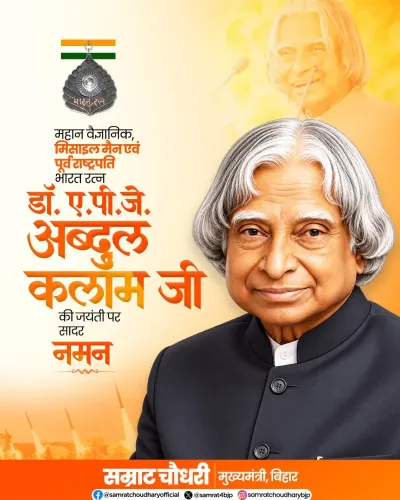
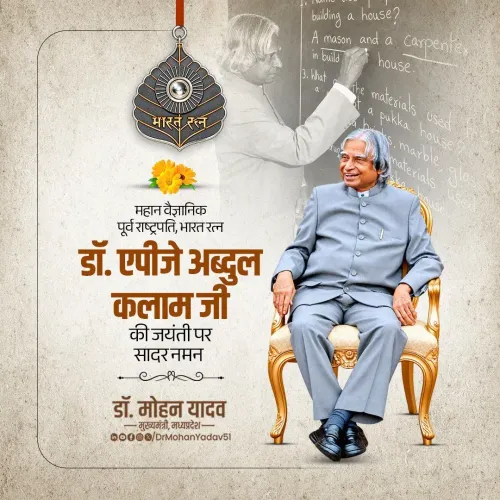
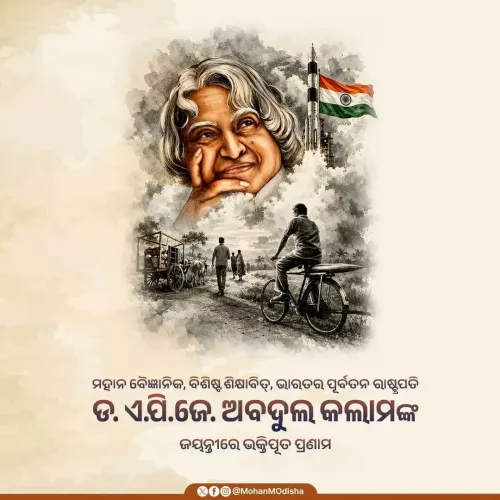
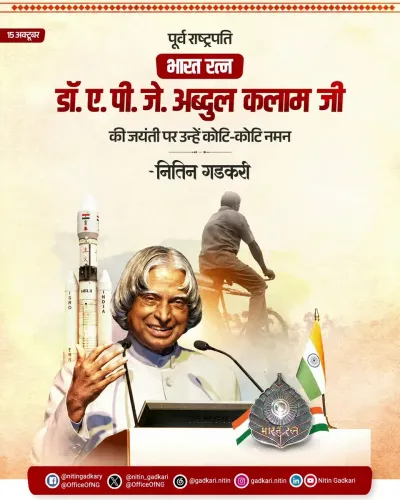
The tribute is part of an established annual national practice, with leaders across parties marking Kalam's legacy on this date.
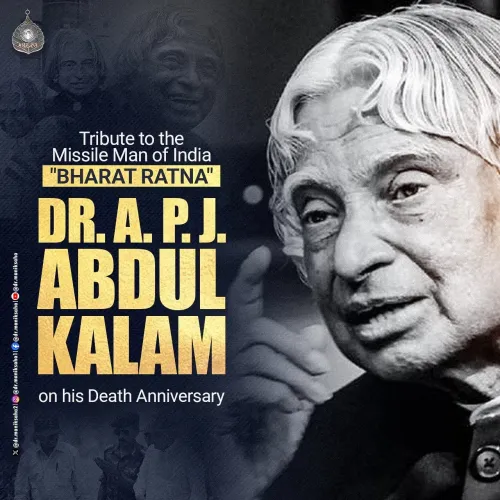
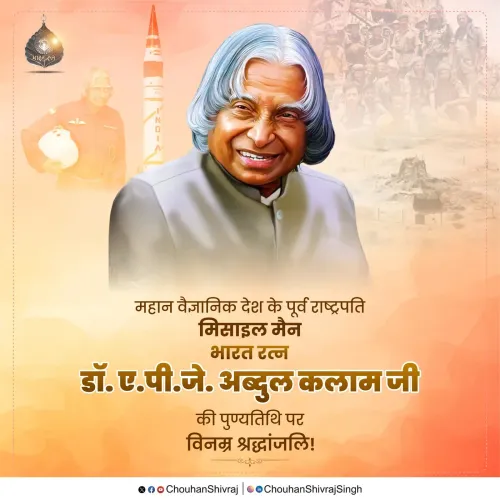
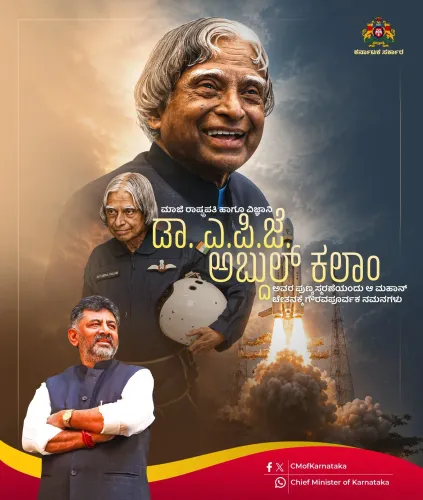
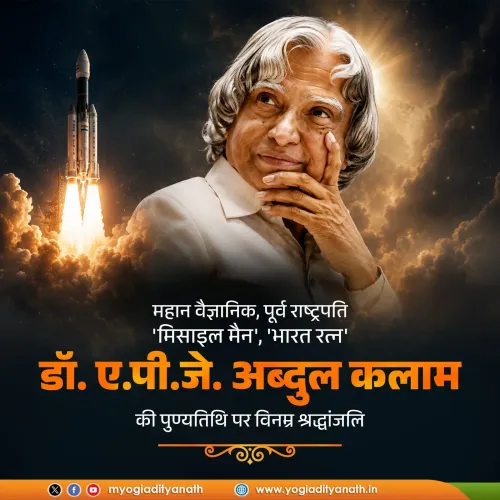
A rocket scientist who became a president, a dreamer who became a national conscience — on 15 October, Andhra Pradesh Chief Minister N. Chandrababu Naidu joined the country in honouring the birth anniversary of former President Dr. A.P.J. Abdul Kalam, calling him a 'peak of inspiration' and a rare personality whose vision reshaped India's nuclear and technology frontiers.
In his tribute posted on X, CM Naidu wrote in Telugu: 'అబ్దుల్ కలాం అంటే ఒక స్ఫూర్తి శిఖరం' — 'Abdul Kalam is a peak of inspiration.' He described Kalam as a visionary who charted entirely new directions for India's nuclear and scientific sectors, and called on citizens to remember the humanist's service to the nation and society on this day.
The Scientist Who Shaped India's Strategic Spine
Dr. A.P.J. Abdul Kalam spent decades at DRDO and ISRO before the nation handed him its highest constitutional office. As the chief architect of India's missile programme — including the Agni series — and a pivotal figure in the country's nuclear capability, his work defined strategic self-reliance long before it became a policy buzzword. He served as President of India from 2002 to 2007, bringing a scientist's precision and a teacher's warmth to Rashtrapati Bhavan.
His legacy is particularly resonant in Andhra Pradesh and across Telugu-speaking communities, where his rise from a modest background in Rameswaram, Tamil Nadu is held up as proof that talent and tenacity can outrun circumstance. CM Naidu's tribute reflects that tradition — connecting Kalam's memory not just to national pride but to a living call for service.
World Students' Day and the Annual Ritual of Remembrance
October 15 is observed as World Students' Day in Kalam's honour, a designation that captures the quality he himself prized above all — the ability to ignite curiosity in young minds. Schools and scientific institutions across India mark the day with events, debates, and readings from his books, turning a birth anniversary into an annual national classroom.
Indian leaders across the political spectrum have consistently marked this date, and Naidu's message fits squarely within that established practice. What stands out is his framing: not just a recollection of achievements, but an active invitation — 'స్మరించుకుందాం' ('let us remember') — to reflect on Kalam's service to society as a continuing responsibility, not a closed chapter.
Kalam did not just inspire a generation. He gave it a vocabulary for ambition — and every October, India finds itself speaking that language again.
Point of View
Naidu aligns himself with an aspiration narrative that transcends party lines. For a CM rebuilding Andhra Pradesh's infrastructure and technology ambitions, invoking Kalam is also a quiet statement of intent — connecting statecraft to scientific vision. The tribute reinforces how Kalam's memory continues to function as a rare national common ground.
NationPress
15 Oct 2026
Frequently Asked Questions
Why is October 15 celebrated as World Students' Day?
October 15 is observed as World Students' Day to mark the birth anniversary of former President Dr. A.P.J. Abdul Kalam , who was renowned for his deep connection with students and his belief in the power of education to transform the nation.
What did Chandrababu Naidu say about Abdul Kalam?
CM Chandrababu Naidu called Dr. Kalam a 'peak of inspiration' with a rare personality, describing him as a visionary who gave India's nuclear and technology sectors entirely new direction and urging citizens to remember his service to the nation and society.
What was Abdul Kalam's contribution to India's missile programme?
Dr. A.P.J. Abdul Kalam served at DRDO and ISRO and was the chief architect of India's missile programme, including the Agni missile series, and played a key role in advancing India's nuclear capability, earning him the title 'Missile Man of India'.
When did Abdul Kalam serve as President of India?
Dr. A.P.J. Abdul Kalam served as the 11th President of India from 2002 to 2007 , widely regarded as a 'People's President' for his accessibility and his emphasis on inspiring youth.
How is Abdul Kalam's birth anniversary marked in India?
Every year on October 15 , Indian leaders across parties, schools, and scientific institutions observe Dr. Kalam's birth anniversary with tributes, student events, and readings, reflecting his enduring status as a symbol of scientific ambition and national service.