CM Himanta Remembers Kalam on His Birth Anniversary
Synopsis
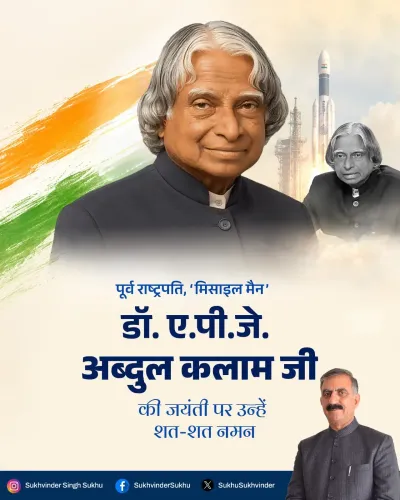
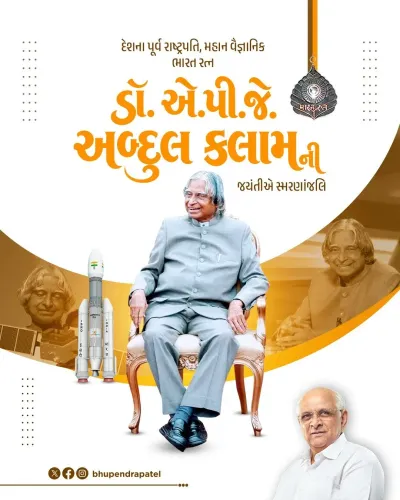
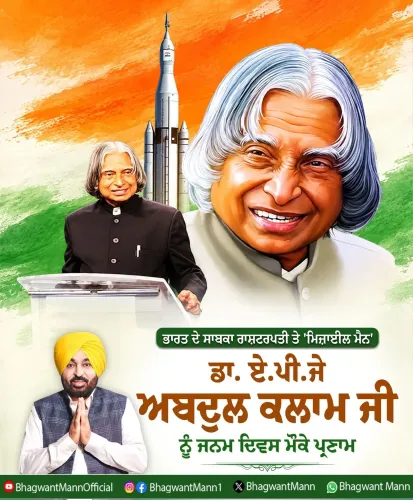
Assam Chief Minister Himanta Biswa Sarma remembered Dr. APJ Abdul Kalam on his birth anniversary, honouring the 'People's President' for his missile science breakthroughs, his devotion to knowledge and nationalism, and his memorable visits to Assam's student community.
Key Takeaways
Assam CM Himanta Biswa Sarma posted a tribute to Dr.
APJ Abdul Kalam on 15 October 2026 , his birth anniversary.
Kalam served as India's 11th President from 2002 to 2007 and is known as the 'People's President.' He led India's Integrated Guided Missile Development Programme (IGMDP) from 1983 , cementing India's indigenous missile capability.
CM Sarma specifically highlighted Kalam's visits to Assam as 'enriching' for the state's student community.
The tribute frames Kalam's legacy around knowledge, nationalism, and scientific self-reliance — themes central to BJP governance messaging.
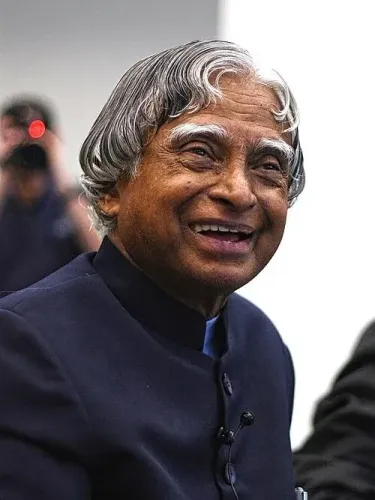
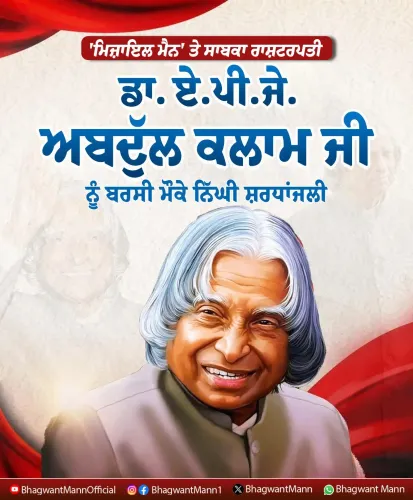
From a modest home in Rameswaram to the grandeur of Rashtrapati Bhavan — few lives in independent India have traced an arc quite like that of Dr. APJ Abdul Kalam, whose birth anniversary falls on 15 October. Assam Chief Minister Himanta Biswa Sarma marked the occasion with a heartfelt tribute on X, recalling Kalam's scientific legacy and his special bond with the state's student community.
A Journey From Rameswaram to Rashtrapati Bhavan
Dr. Kalam was born in 1931 in Rameswaram, a coastal town in Tamil Nadu, into modest circumstances that gave little hint of the trajectory ahead. He rose through India's scientific establishment to become the driving force behind the Integrated Guided Missile Development Programme (IGMDP), launched in 1983 under his leadership at DRDO. That programme placed India on the map as a credible indigenous missile power — a strategic shift whose consequences reverberate to this day.
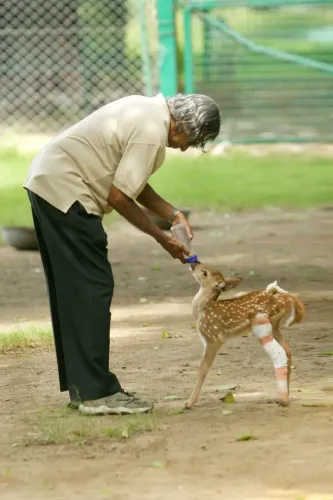
He served as India's 11th President from 2002 to 2007, a tenure defined as much by his accessibility to young people as by his statecraft. The title 'People's President' — invoked by CM Sarma in his tribute — stuck precisely because Kalam never stopped being a teacher.
Kalam's Assam Connection and the Student Legacy
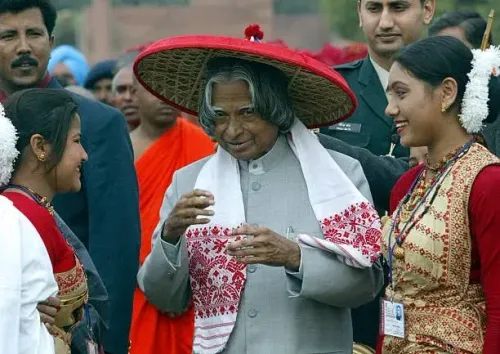
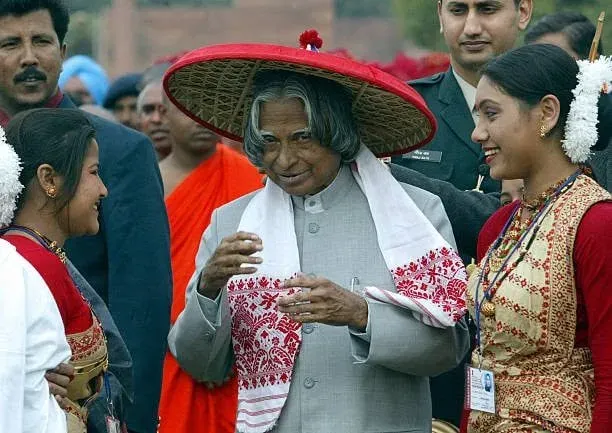
CM Sarma specifically noted that Kalam visited Assam on 'several occasions,' calling those engagements 'always enriching for all, especially our student community.' The reference is a pointed one. Kalam was famously committed to direct dialogue with young people — schoolchildren, college students, aspiring scientists — and his visits to northeastern India were consistent with that mission.
Anchoring a national icon to a regional youth narrative is also a deliberate act of political messaging. For Assam and the broader Northeast, claiming a share of Kalam's legacy positions the region within the mainstream of India's scientific and patriotic story — not on its periphery.
Why This Tribute Carries Weight Beyond the Calendar
Political leaders across party lines pay homage to Kalam every 15 October, but CM Sarma's framing carries a specific emphasis: knowledge and nationalism as inseparable values, and science as the surest armour for the motherland. 'He ensured that the future of India will always be protected through his scientific breakthroughs and no adversary will ever be able to harm our motherland,' Sarma wrote — language that connects Kalam's missile work directly to contemporary national-security pride.
It is a framing entirely consistent with the BJP's broader ideological emphasis on indigenous technology and self-reliance. The call for 'upcoming generations' to carry Kalam's ideals forward is less a eulogy than a directive — one with clear policy undertones as Assam watches its own science and education landscape evolve.
Point of View
He ties a pan-Indian scientific icon to a Northeast constituency that often feels distant from India's mainstream heritage narrative. The emphasis on missiles, national defence, and 'no adversary harming the motherland' signals continuity with the BJP's Atmanirbhar Bharat and defence-indigenisation agenda. Expect these themes to resurface each October as state-level science or education schemes seek Kalam's name as moral and political cover.
NationPress
15 Oct 2026
Frequently Asked Questions
When is APJ Abdul Kalam's birth anniversary?
Dr. APJ Abdul Kalam was born on 15 October 1931 in Rameswaram , Tamil Nadu. His birth anniversary is observed nationally as a day celebrating science, youth, and nationalism.
Why is APJ Abdul Kalam called the 'People's President'?
Kalam earned the title 'People's President' during his tenure as India's 11th President (2002–2007) for his extraordinary accessibility — especially to students — and his refusal to let the formality of high office distance him from ordinary citizens.
What was APJ Abdul Kalam's role in India's missile programme?
Dr. Kalam led India's Integrated Guided Missile Development Programme (IGMDP) , launched in 1983 at DRDO . The programme produced a family of indigenous missiles and established India as a serious indigenous defence technology power.
Did APJ Abdul Kalam visit Assam?
Assam CM Himanta Biswa Sarma has stated that Dr. Kalam visited Assam 'on several occasions,' describing those visits as particularly enriching for the state's student community. Specific dates of those visits are not on public record.
Why do BJP leaders frequently tribute APJ Abdul Kalam?
Leaders across parties honour Kalam, but BJP leaders in particular invoke his legacy because his emphasis on scientific self-reliance, indigenous defence technology, and nationalism aligns closely with the party's Atmanirbhar Bharat and defence-indigenisation priorities.