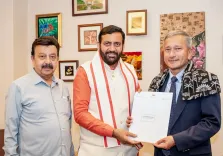
CM Himanta Flags 58 AMRUT 2.0 Projects Worth ₹861 Cr in Assam

Synopsis
Assam CM Himanta Biswa Sarma has announced 58 urban infrastructure projects under AMRUT 2.0, backed by over ₹861 crore in investment, targeting upgraded water systems, sanitation, and civic amenities across the state's towns.
Key Takeaways
Assam is implementing 58 projects under the centrally sponsored AMRUT 2.0 urban mission.
The total investment cited by CM Himanta Biswa Sarma stands at over ₹861 crore .
Focus areas include upgraded water supply systems, cleaner surroundings, and pace-setting civic infrastructure.
AMRUT 2.0 was approved by the Union Cabinet in October 2021 with a national outlay of ₹2.77 lakh crore covering approximately 4,800 smaller towns beyond the original 500 cities.
Northeastern states have received increased priority under AMRUT 2.0 as part of a wider regional urbanisation push.
Project completion and utilisation reporting to the Ministry of Housing and Urban Affairs will be the next key milestone.
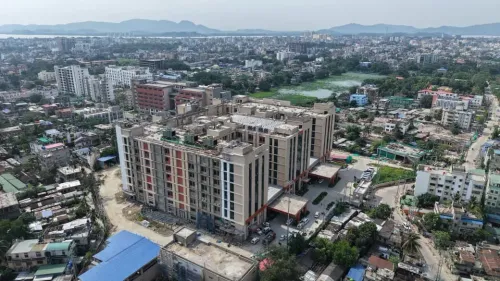
Assam Chief Minister Himanta Biswa Sarma on Saturday, 23 May 2026, highlighted the state's urban infrastructure push under the centrally sponsored AMRUT 2.0 scheme, citing 58 projects backed by an investment of over ₹861 crore aimed at upgrading water systems, sanitation, and civic amenities across Assamese towns.
Context
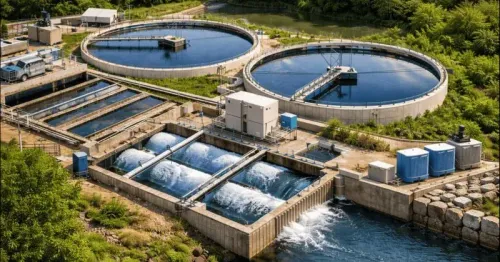
In his post, Himanta Biswa Sarma stated that the projects are 'rethinking how our towns function' by ensuring 'upgraded water systems, cleaner surroundings and infrastructure that keeps pace with people's needs.' The announcement frames the investment as part of a deliberate effort to modernise urban Assam, a state whose smaller towns have historically lagged behind in civic infrastructure compared to larger metropolitan centres.
The Chief Minister's communication signals an active push to demonstrate tangible development delivery in the urban space, a priority that has grown sharper as Assam urbanises at a pace outstripping existing civic capacity.
Policy Backdrop
The Atal Mission for Rejuvenation and Urban Transformation (AMRUT) was first launched in June 2015 to provide assured water supply and sewerage networks across 500 cities nationwide. Its successor, AMRUT 2.0, was approved by the Union Cabinet in October 2021 with a total outlay of ₹2.77 lakh crore, expanding coverage to the original 500 cities plus roughly 4,800 smaller towns.
The expanded mission places particular emphasis on 100 per cent household water tap connections, stormwater drainage to reduce urban flooding, and the creation of green spaces. Northeastern states, including Assam, have received heightened attention under the scheme as part of the Union government's broader urbanisation and connectivity drive in the region.
Stakeholders and Impact
The primary beneficiaries of the 58 projects are urban households and municipal bodies across Assam that have long struggled with ageing water distribution networks and inadequate drainage infrastructure. Improved water supply and cleaner surroundings directly affect public health outcomes, particularly in smaller towns where piped water coverage remains uneven.
Municipal bodies stand to gain upgraded operational capacity, while urban residents — especially in lower-income localities — are expected to see the most direct quality-of-life improvement once projects reach completion. The investment also carries an indirect economic signal, suggesting that urban local bodies in Assam are being positioned to absorb and execute larger capital works.
What's Next
Attention will now turn to state-level utilisation certificates and project completion reports submitted to the Ministry of Housing and Urban Affairs, which tracks AMRUT 2.0 disbursements and outcomes. Progress on the 58 projects will be a key indicator of Assam's execution capacity under the mission.
Observers will also watch whether Assam's upcoming budget cycle includes supplementary allocations for urban local bodies to sustain operations and maintenance once the centrally funded capital works conclude — a recurring challenge for states after scheme-driven infrastructure is handed over to municipalities.
Point of View
Urban infrastructure has emerged as a credibility frontier: the state's rapid urbanisation has outpaced civic capacity, making visible capital investment politically significant. The ₹861 crore figure also signals that Assam is absorbing a meaningful share of the AMRUT 2.0 national outlay, which could strengthen the state's case for supplementary allocations. The real test, as with all scheme-driven infrastructure, will be post-completion operations and maintenance — the point where state commitment diverges from central funding.
NationPress
6 Oct 2026
Frequently Asked Questions
What is AMRUT 2.0 and how does it apply to Assam?
AMRUT 2.0 is a Union government urban mission approved in October 2021 with a national outlay of ₹2.77 lakh crore to improve water supply, sewerage, and green spaces in cities and towns. Assam is implementing 58 projects under the scheme with an investment of over ₹861 crore.
How many AMRUT 2.0 projects are underway in Assam?
According to CM Himanta Biswa Sarma, 58 projects are being implemented in Assam under AMRUT 2.0, focused on water systems, sanitation, and urban civic infrastructure.
What is the total investment in Assam's AMRUT 2.0 projects?
The investment cited by the Chief Minister is over ₹861 crore, directed at upgrading urban water systems, cleaner surroundings, and civic amenities across Assam's towns.
Who oversees AMRUT 2.0 project completion and fund utilisation?
The Ministry of Housing and Urban Affairs oversees AMRUT 2.0 nationally, with states required to submit utilisation certificates and project completion reports to access and account for disbursements.
Why are northeastern states prioritised under AMRUT 2.0?
Northeastern states have received increased focus under AMRUT 2.0 as part of the Union government's broader push for urbanisation and connectivity in the region, where smaller towns have historically had limited civic infrastructure.