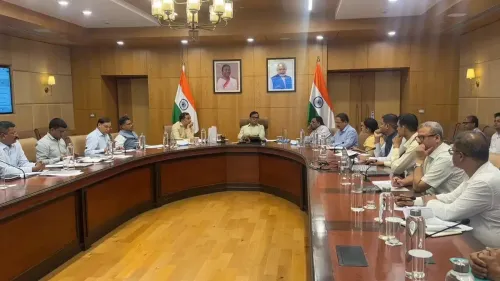
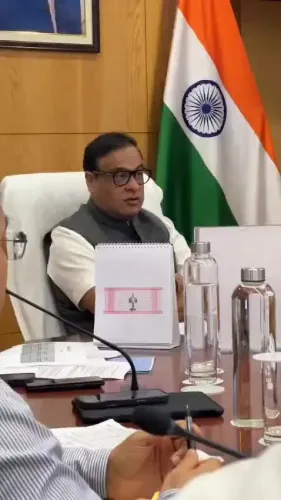
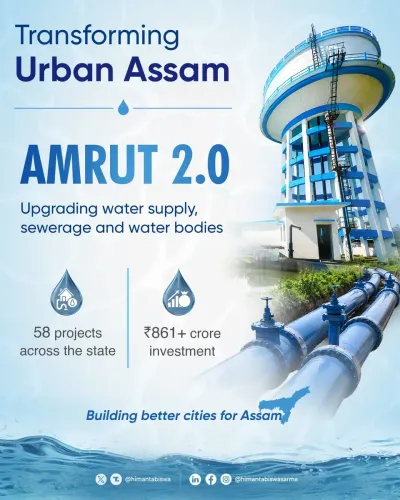
Assam CM Office: 58 AMRUT 2.0 Projects Worth ₹861 Cr Approved
Synopsis
The Chief Minister's Office of Assam has announced 58 AMRUT 2.0 projects worth ₹861 crore to upgrade water supply and sanitation infrastructure across the state's urban local bodies, reinforcing Assam's uptake of the Centre's flagship urban transformation mission ahead of the scheme's 2026 deadline.
Key Takeaways
58 projects under AMRUT 2.0 have been approved for Assam , with a combined value of ₹861 crore .
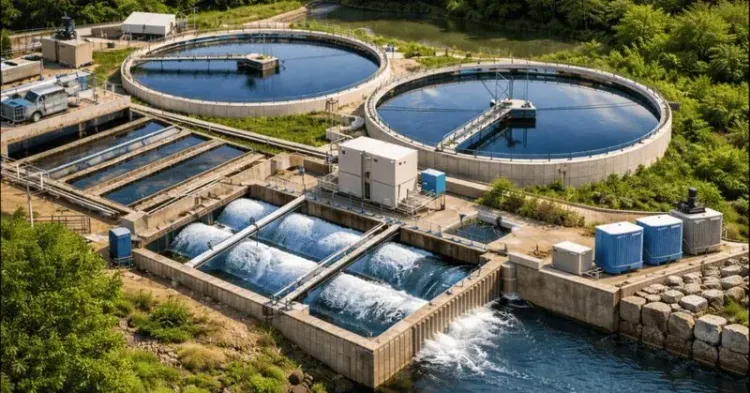
The projects target urban water supply, sewerage, and septage management across Assam's statutory towns.
AMRUT 2.0 was approved by the Union Cabinet in October 2021 with a national outlay of ₹2.77 lakh crore for 2021–26.
Assam signed an MoU with the Ministry of Housing and Urban Affairs in 2022 to implement the scheme through its urban local bodies.
Urban local bodies will serve as implementing agencies and must submit utilisation certificates to MoHUA to unlock subsequent funding tranches.
The announcement comes as the AMRUT 2.0 programme window approaches its 2026 close, making timely execution critical.
The Chief Minister's Office of Assam announced on Sunday, 25 May 2026 that 58 projects worth ₹861 crore under the AMRUT 2.0 scheme are set to strengthen the state's urban infrastructure, covering water supply and sanitation across its cities and towns.
Context
The announcement confirms Assam's continued draw-down of funds under the Atal Mission for Rejuvenation and Urban Transformation 2.0, a centrally sponsored scheme approved by the Union Cabinet in October 2021 with a national outlay of ₹2.77 lakh crore for the 2021–26 period. The mission targets universal piped water supply and sewerage management across all statutory towns in India. Assam signed a memorandum of understanding with the Ministry of Housing and Urban Affairs (MoHUA) in 2022 to implement the scheme through its urban local bodies.
Chief Minister Himanta Biswa Sarma, who has helmed the state since May 2021, has made central-scheme uptake a visible governance priority, positioning AMRUT 2.0 as a vehicle to close the region's longstanding urban infrastructure gap.
Policy Backdrop
AMRUT 2.0 builds on its predecessor, the original AMRUT scheme launched in June 2015, which covered 500 cities with a narrower focus on water supply and drainage. The 2.0 version expanded coverage to all statutory towns and added sewerage and septage management as explicit targets. Northeastern states, including Assam, received dedicated allocations and relaxed implementation norms under the programme to account for hilly terrain and connectivity constraints.
The scheme sits within a broader cluster of urban missions — including the Smart Cities Mission, Swachh Bharat Mission-Urban, and 15th Finance Commission grants for municipal services — that together form the central government's decade-long push to modernise Indian cities.
Stakeholders and Impact
The primary beneficiaries of the 58 projects are residents of Assam's urban local bodies, who stand to gain improved access to piped drinking water and functional sewerage systems. Upgraded sanitation infrastructure also has downstream public-health implications, particularly in densely populated town centres where open drainage remains common.
Urban local bodies across the state will serve as implementing agencies, responsible for tendering, execution, and submitting utilisation certificates to MoHUA. The scale of the investment — ₹861 crore across 58 projects — implies an average project size of roughly ₹14.8 crore, suggesting a mix of ward-level and city-wide interventions.
What's Next
Attention will now shift to the pace of tendering and physical progress at the project level. MoHUA tracks state-level utilisation and can withhold subsequent tranches if expenditure milestones are missed — making timely execution critical for Assam to access the full sanctioned amount. State budget announcements on matching-fund contributions and any additional AMRUT project pipelines will be watched closely by urban planners and municipal bodies alike.
With the AMRUT 2.0 programme window closing in 2026, Assam faces a narrow timeline to commission works and demonstrate outcomes — setting the stage for whatever successor urban mission the Centre designs for the next planning cycle.
Point of View
Announcements of this scale serve a dual purpose: demonstrating administrative capacity to MoHUA and building a governance record ahead of future electoral cycles. The real test, however, lies not in sanction but in execution — Northeastern states have historically struggled with utilisation rates under time-bound central missions, and the 2026 deadline leaves limited room for procedural delays. If Assam can demonstrate strong physical progress, it will be well-placed to negotiate a favourable allocation under whatever urban mission the Centre designs for the next planning period.
NationPress
7 Oct 2026
Frequently Asked Questions
What is AMRUT 2.0 and how does it benefit Assam?
AMRUT 2.0, or the Atal Mission for Rejuvenation and Urban Transformation 2.0, is a centrally sponsored scheme approved in October 2021 to provide universal piped water supply and sewerage management in all statutory towns. Assam benefits through dedicated project funding — 58 projects worth ₹861 crore have been announced — to upgrade urban water and sanitation infrastructure across the state's cities and towns.
How many AMRUT 2.0 projects are approved for Assam and what is the total cost?
A total of 58 AMRUT 2.0 projects worth ₹861 crore have been announced for Assam, as stated by the Chief Minister's Office on 25 May 2026.
Who is responsible for implementing AMRUT 2.0 projects in Assam?
Urban local bodies across Assam serve as the primary implementing agencies for AMRUT 2.0 projects. They handle tendering, construction, and must submit utilisation certificates to the Ministry of Housing and Urban Affairs to receive subsequent funding tranches.
What is the deadline for AMRUT 2.0 projects in Assam?
The AMRUT 2.0 programme runs for the 2021–26 period, meaning Assam's urban local bodies face a tight timeline to complete tendering and physical works before the scheme window closes in 2026.
What did Assam sign with the Ministry of Housing and Urban Affairs for AMRUT 2.0?
Assam signed a memorandum of understanding with the Ministry of Housing and Urban Affairs in 2022, committing the state to implement AMRUT 2.0 through its urban local bodies in exchange for central funding and technical support.